








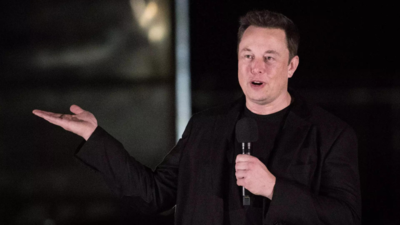
Elon Musk’s business empire could be heading towards a major consolidation, with SpaceX and Tesla setting up special committees to discuss a possible merger. Musk confirmed the talks on Tuesday, saying he viewed combining the two companies favourably, although any deal would depend on the committees’ deliberations and approval from shareholders.“I think it would be a good idea, but it’s really up to the special committees of both companies,” Musk said, in the first official confirmation that the companies were formally talking. “Because I’m a conflicted party, I can’t actually be in the discussion of the special committees,” he told investors on a conference call as per news agency Reuters. Shareholders ultimately would need to approve a deal, he added.SpaceX shares rose 4.9% in extended trading following the remarks. Speculation about a potential deal has grown in recent weeks, with Barclays suggesting last week that an announcement could come before Tesla’s annual meeting in December. Musk has previously floated the idea, pointing to increasing overlap between the businesses.
SpaceX posts first public-company profit as AI revenue surges
The merger discussions came as SpaceX reported its first profit as a public company, alongside a sharp rise in revenue from artificial intelligence (AI). Revenue increased 161% year-on-year to $14.58 billion in the three months ended September 30.AI revenue surged almost tenfold to $7.56 billion, largely driven by renting data-centre computing capacity to developers such as Anthropic, Google’s parent Alphabet and Reflection AI, rather than by sales from its own AI models.“We are in an inflection moment for SpaceX across launch, connectivity and superintelligence,” Musk said on the call. He ended his portion of prepared remarks with a seemingly off-script remark. “In a nutshell, what this implies for SpaceX annual recurring revenue by the end of ’27 is somewhere between $500 billion and a trillion.”SpaceX chief financial officer Bret Johnsen reiterated that the company expected annual recurring revenue of about $100 billion by the end of 2026. The company plans to spend $35 billion to $40 billion on capital expenditure in the fourth quarter. AI accounted for $16.4 billion of its $19.6 billion in capital spending in the third quarter, with investment in computing infrastructure nearly tripling.SpaceX reported net income of $4.4 billion, compared with a loss of $1.1 billion a year earlier. The result also beat analysts’ average expectation of a $1.57 billion profit. On an adjusted per-share basis, the company earned 45 cents, above the average estimate of 13 cents, according to IBES calculations.“SpaceX delivered the quarter the bulls wanted, at least on the top line,” said Will Rhind, CEO of asset manager GraniteShares. “The story now is all about AI. The compute contracts signed earlier this year are turning into revenue faster than a lot of people thought.”
Starlink growth and Starship remain key to long-term plans
SpaceX’s expanding AI business includes Grok, social media platform X and its growing data-centre operations. However, the AI unit has incurred large operating losses, and the company has warned that sustained investment will be needed before it can generate consistent profits.“With AI revenue now the company’s biggest business line, the company’s hyperscale business is quickly providing operating strength and leverage which will carry into the advancements of its satellite and launch business,” said Daniel Newman, CEO of tech research group the Futurum Group. “Increasingly, the strength and diversification of SpaceX makes a merger with Tesla feel imminent.”Starlink, SpaceX’s satellite internet business, also continued to expand. It had 13.6 million subscribers in the third quarter, exceeding analysts’ expectation of 12.19 million. However, average monthly revenue per subscriber fell from $99 in 2023 to $69 in the latest quarter as the company expanded into more markets with cheaper plans. SpaceX has warned that entering countries with lower purchasing power could push average revenue per user down further.The company’s longer-term plans also depend on Starship, its next-generation reusable rocket system, which has yet to enter commercial service. The rocket is expected to help deploy more advanced Starlink satellites and support plans for AI computing infrastructure in orbit.SpaceX successfully deployed several Starlink satellites last month during Starship’s first orbital test flight, although the flight ended hours earlier than expected following an engine issue. While Falcon rocket launches remain active across commercial and government missions, Starship development continues to involve significant costs and uncertainty.SpaceX has also increasingly prioritised launching satellites for its own network over carrying third-party payloads. The combination of a growing AI business, expanding satellite connectivity and ambitious rocket development has changed the company’s financial profile, making the potential merger with Tesla a significant development for both businesses.(With inputs from Reuters)