







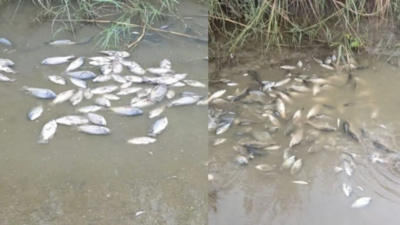
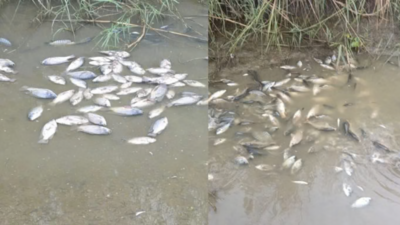
NEW DELHI: Visuals of hundreds of dead fish and many more gasping for oxygen in Yamuna upstream of Wazirabad have raised fresh concerns over the river’s pollution levels. The alarming development comes soon after the monsoon, when the river is expected to have adequate water along with cleaner inflows from upstream.TOI had recently reported a spike in pollution levels in the river in Sept, raising questions about why water quality remains so poor even after the monsoon.Over the past few days, fishermen had been reporting a rising stink from the river before large numbers of dead fish were found floating Tuesday in its main channel near Burari – between Palla and Wazirabad – which is often considered its cleanest stretch in Delhi.Such events have occurred in the past, often during summer when the reduced river flow limits the dilution of pollutants. Post-monsoon, the river, however, has water, raising questions about what could have triggered the deaths.In a letter to Delhi Pollution Control Committee (DPCC), environmental group Earth Warrior sought an immediate investigation and water sampling at upstream locations. It called for testing dissolved oxygen, biochemical and chemical oxygen demand, faecal coliform, heavy metals and toxic substances, and identifying drains or industrial units discharging untreated effluents. The group also sought public disclosure of the findings and real-time monitoring of major drains.“Similar fish deaths were reported near Burari in May 2025 and July 2024,” stated the letter while warning that Burari lies upstream of Wazirabad barrage, and the incident could have implications for Delhi’s drinking water source.Bhim Singh Rawat of South Asia Network on Dams, Rivers and People said the recurring deaths in a “relatively cleaner stretch” were deeply concerning. “If this is from pollution, then adverse effect may impact Delhi’s potable water as well,” he said, calling for an investigation to find the exact cause.Rawat flagged restricted environmental flows and untreated discharges from drains, including Drain no. 2 in Panipat and Dhanaura drain in Haryana, as possible contributors. He said industrial pollution could also be a factor.The incident follows DPCC’s Sept water-quality analysis, which recorded high pollution levels at several locations, including an elevated biochemical oxygen demand and faecal coliform count at ISBT Bridge. No response was available from DPCC on the recent incident.