









MADURAI: A man accused of gang rape will no longer be treated the same way as a youth booked in an elopement case involving a minor. A repeat stalker will not be monitored like a first-time accused. This is the idea behind ‘Spectrum’, a new Tamil Nadu police project launched in the south zone to classify and track sexual offenders based on risk.The project covers 10 southern districts including Madurai, Tirunelveli, Tuticorin and Kanyakumari. Police have mapped around 15,000 people booked in sexual offence cases ranging from eve-teasing to rape and murder. (Spectrum stands for sexual offender profiling, evaluation, classification, tracking, risk assessment and unified monitoring system.)
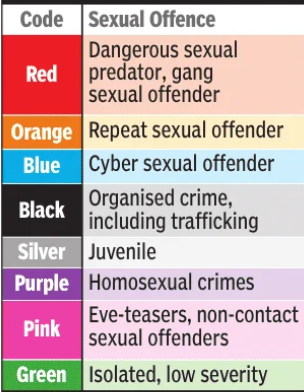
Vijayendra Bidari, IG, south zone, said the region registers around 1,500 to 2,000 such cases every year, many of them involving relationships or marriages with consent. In such cases, the girl used to be a minor, attracting provisions of Pocso Act, or non-contact sexual offences like ogling, stalking and voyeurism. The focus, he said, would be on repeat offenders and those posing a higher threat.Under Spectrum, offenders are placed under eight colour-coded categories. Red covers gang rape accused, serial rapists, repeat Pocso offenders and those seen as a threat. Orange covers repeat molesters, stalkers and habitual harassers.“We track the red and orange category accused closely and even keep track of their parole status,” Bidari said. “In some cases, we have started invoking Section 126 of BNSS to make high-risk offenders execute bonds. We are also trying to get convictions in their previous cases and get their bails cancelled soon.”Police are also recording biometrics of accused through measurement capturing unit (MCU), launched in south zone earlier this year. Fingerprints, iris scans, palm prints, height and high-resolution photographs are stored to help in future and unsolved cases.Cyber offenders, an emerging trouble in southern districts, are also being given special focus. Such accused, including online groomers, sextortionists and cyber stalkers, are placed in the blue category, while cases involving alleged offences through same-sex dating platforms are marked separately in purple.“We are monitoring their phones and social media handles. Police are also watching cases where dating apps, particularly Grindr, are allegedly misused to cheat or trap people,” said a cybercrime sub-inspector from Dindigul, who recently arrested two men in such a case.The other categories are meant to separate organised crime from lower-risk cases. Black covers trafficking, commercial sexual exploitation rackets and organised sexual offence networks. Juveniles are placed under silver, with police looking at counselling through parents where reform is possible.