








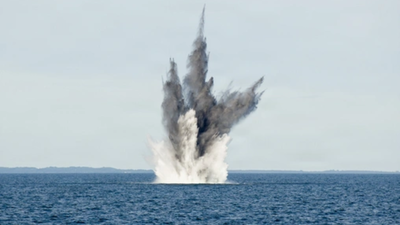
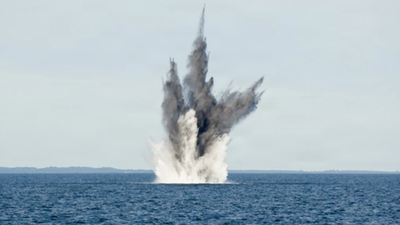
The Indian and the US navies have begun a five-day specialised bilateral exercise focused on Explosive Ordnance Disposal (EOD) at the Southern Naval Command in Kochi. The exercise, which will conclude on August 14, is aimed at sharpening interoperability between the two navies’ diving and EOD teams, a niche but critical area of maritime operations that rarely gets the spotlight compared to bigger-ticket exercises involving warships and fighter jets.The eighth edition of the exercise will run through subject matter expert exchanges, cross-training sessions, equipment demonstrations and scenario-based drills. The aim is to provide specialists from both sides a chance to compare notes on how they clear mines and defuse underwater explosives. These skills matter enormously whenever a harbour needs to be cleared or a vessel needs safe passage through contested or hazardous waters. The Navy’s EOD units work in tandem with diving and salvage units, which specialise in harbour clearance, underwater search and recovery, as well as emergency repairs to ships.This is especially important now due to the prevailing conflict in west Asia. As the Iranians claim to have mined a portion of the crucial Strait of Hormuz, which is the conduit for roughly 20% of the global oil and gas supply. Another important aspect for India here is the need to keep its ports and other coastal infrastructure safe in the light of asymmetric threats such as those from terrorists. This becomes even more important as nearly 95% of India’s trade by volume and about 70% by value moves through maritime routes across the Indian Ocean trade network.The exercise offers a chance to both nations to benchmark their EOD and diving capabilities against a partner that has decades of experience deploying these teams in expeditionary settings across the world. The exercise focuses on sharing methodologies, new technologies, and best practices to help both navies understand each other’s capabilities, operational concepts, and philosophies. It is aimed at fostering collaborative learning and operational synergy, allowing personnel to refine procedures, build mutual understanding, and improve their ability to jointly tackle complex and evolving explosive ordnance disposal challenges.Chief of the Naval Staff Admiral Krishna Swaminathan is on a four-day visit to Mauritius from August 10 to 13, part of India’s ongoing effort to deepen ties in the Indian Ocean Region. During the visit, the Navy chief is expected to hold talks with senior Mauritian leadership on maritime security, defence cooperation, and capability building. This element has become central to India’s outreach to island nations across the Indian Ocean Region in recent years and is a part of PM Modi’s Mutual and Holistic Advancement for Security and Growth Across Regions (MAHASAGAR) approach. Both these elements reflect the armed forces engagement in the region and beyond and is emblematic of naval diplomacy, which consists of engagement at multiple levels, from specialist-to-specialist training exchanges to top-level visits.