








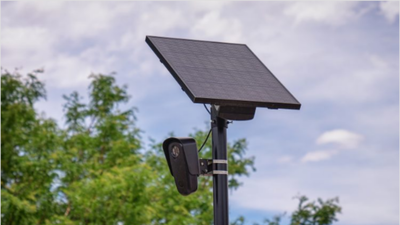
Flock Safety, the maker of AI-powered licence plate recognition cameras used by thousands of law enforcement agencies across the US, has announced a series of new privacy and accountability measures amid increasing scrutiny over police misuse of its technology and growing public backlash against surveillance systems, according to a report by ABC News. The announcement comes as incidents of Americans vandalising Flock cameras have increased across several communities, while reports of officers allegedly using the company’s surveillance network to stalk former partners and conduct unauthorised searches have fuelled concerns about privacy and oversight.
New safeguards announced by Flock
* Case numbers required. Law enforcement users must label every search with a criminal case number.* Automatic review. Abnormal search activity will trigger an automatic review, and proactive lockouts for the users involved.* Shorter data retention. The default retention period drops to seven days from 30.* Limits on sharing. Data from Flock’s 120,000 cameras across the US can be shared by police departments with agencies nationwide. Cities will now be able to choose which types of offenses other agencies can search for through their cameras.CEO Garrett Langley gave an example in a blog post announcing the changes: “City A could allow City B to search its cameras only for a stolen vehicle, missing person, or violent crime while blocking searches related to immigration enforcement.”“These changes reflect years of work and deliberation,” Langley wrote. “They are not the end of that work, but simply the continuation of our commitment to both safety and privacy. We are not perfect, so we will keep listening, improving, and building a better standard for public safety technology together.”
Reports of misuse
The announcement follows weeks of scrutiny over how police have used the system. Last week, The Washington Post reported that at least 50 officers had been accused, charged or convicted of using Flock’s system and other license plate readers to spy on people, in many cases stalking girlfriends or former partners. The Post said it has since confirmed more than a dozen additional cases. Two safeguards suggested in the Post’s story are among those Flock has now announced.Earlier this month, a North Carolina police officer was arrested for allegedly using Flock license plate readers to track her boyfriend’s ex-wife, police said. In Savannah, Georgia, six police department employees were fired in August over alleged misuse of Flock cameras, according to ABC affiliate WJCL.Langley said a tool called Audit Assistance, introduced 16 weeks ago to detect abnormal activity and flag it for review, has been associated with arrests of several law enforcement officers who allegedly abused the system. About one-third of customers have adopted it. It will become mandatory by the end of the year.The company also said it had fixed a problem discovered in December 2025, in which some of its AI-powered pan-tilt-zoom cameras were publicly accessible. “For a brief period of time, third parties were able to access live streams and footage from those cameras,” Langley wrote, blaming a network configuration error by a vendor. “We are accountable,” he said.
Critics say the changes fall short
Civil rights advocates say the measures do not go far enough. “While this measure contains some meaningful improvements, such as the shortened retention policy, ultimately it is the same ‘Just Trust Us’ policy with a fresh coat of paint,” said Tom Bowman, policy counsel at the Center for Democracy & Technology, in a statement to ABC News.“Flock is still asking thousands of police departments to police themselves, despite evidence from across the U.S. that this lack of guardrails is unsafe,” he said. He argued that the changes do not address the risks of license plate readers, including pervasive tracking, vehicle stops based on flawed AI flags of “irregular” driving patterns, and stalking. The real fix, he said, is to “make the government get a warrant.”The Institute for Justice, a libertarian nonprofit law firm, launched a database on Tuesday documenting abuse of automated license plate readers (ALPRs). It says it has found more than 100 incidents, including stalking, wrongful stops and detentions, and non-law enforcement use. The group says companies like Flock “have now blanketed thousands of communities with ALPRs,” creating systems that can reconstruct where people have been without a warrant.Flock’s name has become shorthand for ALPRs, which are marketed as tools for catching car thieves and finding missing people, although other companies also make them.