






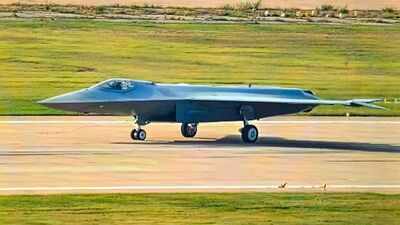
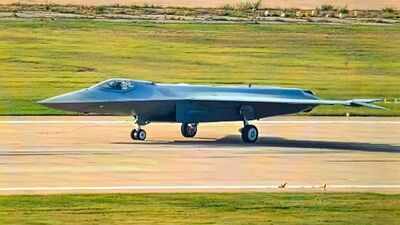
China’s next-generation stealth fighters are being designed with advanced autonomous capabilities that could allow them to fly without a pilot, navigate without satellite signals and control large groups of drones, according to new research by Chinese military aircraft designers.The research comes from the Shenyang Aircraft Design & Research Institute, linked to the development of the aircraft widely known as the J-50.A paper led by the institute’s chief flight-control designer, Zhang Dong, describes a “leapfrog transformation” in next-generation fighter technology, aimed at moving rapidly to more advanced capabilities instead of developing them step by step.It describes concepts including automatic control if a pilot is incapacitated, quantum navigation when satellite signals are unavailable, and fighter aircraft working with drones for attack, reconnaissance and protection missions.What does the “leapfrog” technology mean?The research points to a major shift in how China wants its next-generation fighters to operate. Instead of relying entirely on a pilot to control the aircraft, the designers are exploring systems that could allow the fighter to take over some tasks automatically and continue operating in difficult combat situations.One example is autonomous flight. If a pilot becomes unconscious or faces an extremely heavy workload, the aircraft could automatically take over control and continue flying. This could help keep the fighter operational even when the pilot is unable to control it normally.The researchers are also looking at navigation without satellite signals. The paper discusses quantum navigation, which could help an aircraft determine its position when systems such as GPS are unavailable or have been disrupted. This is important in a conflict because an enemy could attempt to jam or disable satellite-based navigation.Another major part of the concept is drone teaming. A manned fighter could work with a large number of drones, with the drones taking on different roles such as attack, reconnaissance and protection. Their formation could also be reorganised depending on the changing battlefield situation.China sixth generation fighter programmesChina is developing two major sixth-generation stealth-fighter programmes, represented by aircraft widely known as the J-36 and J-50. Both are still developmental aircraft, and Beijing has not officially confirmed these designations.The two prototypes first attracted global attention after appearing in flight tests in late 2024 and have since undergone further testing.The aircraft widely referred to as the J-36 is being developed by Chengdu Aircraft Corporation. Public images and analysis by defence experts indicate that it has a large, tailless design with three engines. Its size and configuration suggest a focus on long range, stealth and a large weapons payload, although its exact operational role has not been officially disclosed.The aircraft commonly called the J-50 is associated with the Shenyang Aircraft Design & Research Institute and is smaller than the J-36. It has a tailless, twin-engine design and has also undergone flight testing. Images of a later version showed the removal of the nose-mounted air-data boom used during earlier test flights, which analysts viewed as a possible sign of progress in the programme.The two sixth generation aircraft of China reflects two different approaches to sixth-generation airpower. The larger J-36 appears focused on range, payload and stealth, while the smaller J-50 could offer a different combination of agility, flexibility and potentially carrier operations. The parallel programmes also allow China to test different aerodynamic and technological solutions rather than committing to a single design from the beginning.