









The AI data center boom was supposed to be America’s new economic engine—a machine that fattens local tax coffers and mints jobs. But after straining power grids, driving up household utility bills and stoking fears over water and pollution, the industry has hit a wall that money alone can’t knock down. There simply aren’t enough skilled workers to build all the facilities being planned.The crunch is now serious enough that contractors are turning away business. “There is plenty more work we could take if we could possibly do it,” Comfort Systems USA CFO William George told Bloomberg. He isn’t alone. The combined project backlogs at Comfort Systems, Emcor Group and Sterling Infrastructure have jumped sixfold—far outpacing any growth in the pool of electricians and HVAC installers who actually do the work.
A very human bottleneck for a very futuristic industry
For all of AI’s sci-fi promise, its physical footprint runs on old-fashioned tradespeople. Data centers aren’t ordinary construction jobs. They need high-voltage technicians, fiber-optic installers, controls engineers and commissioning teams—roles that take years of training to fill. That makes the labor pool almost impossible to expand as fast as investment has ballooned. Turner & Townsend found data centers are now the most constrained sector globally, with over 70% of the 112 markets it analyzed seeing tightening or overstretched contractor capacity.The roots run deep. Construction faces a graying workforce, too few young recruits and a thin pipeline of apprenticeships. Immigration crackdowns have squeezed things further, since foreign-born workers make up roughly a third of the construction trades.
How the AI hiring war is hurting homeowners
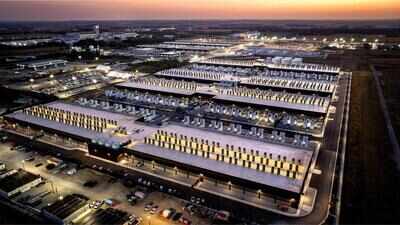
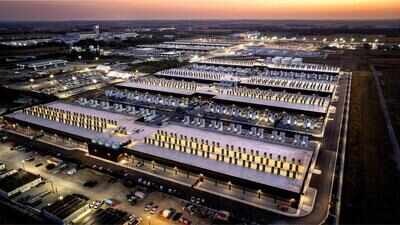
The pain is spilling into neighborhoods. In Abilene, Texas—home to the sprawling 4-million-square-foot Stargate facility backed by OpenAI and Oracle—homebuilder Gene Lantrip watched subcontractors lose crews to data centers offering far better pay. “It’s hard to compete when contractors are paid $15 to $20 an hour, while the data centers offer $40 plus a per diem,” he said. His houses now take two months longer to finish.In Arizona, remodeler Danny Niemela says pulling 200 electricians onto a single campus for a year guts the local workforce. An AC repair that once took two days can now stretch to five or six. Labor costs for licensed trades in the Valley region have climbed 12% to 18% over two years, he added.
Why the data center labor shortage won’t ease anytime soon
The numbers are stark. Recruiting firm iRecruit projects a shortfall of up to 499,000 workers for projects running 18 to 30 months. Associated Builders and Contractors says the industry needs 349,000 net new workers in 2026 just to meet demand, jumping to 456,000 in 2027.Some tech giants are trying to fix the pipeline themselves. Meta partnered with CBRE earlier this year on a workforce training initiative, hoping to widen the pool of qualified builders.But few expect a fast fix. Blue-collar stigma still runs deep, and training a skilled electrician takes years, not weeks. As Coastal Construction’s Patrick Murphy put it, data centers didn’t create the labor shortage—they exposed it. The industry has mastered attracting capital. Producing thousands of experienced tradespeople is proving to be the harder problem.