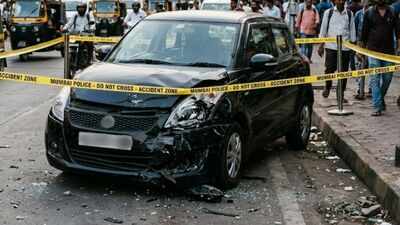











The Chhattisgarh high court has held that an insurance company cannot be made liable for an accident merely because it had received the premium beforehand, ruling that the insurance contract kicks in only from the date and time mentioned on the policy itself. The court also set aside a tribunal’s finding that had relied solely on an Aadhaar card to determine an accident victim’s age, and enhanced compensation in all three connected claims arising from the accident.What was the dispute aboutOn the night of April 19, 2019, a Tata Sumo owned by Govind Sahni and driven by his brother Gopi Sahni hit a motorcycle carrying three men. Two of the riders, Panchram Bhunjia and Bisnath Bhunjia, died. The third, Ranjit Bhunjia, survived but had his leg amputated above the knee. The families of the deceased and the injured rider filed claims before the Motor Accident Claims Tribunal, which awarded them compensation but held the driver and owner personally liable to pay it, clearing the insurance company of any liability, as per the court order.The owner’s defence was that he had arranged for the vehicle’s premium to be paid through an agent, at 4 pm on the day of the accident, and that the amount was credited to the insurer’s account by 4.35 pm, nearly six hours before the crash. He argued that since the insurer had already received the money, it could not escape liability just because the formal policy document was issued a day later, with effect from April 20.Separately, in the case of injured rider Ranjit Bhunjia, the tribunal had computed his compensation by relying on his Aadhaar card, which showed his age as 68, a figure that pushed down the multiplier used to calculate his loss of future earnings, even though his own claim petition, medical records and disability certificate all put him at around 58 to 60.Both the driver-owner and the claimants appealed to the high court, with the claimants also filing cross-objections seeking higher compensation.What did the high court sayJustice Sachin Singh Rajput held that simply crediting a premium does not make an insurer liable from that moment. Relying on Supreme Court precedent, the court said “date of issuance of insurance policy would be the relevant date for all purposes and not the date of proposal or the date of issuance of receipt.”The court also noted that the agent, who deposited the premium, was not the authorised agent of the insurance company, as admitted by him in his own evidence, and held that the insurer “cannot be held vicariously liable for any action of the agent while there is no authority upon him to act on behalf of the insurance company.”It concluded that “the contract of insurance only commenced from the date and time of issuance of the insurance policy,” which in this case was 12:01 am on April 20, about two hours after the accident had already occurred.On the age dispute, the court found the tribunal’s reliance on the Aadhaar card mistaken, noting that Ranjit Bhunjia had stated his age as 58 in his claim petition, while his disability certificate and treatment papers put it at 60. It observed that the tribunal’s finding of 68 years “does not appear to be correct” in light of a 2024 Supreme Court ruling, and fixed his age at 61-65 years instead. It also revised his disability upward from 35 percent to 60 percent, noting his profession as a carpenter demanded “physical strength and skill” that his amputation would seriously impair.The court rejected the appellants’ plea of contributory negligence, since a mere traffic violation does not prove fault unless shown to have caused the accident.Dismissing the driver and owner’s appeals, it partly allowed the claimants’ cross-objections, enhancing compensation from Rs 96,400 to Rs 3,90,800 for Ranjit Bhunjia, Rs 2,18,200 to Rs 4,26,400 for Bisnath Bhunjia’s death, and Rs 10,73,900 to Rs 21,57,800 for Panchram Bhunjia’s death, with 6 percent annual interest from February 9, 2022.