










A major data-centre campus planned beside a historic Civil War battlefield in Virginia has been abandoned after years of community opposition and legal challenges. The Prince William Digital Gateway, proposed along Pageland Lane in Prince William County, would have brought up to 37 data-centre buildings to approximately 2,100 acres near Manassas National Battlefield Park. Residents, landowners and preservation groups challenged the project’s approvals, arguing that the development threatened the area’s historic character and raised broader concerns about large-scale infrastructure. In March 2026, the Virginia Court of Appeals upheld a ruling invalidating the project’s three rezonings over defective public notices. QTS Data Centers later withdrew its appeal, ending the proposal in July 2026.
A 2,100-acre data-centre planned near Civil War history
The Digital Gateway was designed as a large-scale technology campus in rural western Prince William County. QTS Data Centers and Compass Datacenters planned to develop the site, with the proposed facilities expected to total more than 22 million square feet at full build-out. QTS planned approximately 11.3 million square feet, while Compass proposed up to 11.55 million square feet. The completed campus would have included as many as 37 buildings and represented a multibillion-dollar investment in the region’s data-centre industry.The location was a central point of the controversy. The proposed site stood beside Manassas National Battlefield Park, which preserves the landscape of two major Civil War battles: the First Battle of Manassas, also known as the First Battle of Bull Run, fought on 21 July 1861, and the Second Battle of Manassas, also known as the Second Battle of Bull Run, fought from 28 to 30 August 1862. Preservationists argued that a major industrial development next to the park could damage the historic setting and views associated with the battlefield.
Why residents and preservationists opposed it
Opposition came from local residents, landowners and organisations concerned about the proposed campus’s effect on the surrounding area. Critics raised questions about the development’s scale, its proximity to the battlefield and the possible consequences for the rural landscape. Environmental and infrastructure concerns also formed part of the wider debate surrounding the project.The American Battlefield Trust was among the groups challenging the development. Its opposition focused on protecting the historic landscape near Manassas National Battlefield Park. Residents also became involved in legal action against the county and the developers, arguing that the approvals had not followed the public-notice requirements established by law.The project had supporters as well. Developers said it would bring tens of billions of dollars in capital investment, substantial annual tax revenue and thousands of long-term jobs. The disagreement was therefore not limited to the question of construction near a historic site. It also involved competing views about economic development, land use and the future of data-centre infrastructure in Northern Virginia.
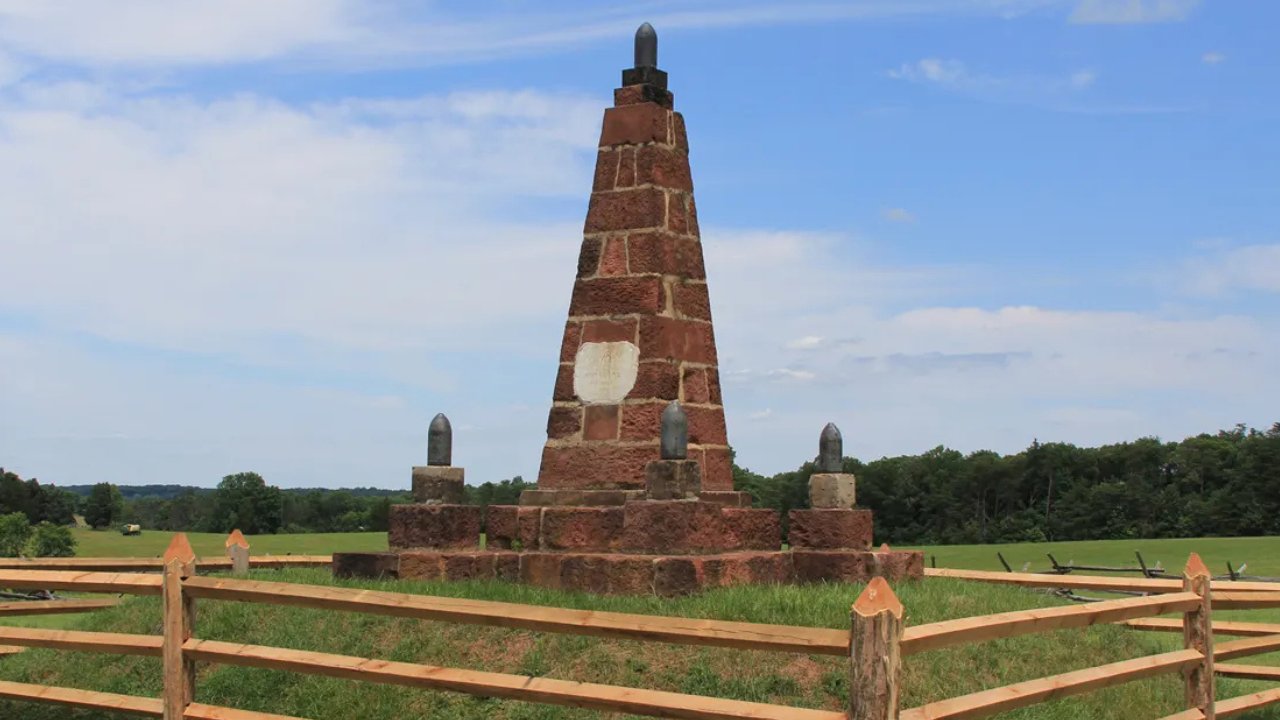
The Bull Run Monument on Henry Hill is among the nation’s earliest Civil War monuments.
County approves the project after a 27-hour hearing
The Prince William County Board of County Supervisors approved the three rezoning applications in December 2023. The decision followed a public meeting that lasted approximately 27 hours, during which residents and other participants debated the project.The rezonings were necessary to allow the proposed data-centre development on land that had previously been zoned for other uses. The approvals followed an earlier comprehensive plan amendment adopted by the county in November 2022. That amendment established a policy framework for potential data-centre development in the Digital Gateway area, while the later rezoning decisions addressed the specific properties involved in the project.Opponents subsequently filed lawsuits challenging the approvals. Their central legal argument concerned the county’s compliance with public-notice requirements before the December 2023 hearing. The case would eventually turn on that procedural issue rather than on a general legal ban on data centres near Civil War battlefields.
Lawsuits challenge the county’s public notices
In August 2025, Prince William Circuit Court Judge Kimberly A. Irving ruled that the rezonings were void because the county had failed to comply with the applicable public-notice requirements. The notices were required to be published in accordance with state law and the county’s zoning ordinance before the public hearing and vote.The case involved challenges brought by landowners, including the Oak Valley Homeowners Association, and the American Battlefield Trust. The plaintiffs argued that the deficiencies in the notices made the rezoning approvals legally invalid.The Virginia Court of Appeals upheld the ruling on 31 March 2026. The court found that the county’s advertising was deficient and affirmed the invalidation of the three rezonings. The decision concerned the legality of the approval process. It did not establish that all future data-centre proposals in the area would be prohibited.
Developers withdraw from the legal battle
Following the appeals court’s decision, Prince William County and Compass Datacenters chose not to continue their appeals. QTS initially pursued a further challenge before the Virginia Supreme Court, making it the last developer seeking to preserve a legal route for the project.QTS eventually withdrew its appeal on 2 July 2026 and announced that it would terminate the Digital Gateway project. The decision ended the proposal after years of planning, public controversy and litigation.In its statement, QTS defended the original project, saying it had advanced through years of planning, analysis and public review. The company also pointed to the investment, tax revenue and employment it believed the development would have generated. Opponents welcomed the withdrawal, with preservation groups and community organisations describing it as a victory after years of campaigning and legal action.
What happens to the land after the project’s end?
The termination of the Digital Gateway project does not permanently rule out future development proposals on the site. Prince William County said in an update published on 5 August 2026 that the three rezoning approvals were void and that the properties had reverted to their original zoning districts. The comprehensive plan amendment, however, remained in place.Any future attempt to rezone the properties would have to follow the normal application process, including review by county staff and public hearings before the Planning Commission and Board of County Supervisors. This means the end of the current project does not amount to a permanent prohibition on data-centre development in the wider area.