




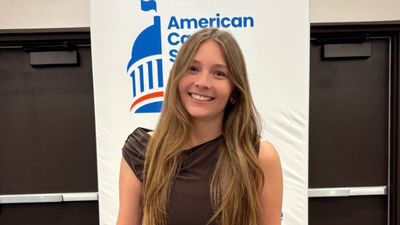
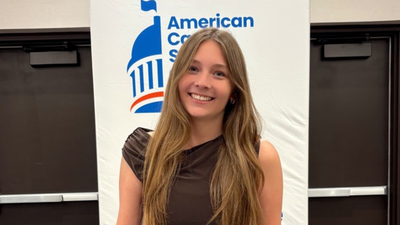
At 18, Lidia Rak has already taken her interest in cancer research beyond the classroom and into conversations with lawmakers. The Mandarin High School senior began looking at cancer data after a personal experience with an autoimmune blood condition led her to learn more about cancer risks. Her research eventually turned towards pediatric brain tumours and the possible relationship between naturally occurring radium in groundwater and reported cases in Florida. Rak then began advocating for greater attention to childhood cancer research and care. According to her school, Mandarin High School, that work also contributed to a $30 million Florida bill supporting local hospitals.
How Rak’s research began
Rak told Duval County Public Schools that her research started with leukemia and cancer data. She had been interested in blood conditions because of her own childhood diagnosis of an autoimmune blood condition, which she said increased her risk of developing cancer. While looking at cancer cases in Florida, her focus eventually shifted to brain tumours. The turning point came when she was reading research about possible cancer clusters in the Jacksonville area. The earlier work had examined whether airborne carcinogens could help explain the clusters but had not found a statistically significant connection. Rak noticed that the researchers had not examined possible waterborne carcinogens. That gap prompted her to ask a different question: could something in the water be associated with the pattern of pediatric cancer cases?She began examining available data and looking specifically at radium levels in groundwater alongside pediatric brain-tumour incidence. According to Rak’s account to her school, her analysis identified a correlation between the two. The distinction between correlation and causation is important here. Rak’s research identified a statistical relationship in the data she examined; that finding by itself does not establish that groundwater radium causes pediatric brain tumours. Her school describes the work as an environmental epidemiology study.
From student research to cancer advocacy
Rak did not stop with the research. She began using what she had found to talk about pediatric cancer funding and support. As a National Gold Together Ambassador for the American Cancer Society, she has spoken with lawmakers in Florida and Washington, DC. She told Mandarin High School that her conversations with legislators were not simply about presenting statistical figures. Instead, she tried to explain the presence of cancer clusters in the Jacksonville area and why she believed more attention should be given to pediatric cancer research and patient support.Her interest in childhood cancer is also tied to what she sees as a gap between pediatric and adult cancer care. According to Rak, she became more aware of differences in funding while working as a national ambassador for the American Cancer Society. The Barron Prize for Young Heroes also recognised this combination of research and advocacy when it named Rak among its 2026 winners. The prize described her work as an independent environmental epidemiology study examining the relationship between naturally occurring radium in drinking water and pediatric brain-tumour incidence in Florida. It also said she had used the research to advocate for increased pediatric cancer research funding.
What the $30 million bill means in her story
Rak’s advocacy has also taken her into state policy discussions. Mandarin High School reported in April that she had contributed to a $30 million Florida bill supporting local hospitals. The school described this as one of the outcomes of her work as a student researcher and advocate. For Rak, the policy work grew out of a broader concern about how pediatric cancer is researched and treated. She told her school that childhood cancer may receive less funding than adult cancers despite the long-term effects that a diagnosis can have on children.Her advocacy has therefore gone beyond her original research question. The groundwater-radium project gave her one way to examine a potential environmental factor, while her work with the American Cancer Society gave her an opportunity to discuss pediatric cancer funding more broadly.
What comes next for the 18-year-old
Rak is planning to continue both her scientific and advocacy work. She told Mandarin High School that she intends to study molecular biology in college and eventually pursue medicine, with the goal of becoming a pediatric oncologist. She also plans to remain involved with the American Cancer Society and continue working on brain-tumour research. She is also working on a book about youth advocacy. Rak said the project is aimed at young people who want to get involved but may not know where to begin. She has spoken about her own experience of finding a starting point through a volunteer opportunity and gradually becoming involved in cancer advocacy.Her story has now earned recognition beyond her school and state. The Gloria Barron Prize for Young Heroes selected Rak as one of its 2026 winners, part of a group of 25 young people recognised for projects involving service, science, health and the environment.For Rak, the research and advocacy appear to be connected by the same goal: understanding issues that affect children and finding ways to draw greater attention to them. Her groundwater research offers a specific statistical association to investigate further, while her advocacy has given her a platform to push for more discussion and funding around pediatric cancer.