








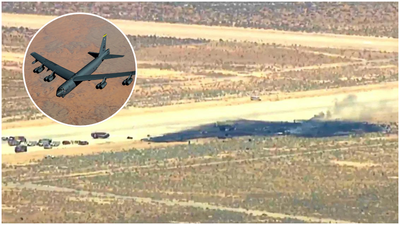
A US Air Force B-52H Stratofortress crashed shortly after takeoff at Edwards Air Force Base in California’s Mojave Desert on Monday, killing all eight personnel on board, officials confirmed.The crash has attracted added attention given the B-52 Stratofortress’s status as one of the most enduring symbols of American air power.The bomber has played a central role in multiple US military campaigns over the decades and was recently deployed as part of Washington’s operations against Iran.Against that backdrop, the loss of a B-52 during what officials described as a routine test mission is particularly striking.The aircraft type, designed in the early years of the Cold War and expected to remain in service into the 2050s, has repeatedly demonstrated its ability to undertake some of the US military’s most complex and high-profile missions.Its destruction within three minutes of take-off on home soil highlights the risks inherent in operating and modernising an ageing but strategically critical fleet, even as it continues to serve at the forefront of American military operations.“At 11.20 am (19.20 GMT) on Monday… we lost eight great Americans,” Colonel James Hayes, deputy commander of the 412 Test Wing at Edwards, said at a news conference, adding that efforts were underway to notify next of kin.
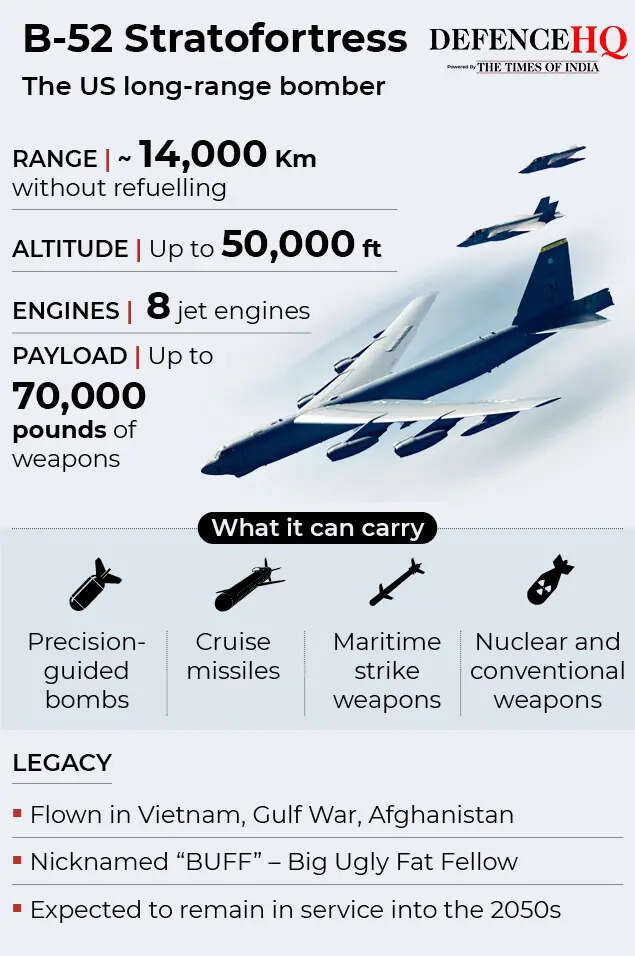
B-52 Stratofortress
Officials said the aircraft ‘burst into flames on impact,’ with aerial footage showing heavy smoke and near-total destruction of the wreckage site. The aircraft was airborne for just over three minutes, before crashing into a fireball.
Final minutes: What tracking data shows
Limited flight tracking data from AirNav Systems and multilateration-based monitoring systems provides the clearest reconstruction of the aircraft’s last three minutes.
- T+0 seconds: Aircraft takes off from Edwards Air Force Base
- Shortly after takeoff: Aircraft turns northeast
- Seconds later: Executes a sharp right manoeuvre
- Near final minute: Nearly completes a 180-degree turn
- Final phase: Rapid, uncontrolled descent begins. The bomber fell at approximately 5,056 feet per minute, according to multilateration data. This speed is nearly 10 times as fast as a plane normally descends when preparing to land.
- Impact: Aircraft crashes on/near another runway area within base perimeter
Multilateration systems do not provide precise altitude or speed but help reconstruct movement patterns.
Aircraft profile: Why this bomber matters
The B-52 Stratofortress is one of the US Air Force’s longest-serving strategic bombers, often used for long-range strike missions, nuclear deterrence capability, high-altitude bombing operations and extended endurance missions across global theatres.It has historically been deployed in multiple US military campaigns, including Cold War-era deterrence roles and modern conflicts in West Asia.Military analysts often describe the platform as a ‘workhorse’ of US strategic air power due to its longevity and upgrade cycles.After reviewing footage of the accident, the military concluded that no one could have survived, Colonel Hayes said. The cause has yet to be determined, with the investigation expected to take as long as six months.
Why did it crash? What is known so far
As quoted by news agency AP, aviation safety expert Jeff Guzzetti said the B-52’s rapid post-takeoff loss of control suggests a ‘controllability issue’ rather than pilot error.He noted possible causes include misrigged controls after maintenance, a catastrophic engine failure, or malfunction of new test equipment onboard.The immediate descent strongly points to a sudden, severe technical failure; however, nothing has been confirmed officially by the investigating authorities.