








More than 105,000 acres of England’s so-called “Ghost Woods” are set to be restored after the Rewild the Ghost Woods campaign secured £5.9 million in ongoing UK government funding. The project will target ancient woodland sites buried beneath monoculture timber plantations, in what campaigners say is a major step towards reviving some of England’s most biodiverse landscapes.The funding, secured for the period from 2026 to 2029, marks the first time the Department for Environment, Food and Rural Affairs (Defra) has committed multi-year funding specifically towards restoration on the Public Forest Estate, according to campaign group Wild Card.The funding will support the restoration of 105,000 acres of Forestry England land classified as Plantations on Ancient Woodland Sites (PAWS). The area is larger than the Isle of Wight.Nature Minister Mary Creagh confirmed the funding in correspondence with Rebecca Smith MP, outlining the government’s plans to accelerate restoration across the Public Forest Estate.She said, “Restoration of plantations on ancient woodland sites on the Public Forest Estate … is being accelerated by targeted funding from Defra. The impact of this £5.9 million targeted Defra funding for 2026-2029 is being closely monitored through the pace and outcomes of restoration, with a headline target to work towards doubling the recent rate of restoration.”The announcement follows a nationwide campaign backed by more than 147,000 people, including petition signatories, local campaigners, artists and conservation supporters.
What are England’s ‘Ghost Woods ‘?
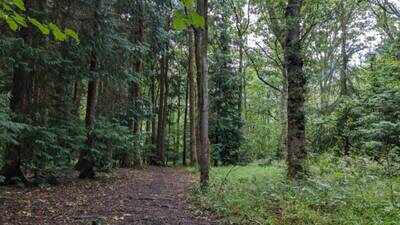
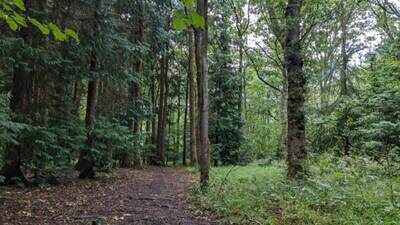
The term “Ghost Woods” refers to former ancient woodlands that were felled and replaced with commercial timber plantations, particularly during the 20th century.Following the Second World War, Britain faced a significant timber shortage. Government bodies expanded timber plantations using largely non-native conifer species to increase the country’s supply of wood.According to Wild Card, around 40% of the UK’s ancient woodlands were cut down and replaced with plantations over the 20th century.While the resulting plantations can produce timber, conservationists argue they lack the complex ecosystems associated with ancient woodland. Dense, uniform plantations can restrict light, suppress woodland flora and provide poorer conditions for many species.The underlying land, however, can retain important remnants of the original ecosystem. These include ancient woodland plants, veteran trees, naturally developed soils, fungal networks and seed banks.That makes restoring PAWS potentially more effective than establishing entirely new woodland from scratch, because elements of the ancient ecosystem may still survive beneath the plantation.
Only 1.6% of England is true ancient woodland
The campaign comes against a backdrop of growing concern over the decline of ancient woodland in England.Wild Card says only around 1.6% of England consists of true ancient woodland, while approximately 370,000 acres of former ancient woodland are classified as Plantations on Ancient Woodland Sites.Ancient woodland is generally understood as land that has had continuous tree cover since at least 1600 in England. Its ecological importance extends beyond individual trees, with long-established woodland ecosystems providing habitats for rare and threatened species.Ancient woodland is also classified by the UK government as an “irreplaceable habitat”, reflecting the difficulty of recreating the ecological conditions developed over centuries.
Forestry England manages 105,000 acres of ‘Ghost Woods’
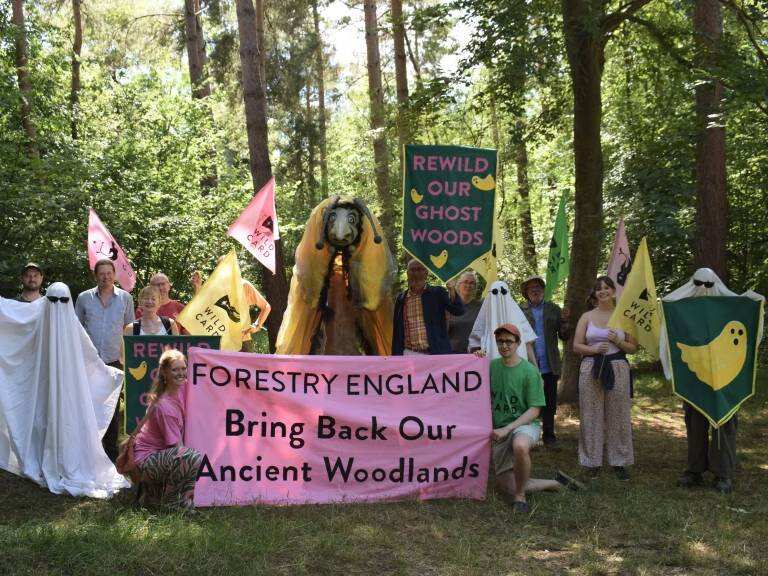
The “Rewild the Ghost Woods” campaign was backed by more than 147,000 people pushing for ancient woodland restoration. (Photo: Wild Card)
Forestry England, the largest land manager of forests and woodlands in England, controls more than 600,000 acres of land. Of this, 105,000 acres are identified as Ghost Woods, according to Wild Card.That represents around 32% of all PAWS in England.Forestry England was established in 1919 as part of the Forestry Commission, following a period when Britain’s woodland cover had fallen to historically low levels. The organisation was tasked with increasing the country’s timber resources after woodland had been heavily depleted during the First World War.Over subsequent decades, large areas of land were acquired and planted with trees for timber production.Today, Forestry England operates separately from Forestry Scotland and Natural Resources Wales, with responsibility for managing England’s publicly owned forests and woodlands.
Campaign backed by more than 147,000 people
Wild Card’s Rewild the Ghost Woods campaign attracted support from more than 147,000 people across the country.Campaign highlights included local “ghost hunts” organised by members of the public, an artistic project focused on ancient woodland and thousands of emails sent to MPs calling for dedicated restoration funding.More than 40 MPs also backed an Early Day Motion calling for greater action on PAWS restoration.The campaign culminated in an event dubbed “Slug Rising”, during which campaigners dressed as slugs gathered in London to deliver their petition to Nature Minister Mary Creagh.Campaigners said the £5.9 million commitment demonstrates what coordinated public pressure can achieve, but stressed that the funding should not be considered the end of the campaign.
What happens next?
Wild Card said it would continue monitoring how the government funding is spent and hold ministers and Forestry England to account over the restoration programme.The organisation is also watching for the government’s forthcoming England Tree Action Plan, expected later this year.The £5.9 million commitment follows an earlier one-off allocation of £600,000 to Forestry England, which campaigners argued was insufficient given the scale of restoration required.Forestry England has since committed to doubling the rate of ancient woodland restoration in its latest strategy.For conservationists, the significance of the programme extends well beyond the 105,000 acres covered by the new funding. Restoring these landscapes could help bring back native woodland species, improve biodiversity and reconnect ecosystems that were disrupted decades ago.Among the species that could benefit are ancient woodland indicators such as wood anemones, fungi and a wide range of invertebrates.