









Norway is drilling the world’s longest and deepest undersea road tunnel through fault zones and rock that keeps letting seawater in | World News

While most coverage of Norway’s Rogfast tunnel focuses on the record it will hold, the world’s longest and deepest undersea road tunnel, the real story engineers are dealing with sits underground, in rock that has spent millions of years being crushed, fractured and folded into some of the most unpredictable terrain along the entire Norwegian…

Read More

During Tanzania’s deadly 1993 drought, an elephant matriarch’s memory helped save her entire herd, while a younger leader stayed behind and more calves died | World News

During a brutal drought in Tanzania back in 1993, one elephant’s memory ended up making the difference between life and death for her entire family. Researchers tracking family groups in Tarangire National Park found that herds led by older matriarchs, elephants who had lived through droughts before, left the park entirely in search of water…

Read More

A Maya astronomer studied the movements of Venus and Mars in AD 781, and archaeologists have now discovered his name |

For centuries, the ancient Maya have been celebrated for their remarkable achievements in astronomy, mathematics and calendar-making. They tracked the movements of planets with extraordinary precision, developed one of the world’s earliest concepts of zero and created complex calendars that guided agriculture, religion and governance. Yet the brilliant minds behind these discoveries have largely remained…

Read More

Emperor penguins survive Antarctica’s brutal winters by huddling together, but a maths study reveals the hidden system behind their remarkable teamwork |

Every winter in Antarctica, emperor penguins gather in large groups called huddles to survive the cold. Temperatures can fall to -40 degrees Celsius, and strong winds make the weather even harsher. Without huddling together, these penguins would not be able to survive.But a penguin huddle is much more than a group of birds standing close…

Read More

Meet Julia Butterfly Hill: The 23-year-old woman who climbed a 1,000-year-old tree and stayed there for 738 days to save it from being cut down | World News

At 23, Julia Butterfly Hill climbed nearly 180 feet into the canopy of a towering 1,000-year-old redwood in northern California, expecting to spend only a few days there as part of an environmental protest. Instead, the ancient tree, known as Luna, became her home for the next 738 days. Living on two small wooden platforms…

Read More

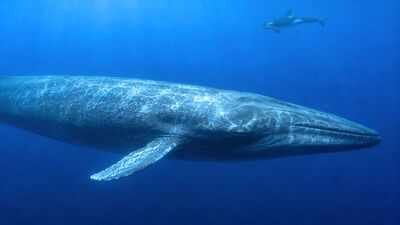
Scientists have finally explained why killer whales struggle to hear blue whales, and the answer may have helped the giants survive for millions of years |

Whales are well known for their songs. But scientists have discovered that, for some whales, those songs may also help them stay alive. A researcher from the University of Washington has found that some baleen whales, including blue, fin and minke whales, have evolved to sing at such low frequencies that killer whales, their only…

Read More

Germany’s fossil-rich limestone has revealed prehistoric giants for centuries, but scientists have now uncovered a previously unknown flying reptile that lived 150 million years ago | World News

In Germany, Scientists have found a new species of ancient flying reptile. It comes from a new scientific study of a flying reptile that lived about 150 million years ago during the Late Jurassic period. The fossil was found in the ancient and fossil-rich rock layer in southern Germany. This area is already very famous…

Read More

China’s 125-million-year-old dinosaur fossil reveals preserved skin, strange spikes and a previously unknown species |

Fossils often preserve bones well enough to reveal the shape of an ancient animal, but traces of soft tissues are much less common. That is why a newly described dinosaur from north-eastern China has drawn such close attention from palaeontologists. Dating back around 125 million years to the Early Cretaceous period, the specimen offers more…

Read More

40-gram, palm-sized AI micro-drone kills a flying insect autonomously in mid-air for the first time. Now it could eradicate mosquitoes and save thousands of lives |

A palm-sized AI drone weighing just 40 grams has achieved an engineering first by autonomously hunting and killing a flying insect in mid-air, paving the way for a new approach to mosquito control. Developed by US startup Tornyol, the tiny drone successfully detected, tracked and intercepted a flying moth during a controlled indoor demonstration without…

Read More