




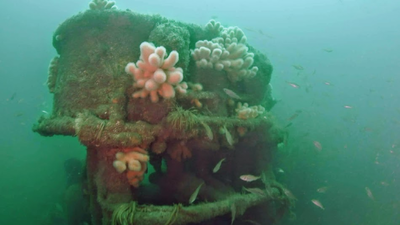
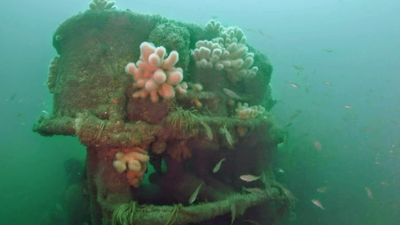
No matter the oceans it crosses, a ship always finds a home at sea. One such vessel is the 197-foot MV Shingle, a ship that was intercepted for carrying 32 million illegal cigarettes while travelling from Slovenia toward Drogheda, Ireland, according to RTÉ. Now, 12 years later, the ship has found a second life at the bottom of the sea where it has become the abode of numerous creatures.Following legal proceedings, the Moldovan-registered Shingle was taken under control by Irish authorities who initially hoped to sell it. But the vessel contained rust and asbestos, and scrapping it was deemed too expensive. Instead, the Shingle remained tied up at Dublin Port for roughly nine years.Berthing fees and remedial work ultimately cost more than €2 million, approximately $2.24 million based on current exchange rates, before the vessel was eventually prepared for a completely different fate. In 2024, the ship was cleaned in accordance with regulations and deliberately sunk about 2.5 miles offshore in Killala Bay on Ireland’s northwest coast. Now, the vessel sits 98 feet beneath the surface, where marine life is beginning to take over it, creating an artificial reef and new diving attraction. Underwater footage has revealed that barnacles, sponges, sea squirts and fish are gathering on and around it.“What we were trying to do originally when we said we were going to sink this artificial reef … was really to improve diving but also biodiversity,” Councillor Michael Loftus of the Killala Bay Ships to Reef Group told RTÉ. Now, two years later, the group is already seeing results. “We’ve been very fortunate that we’ve seen the results of it with the fish life on the wreck,” he said, adding that porpoises and dolphins have also been seen in the bay.“It’s quite impressive to be honest,” Dr Jose Maria Fariñas-Franco, a marine ecologist at Atlantic Technological University, told RTÉ. “I could see … a lot of growth for the time period that the wreck has been in the water.” Some sections of the ship remain relatively bare, while others are further along in the colonisation process. Fariñas-Franco said barnacles and worms are among the first organisms to settle on structures like the Shingle, followed by species such as sea squirts.As more organisms move in, they can create food sources for other animals. “All this sea life actually increases the availability of food for other species, and that’s why you see all the fish attracted to the wreck,” Fariñas-Franco said. He added that deliberately sinking ships should not be the default way to dispose of them, but when properly managed, he said artificial reefs can create additional habitat and boost biodiversity.“Artificial reefs become like real estate in marine areas,” he explained. “So, any animals that live in the system will settle on it and start growing and attracting other species.” He noted that the Shingle will not become the same thing as a naturally occurring reef, and its transformation will take time.As hoped, the wreck is attracting human visitors too. Anna Connor, head of the Ballina Municipal District with Mayo County Council, told RTÉ that the project is drawing visitors throughout the year rather than only during Ireland’s peak summer tourism season. “We’re seeing about 12,000 visitors per annum, which is quite significant,” she said.Still 30 meters beneath the surface, the transformation of the former smuggling ship is still underway. “In ecological terms, in nature, things take time,” Fariñas-Franco said.