









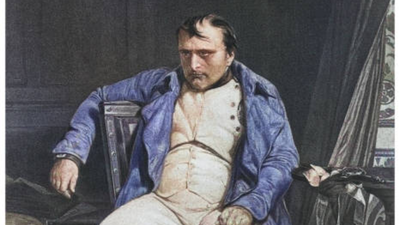
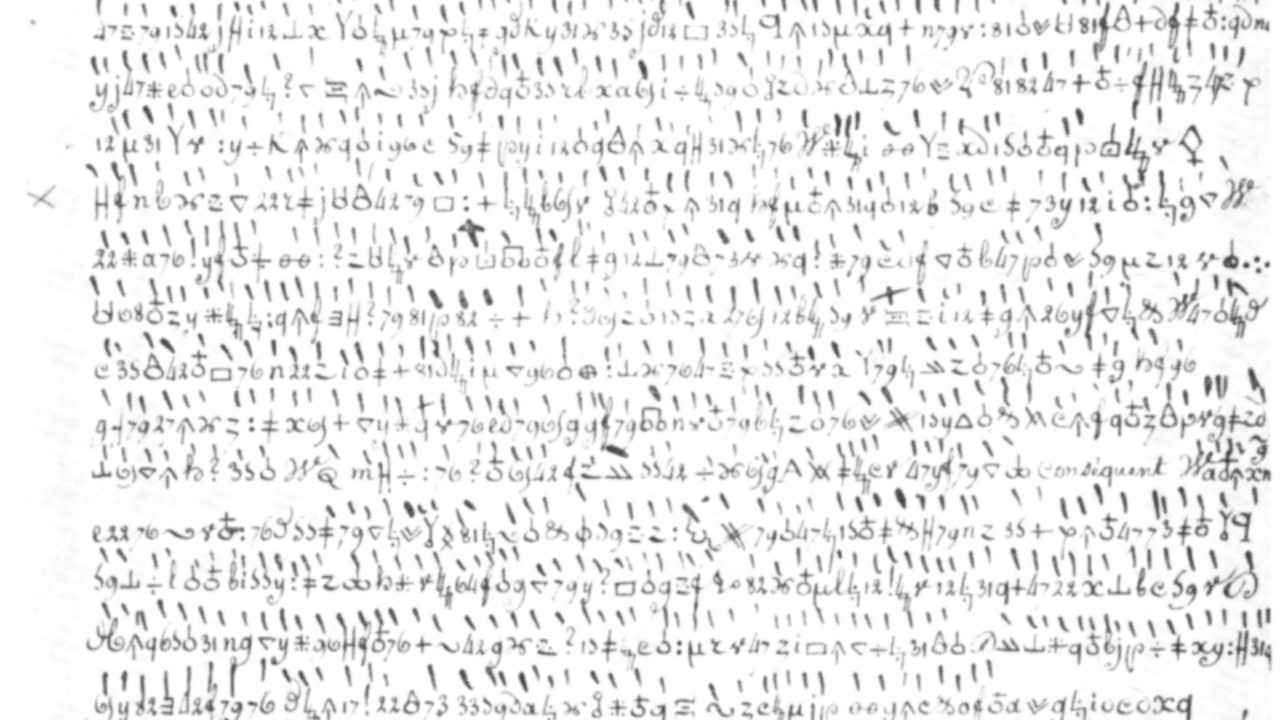
A coded military message ordered by Napoleon Bonaparte in 1809 remained unread for 217 years because its cypher key had been lost. But now, an AI engineer has used OpenAI‘s GPT-6 Astra to reconstruct and decipher the message, revealing details about French and allied troop positions on the eve of Napoleon’s war with Austria, according to reports by Live Science and The Times.The breakthrough was achieved by Carter Church, an AI engineer at cybersecurity company SentinelOne, who said the AI completed roughly six hours of model execution on the problem. However, the six-hour figure needs context: Church worked on the project over several evenings and gave the AI more than just the historical image, including existing cryptographic research and historical material.The document dates to March 1809, when Austria was preparing to go to war with Napoleon’s France. The message was intended for General Auguste de Marmont, who was stationed with French troops in Dalmatia, in territory corresponding to parts of present-day Croatia. Napoleon instructed his stepson, Eugène de Beauharnais, then Viceroy of Italy, to send Marmont a coded account of the positions of French and allied forces. Napoleon’s March 16 instructions specifically called for the information to be sent “in cypher” by a reliable officer.That distinction matters because the surviving document begins with a line of ordinary French before switching to the mysterious code. The encrypted section contains about 1,300 symbols or cypher units, made up of numbers, letters and invented signs. Researchers had known about the document for decades, but its original key was missing.The surviving image itself was not a newly discovered manuscript. According to Church’s account, the publicly available copy was a low-resolution scan published in 1969 in a French military-history journal. The document contained roughly 155 different signs, with some letters represented by multiple interchangeable symbols, making it a form of homophonic substitution cypher.Church came across the document while looking for an old cypher that could be used to test the capabilities of a modern AI system. He fed GPT-6 Astra the image and asked it to work on the problem. The model first had to identify and transcribe the unusual symbols. It then began searching for clues that could connect the document to earlier cryptographic research.That step proved critical. During its research, Astra located a partial cypher table compiled by cryptology historian Daniel Tant. The table identified the meanings of 33 symbols, accounting for roughly a third of the coded material. Church said the table had not previously been connected to the particular Marmont document. The AI recognised the possible connection and applied the partial key to the surviving cypher.From there, the system used a combination of historical information, language patterns and computational trial and error to work through the remaining symbols. Reports describe the process as involving simulated annealing, a computational technique that tests many possible solutions and searches for combinations that produce increasingly coherent results.
The message was intended for General Auguste de Marmont, who was stationed with French troops in Dalmatia
The decoded message was essentially a military briefing. It listed the positions and strength of French and allied forces and contained information about Russian troops moving against Austria. The message also attempted to reassure Marmont about the military situation and instructed him not to be intimidated by opposing forces when the order to march arrived.One translated passage tells Marmont that Austria would be attacked from all sides and was therefore moving towards its defeat, before telling him not to be intimidated by relatively small enemy forces or what the message calls a gathering of “rabble”.The newly decoded material does not, however, appear to contain a spectacular secret that fundamentally changes historians’ understanding of Napoleon’s campaign. Michael Rowe, a researcher in European history at King’s College London, told Live Science that the result was “impressive”, but noted that historians already had access to Napoleon’s correspondence describing what the coded message was supposed to contain. That correspondence provided an unusually valuable way to check whether the AI’s reconstruction made historical sense.Rowe compared the situation to “a kind of Rosetta Stone”, because researchers had an independent description of the expected contents against which the AI-generated solution could be tested. He also cautioned that the success should not automatically be taken to mean AI can reliably decode every unknown historical script or cypher.Historian Zack White, a research fellow at the University of Portsmouth, also described the work as an interesting use of artificial intelligence. He told Live Science that cyphers were essential to Napoleon because intercepted correspondence could provide France’s enemies with valuable military intelligence. White also pointed to an intriguing discrepancy in the newly decoded material. The message appears to refer to troop numbers that do not entirely match the forces Napoleon actually had available. According to White, Napoleon had about 60,000 fewer troops than the figure suggested in the message, raising questions about the intelligence available to French commanders at the time. He said historians would need to place the AI’s reconstruction within the wider historical record rather than treating the decoded text as an isolated revelation.Church himself has been cautious about presenting the feat as something no human could have accomplished. He told Live Science that the cypher was not necessarily an extraordinarily difficult one for professional cryptographers. The challenge was the amount of specialised time and effort required to combine transcription, cryptanalysis, historical research and verification. He argued that many fields have an “unsolved backlog” of niche problems that specialists simply do not have enough time to investigate.The result has nevertheless been independently scrutinised. Satoshi Tomokiyo, a patent engineer and cryptographer who maintains the historical-cypher website Cryptiana, reviewed Church’s proposed solution and subsequently listed the Marmont cypher as solved. Church has also made the reconstructed key, transcription and supporting code available so that others can examine and reproduce the work.The timing gives the discovery an additional historical significance. The message was sent shortly before Austria launched its 1809 campaign against Napoleon. The resulting War of the Fifth Coalition culminated in the French victory at the Battle of Wagram in July 1809.More than two centuries later, a document created to prevent Napoleon’s military plans from falling into enemy hands has become an unusual test of modern artificial intelligence. The message itself may not have contained a lost secret capable of rewriting Napoleonic history. But its recovery demonstrates something potentially important for historians: a document once considered too obscure, difficult or time-consuming to decode can now be approached using AI alongside traditional cryptography and historical research. As Rowe told Live Science, the real significance may lie in what happens when the same methods are applied to historical documents whose contents are not already partly known.