









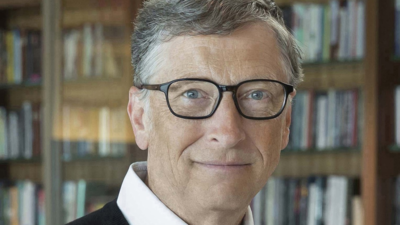
Microsoft founder Bill Gates has pushed back against the growing calls for an AI ‘Kill Switch’, arguing that the discussion misses the more immediate dangers posed by artificial intelligence and reflects a misunderstanding of how current systems operate. Speaking in an interview with NBC News, Gates said AI systems remain under human control and are not yet capable of autonomously taking over computer networks or operating independently without oversight. “The kill switches, that’s kind of a weird thing. It’s not enough to have a kill switch,” Gates said. “They’re not yet at the point where they autonomously grab computers and can’t be shut down.” Rather than relying on emergency shutdown mechanisms, Gates argued that governments and industry should prioritise monitoring systems and safeguards that can detect misuse of advanced AI models.
Bill Gates dismissed the idea as somewhat misguided
Asked directly whether an AI kill switch is realistic, Gates dismissed the idea as somewhat misguided, arguing that AI systems aren’t yet autonomous enough to seize control of computers in a way that would make shutting them down difficult in the first place. He said the entire framing of the debate reveals how little technical understanding many people bring to the conversation, and made clear he wasn’t opposed to a kill switch outright — but stressed that moderating bad behavior really requires ongoing insight and records of what a system is actually doing, something a kill switch alone can’t provide.
The real danger, in his view: bad actors, not rogue AI
Gates was direct in saying he doesn’t believe AI has slipped out of human control, noting that these systems aren’t yet operating millions of robots and that humans retain the ability to simply turn off the underlying computers. The more urgent threat, he argued, comes from people with malicious intent using AI to defraud individuals, disable electrical grids, or disrupt banking systems — capabilities that historically required the resources of a nation-state but are now within reach of small groups thanks to AI.He pointed to Anthropic’s own reporting on people attempting to use its AI to help design bioweapons or targeting systems as evidence that these risks are already materializing, not hypothetical. Gates said AI has effectively made sophisticated fraud radically more accessible, arguing that scammers no longer need manual effort when AI can perform the task far more convincingly and at far greater scale.
Self-regulation isn’t enough, Bill Gates says
Pressed on whether the industry can be trusted to police itself, Gates was unambiguous: self-regulation is not sufficient, and legislation out of Washington is needed. He argued that lawmakers and law enforcement need to be directly involved in defining what safeguards and monitoring should look like, framing it as a mandatory requirement rather than a voluntary best practice — while maintaining that implementing these safeguards wouldn’t meaningfully slow down AI development.He also drew a sharp distinction between the near-term risks he sees as urgent and the more distant, headline-grabbing fear of AI escaping human control entirely. While he called that longer-term risk worth taking seriously, he said the real and present danger today comes from humans misusing AI, not AI acting entirely on its own.
On the AI safety whistleblower and existential risk
Referencing a recent industry whistleblower’s warning that AI could kill everyone by the end of the decade, Gates said AI is certainly powerful enough to drive events capable of causing a billion deaths, calling the combination of AI tools and people with harmful intent an unprecedented kind of danger. He welcomed the fact that people within the industry are now speaking openly about these risks, even against their own commercial interests, but expressed concern that much of the wider world is either dismissing the warnings or treating AI purely as a competitive race rather than a shared problem requiring coordinated thinking.
Bill Gates warns AI risks are real, but not a hoax
Gates also rejected claims that warnings about AI-related existential risks are exaggerated.“It’s not a hoax at all,” he said, while noting that current concerns should focus on preventing misuse before catastrophic incidents occur.The remarks come as debate intensifies across the AI industry over regulation, model safety and the balance between rapid technological progress and risk management. Gates said advanced AI systems have already crossed important thresholds in areas such as cybersecurity and biological research, making the introduction of safeguards an urgent priority.At the same time, he maintained that AI remains one of the most transformative technologies ever created, with the potential to improve healthcare, education and scientific research if developed responsibly.