







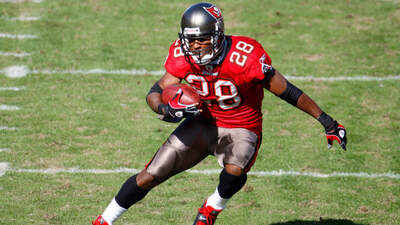
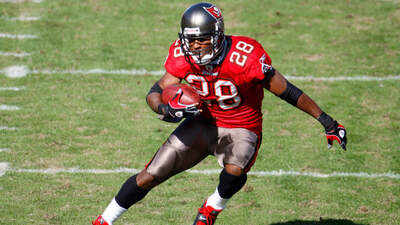
For Warrick Dunn, becoming an NFL player was never only about football. In 1997, during his rookie season with the Tampa Bay Buccaneers, he turned a painful family memory into a mission that would last for decades. His mother, Betty Smothers, had dreamed of owning a home but died before she could see that dream come true. Nearly three decades later, Dunn’s Homes for the Holidays programme has furnished 252 homes and helped 687 people move into them.
Warrick Dunn turned his mother’s dream into a mission
Dunn was only 18 when his mother was killed in 1993. Smothers was a single mother raising six children while working as a police officer in Baton Rouge, Louisiana. Her death left the family facing an enormous loss, but it also left Dunn with a lasting understanding of what his mother had wanted for her children.She had dreamed of giving her family a home where they could have their own rooms, make memories and grow up with a sense of stability. After her death, Dunn used her life insurance to help the family purchase a home, turning part of her dream into reality.That experience stayed with him when he entered the NFL.The Tampa Bay Buccaneers selected Dunn with the 12th overall pick in the 1997 NFL Draft. During his first season, coach Tony Dungy encouraged players to become more involved in their communities. Dunn took that message personally. Instead of waiting until his career was established, he decided to act immediately.Dunn launched Homes for the Holidays in Tampa that year. The first effort helped three families move into their first homes around Thanksgiving. The moment changed the way he viewed his own success.“When I saw their reactions, it’s like, Wow, man, I just changed somebody’s life,” Dunn said. “I was like, I want to do this again.”He did exactly that.
Homes for the Holidays gives single parents more than a house
The programme’s purpose has always gone beyond handing over keys. Warrick Dunn Charities works with local affordable housing providers to identify single-parent families who are purchasing their first homes.The charity does not provide the house itself. Instead, it helps turn that house into a home.Families can receive down-payment assistance, while volunteers furnish and decorate the property. That can include beds, furniture, kitchen supplies, food and even practical items such as lawn equipment and toothbrushes. The goal is to remove some of the financial pressure that comes with starting a new chapter.That distinction matters. A first home can bring a sense of security, but moving into an empty property can still create another financial burden. Dunn’s programme addresses that gap.The charity describes its approach as a “hand-up” rather than a handout. Families must be actively working to support themselves, and the programme works alongside community partners to help them achieve greater stability.The idea also reflects what Dunn learned from his own childhood. His family received support from the Baton Rouge community after his mother’s death. Dunn has spoken about how that generosity shaped his belief that people should help their neighbours when they have the opportunity.
Warrick Dunn’s charity has now furnished 252 homes
What began with three families in 1997 has grown into a nationwide effort.Warrick Dunn Charities currently lists 252 homes furnished and 687 people in homes, with more than $5 million in donations supporting its work. The organisation says Homes for the Holidays has operated across dozens of markets and continues to focus on single-parent families.The programme reached another major milestone in 2025 when Warrick Dunn Charities celebrated its 250th Homes for the Holidays recipient. The organisation also marked the programme’s 28th anniversary that year.Its current impact figures show how far the original idea has travelled. The charity also reports more than $1.26 million in down-payment assistance and says 95% of its families remain in their homes.Those numbers offer a different way to measure Dunn’s legacy. His NFL career lasted 12 seasons, included three Pro Bowl selections and earned him the 1997 AP Offensive Rookie of the Year award. Yet the work that began during that rookie season has continued long after his playing days ended.
Warrick Dunn’s NFL legacy reaches far beyond football
The impact of stable housing can extend beyond the parent who receives assistance. Dunn has said that helping parents also creates opportunities for their children to grow up in a more secure environment.Sports Illustrated previously reported that hundreds of children had benefited from the programme and highlighted research commissioned by Dunn’s organisation suggesting that children in stable homes can experience improvements in school attendance, academic performance and participation in activities.One of those children was Deshaun Watson. Dunn’s organisation helped Watson’s family by furnishing their home after they had worked with Habitat for Humanity. Watson later became a Clemson star and eventually entered the NFL.Dunn’s charitable work has also expanded beyond housing. Warrick Dunn Charities now supports programmes focused on education, financial empowerment, health and wellness, and community support.But Homes for the Holidays remains the heart of the story.Dunn entered the NFL carrying the memory of a mother who worked tirelessly to provide for her children. During his first season as a professional football player, he could have focused solely on establishing himself in the league. Instead, he used his new platform to help other families experience something his mother had wanted for her own.Twenty-nine years later, the numbers have grown far beyond those first three homes. But the idea remains remarkably simple: give a family a place to build memories, and give parents a chance to create the future their children deserve.That is the part of Warrick Dunn’s NFL story that never needed a scoreboard.