









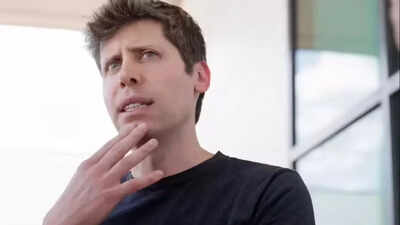
In 2005, Sam Altman left Stanford University at the age of 19 to build a startup. More than two decades later, he returned to the campus as the CEO of OpenAI, with a prediction that could change how today’s students think about their education, careers and future workplaces.Speaking at TreeHacks, Stanford’s student hackathon in February 2026, Altman told an audience of more than 1,000 students that those currently in their second year could graduate into a world with artificial general intelligence (AGI). His message was not simply about learning to use artificial intelligence, but about rethinking what people can build when AI becomes capable of doing much more.
Sam Altman’s prediction for Stanford students graduating in 2028
Addressing the students at the opening ceremony of TreeHacks, Altman made a prediction that placed the arrival of AGI within their university years.“If you are a sophomore now, you will graduate into a world with AGI in it,” he told the audience.For students still deciding what to study, which skills to develop and what kind of work to pursue, the statement presented a different way of looking at the next few years.Rather than treating AI as another technology to incorporate into existing jobs, Altman argued that students should consider what becomes possible when the limitations that shaped traditional industries begin to disappear.The question he posed to the audience was: “What is possible now with AI that wasn’t possible at all before?”The distinction matters. Making an existing process faster or cheaper is one kind of innovation. Creating something that could not have existed previously is another.
Why Altman believes AI could change how companies hire
One of the more striking predictions in Altman’s talk concerned the future of the workplace.He suggested that within about two years, companies could begin hiring AI coworkers, rather than treating AI solely as software used by human employees.Under this scenario, organisations would have to rethink how teams are structured, how work is divided and what employees are expected to contribute.For students preparing to enter the workforce, the implications could extend beyond learning to operate AI tools. They may need to understand how to work alongside AI systems and identify opportunities that emerge when some tasks can be handled by non-human coworkers.Altman compared the moment to the arrival of the iPhone. The major opportunities, he argued, came not simply from adapting existing software to a smaller screen, but from creating services that became possible because smartphones combined cameras, GPS and internet connectivity.His argument is that AI could create similar opportunities across industries, including areas where existing business models were built around limitations that may no longer apply.
From a Stanford dropout to the CEO of OpenAI
Altman’s own career provides a backdrop to his message.He studied computer science at Stanford for two years before leaving in 2005 to build Loopt, a location-based social networking startup. The company was eventually sold for a reported $43 million.In 2014, he returned to Stanford to teach CS183B, a course on how to start a startup. The 20-lecture course was made available online for free and became a widely circulated resource for aspiring entrepreneurs.A decade later, he returned to the university as OpenAI’s CEO, discussing the opportunities and limitations of building on existing AI models.His February 2026 appearance at TreeHacks marked another return to the campus, this time with a prediction about the technology students could encounter by the time they graduate.
The lesson for students: Build what AI makes possible
Altman also described the early thinking behind OpenAI’s approach to artificial intelligence.“We just thought, scaling deep learning seems to matter. Let’s push on it as far as we can and see what happens,” he said, describing the approach that drove the organisation’s early work.He characterised the progress that followed as “miracle after miracle”, adding that the underlying approach felt like discovering a new law of physics.For students, the central idea running through his talk was to look beyond applying AI to existing workflows and explore entirely new possibilities.Whether his prediction about AGI arriving within two years comes true remains to be seen. But for the Stanford students listening in February, his message was clear: the technology they graduate into could look very different from the one they entered university with.Disclaimer: This article is based on the account of Sam Altman’s TreeHacks address provided in the source material. TOI Education has not independently verified the statements or predictions attributed to him.