






When New York farmer Tony Emmi agreed to lease 30 acres of productive farmland for a solar project in 2023, he knew the decision would be controversial. The Baldwinsville farmer had spent years working land that had been in his family since the 1940s, yet rising labour costs, uncertain farm economics and the difficulty of finding workers made guaranteed income increasingly attractive. Three years later, Emmi says the solar lease pays roughly $1,500 to $1,800 per acre each year, with no property taxes deducted from that income. Spectrum News reports that the arrangement helped diversify Emmi Farms, even as Emmi acknowledges that the land was “really good farmland.” His choice captures a growing New York debate: how can the state expand renewable energy while protecting the soils needed for food production?
A farm under pressure
Tony Emmi farms approximately 300 acres of fruits and vegetables in Baldwinsville, New York. His family has operated Emmi Farms since the 1940s, giving the land both financial and personal importance.Farming, however, has become increasingly difficult. Labour costs have risen, local workers can be difficult to find and the federal H-2A programme adds administrative and financial pressure for farms that depend on seasonal labour.Fruit and vegetable growers face another challenge because their products are perishable. Farmers cannot always wait for better market conditions. Once crops are ready, they often have to accept the available price or risk losing the harvest.Emmi told Spectrum News in 2023 that the farm tried to cover its costs but found the situation increasingly difficult. Labour was one of the biggest challenges, particularly when the farm needed workers for planting, harvesting and other time-sensitive tasks.The solar lease offered a different kind of income. Instead of depending on weather, crop prices and seasonal labour, part of the farm could generate a predictable annual payment.
The decision to lease 30 acres
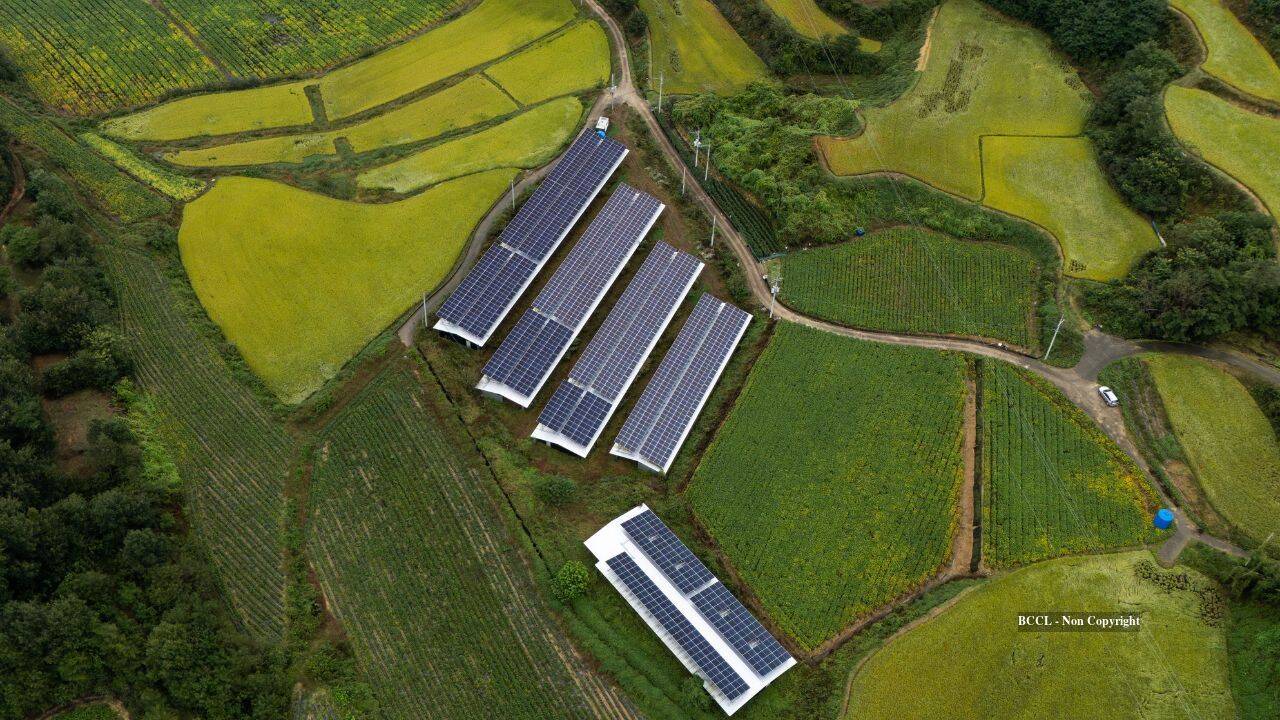
Representative image
In 2023, Emmi chose to lease 30 acres to a solar company.The land was not poor or unusable. Emmi acknowledged that it was productive, tillable farmland, which made the decision emotionally complicated.He told Spectrum News that his main regret was that the site had been “really good farmland.”That comment captures the tension at the centre of the solar debate. Solar developers often prefer land that is flat, cleared, accessible and well-drained. Those same characteristics make land valuable for agriculture.A solar company may see an efficient location for panels and electrical connections. A farmer may see soil capable of producing vegetables, fruit or other crops for decades.The landowner must weigh those competing uses against the economic realities of continuing to farm. For Emmi, leasing a portion of the property allowed him to retain the rest of the farm while creating another source of revenue.The decision was not presented as a rejection of agriculture or renewable energy. It was a financial strategy intended to help the family business survive.
The income from the solar lease
Emmi initially told Spectrum News that the solar field would generate approximately $1,000 per acre, more than he expected to earn by farming the land.By 2026, he described the rough annual figure as between $1,500 and $1,800 per acre, with no taxes deducted from the payment, as per the report.Across 30 acres, that would amount to roughly $45,000 to $54,000 in annual lease income based on the figures Emmi provided.That kind of guaranteed revenue can make a major difference for a farm facing unpredictable costs. It can help pay for equipment, cover labour expenses, support other fields or provide financial stability during poor growing seasons.Crop income can vary widely from year to year. Yields may decline because of weather, pests or disease, while prices can fall because of market conditions. A solar lease provides a contractually defined payment that is not directly tied to the success of a particular harvest.The income is attractive precisely because it reduces uncertainty. For a farm operating on narrow margins, predictable cash flow can be as important as the total amount earned.
Why prime farmland is being targeted
The qualities that make land valuable to farmers can also make it attractive for solar development.Solar projects generally need land that is relatively flat, open and accessible. Developers often prefer areas with nearby roads, transmission lines and electrical infrastructure.Prime farmland frequently meets those conditions. It may have been cleared for generations, have good drainage and offer relatively easy access for construction equipment.Brian Reeves, an Onondaga County farmer and chair of the county’s Farmland and Agricultural Protection Board, told Spectrum News that those characteristics create a difficult contradiction. Well-drained, level land without trees is ideal for farming, but it can also be ideal for solar panels.Reeves supports renewable energy but believes solar projects should prioritise poor-quality, rocky or less productive soils when possible.His concern is that replacing the best agricultural land with solar fields could create food-production problems in the future, even if the projects help reduce carbon emissions today.
The scale of New York’s solar expansion
New York has set ambitious renewable-energy goals, and solar power is a major part of its strategy.Spectrum News reported that the state had surpassed eight gigawatts of distributed solar and was ahead of schedule for its goal of reaching 10 gigawatts by 2030.Meeting climate targets requires building additional renewable-energy infrastructure. Solar fields must be located somewhere, and land availability becomes an important part of the policy debate.According to NYSERDA figures cited by Spectrum News, more than 20,000 acres of solar projects had been built across New York over the previous 15 years. That represented about 0.3 per cent of the state’s approximately 6.5 million acres of farmland.The percentage is relatively small at the statewide level, but totals can feel different locally. A solar project may occupy only a fraction of New York’s agricultural land while still changing the character of a particular farming community.For farmers near a proposed development, the issue is not only the statewide percentage. It is whether the project would occupy productive soils, divide working fields or influence the future value of nearby farmland.
Solar as farm diversification
Emmi sees the solar field as a way to diversify his farm’s income.Diversification is a familiar strategy in agriculture. Farmers may grow several crops, sell directly to consumers, add agritourism activities or lease land for another purpose.By leasing 30 acres for solar, Emmi can continue farming much of the remaining property while receiving a stable payment from the solar installation.The approach may help reduce dependence on perishable crops and seasonal labour. It also gives the farm another source of income that does not require planting, harvesting or finding workers.For some farmers, that financial stability may help keep the broader farm in family ownership. A lease can provide money for equipment, repairs or operating expenses without requiring the entire property to be sold.However, diversification through solar does change the land’s use. A field covered with panels is not producing crops during the lease period, even if the arrangement is reversible later.The decision therefore offers financial protection while also contributing to the gradual conversion of agricultural land to energy infrastructure.
The long-term question of food production
The debate is not simply about whether solar power is good or bad.Solar energy can help reduce dependence on fossil fuels and support the state’s climate goals. Farmland can produce food and maintain rural economies. In some places, the two uses can coexist through agrivoltaic systems, where crops or grazing occur beneath and between elevated solar panels.But not every site is suitable for both activities. The design, soil, crop type, panel height, access and local climate all affect whether agricultural production can continue.Reeves worries that decisions made today could create a shortage of food-producing land years from now. He told Spectrum News that people might eventually look back at large solar expansion and realise that too much productive farmland had been removed from agriculture.The concern is difficult to measure because farmland is lost for many reasons, including housing, roads, warehouses and other development. Solar projects may represent only one part of the pressure, but they are increasingly visible because they occupy large, open areas.The policy challenge is to balance immediate energy needs with long-term food security.
Other development pressures
Solar is not the only threat facing New York farmland.Onondaga County is preparing for population growth associated with Micron’s planned semiconductor manufacturing project. The development is expected to bring tens of thousands of jobs and increase demand for housing, childcare, roads and other services.In 2023, Emmi said he expected pressure for additional residential development once Micron’s project began. He believed farms could face increasing demand from developers seeking land for homes and supporting infrastructure.That pressure can be more permanent than a solar lease. Housing and industrial development often remove agricultural land from production indefinitely.The choice facing farmers is therefore broader than solar versus crops. They may be deciding between continuing to farm under difficult conditions, leasing land for renewable energy, selling land to developers or transferring it to another farmer.Economic uncertainty can make a guaranteed lease attractive even when the farmer is concerned about losing productive soil.
Farmland protection programmes
New York and local governments have programmes designed to preserve agricultural land.Under a conservation easement, a landowner may receive financial support in exchange for giving up development rights. The land remains available for agriculture or open space, while housing and other forms of development are restricted.David Skeval of Cornell Cooperative Extension in Onondaga County explained that New York can purchase development rights from farmers and place the land under a conservation easement.Onondaga County has preserved approximately 12,000 acres through conservation easements, according to information cited by Spectrum News. The state has also increased support for its Farmland Protection Program, which has preserved more than 138,000 acres of prime farmland.These programmes address one part of the problem by preventing permanent development. They do not necessarily stop landowners from leasing property for solar, depending on the terms of the easement and local regulations.The existence of protections also does not eliminate economic pressure. Farmers still need viable incomes, and preservation programmes must be strong enough to compete with offers from developers and energy companies.
Reversible does not mean consequence-free
Solar leases are often described as reversible because panels and equipment can eventually be removed.A solar field may have a defined lease term, after which the landowner can restore the property to agricultural use. That’s different than housing or industrial development which can permanently change the land.But it may be hard to bring back. Heavy equipment can compact soil, construction can alter drainage and underground infrastructure may affect future cultivation.The quality of the decommissioning plan is important. A strong agreement should address who pays for removal, how soil is restored and what happens if the solar company changes ownership or stops operating.The time the land is covered by the panels also affects agriculture. A field that remains out of production for decades loses opportunities to grow food during that period, even if it can eventually return to farming.Die vorübergehende Dauer der Pacht macht es für Emmi vielleicht akzeptabler. For critics, the immediate loss of productive land still matters, especially if many farms make similar choices.
The rise of agrivoltaics
Some researchers and developers are exploring ways to combine solar energy with agriculture.Agrivoltaic projects can set up panels high enough for crops, livestock or farm machinery to work beneath them. In some cases, partial shade can benefit certain crops by reducing heat stress and water loss.Grazing animals such as sheep may also help manage vegetation around solar panels while generating agricultural income.These systems do not work everywhere. Crops require different amounts of sunlight, panels can complicate machinery access and the economics may not match a conventional solar field or traditional farm.Still, agrivoltaics offers a possible compromise for landowners who want renewable-energy income without ending all agricultural activity.The approach could be particularly valuable on productive soils, provided that the design preserves soil health and supports genuine agricultural use rather than simply placing a few animals among panels.
A personal decision with statewide implications
Tony Emmi’s choice affects 30 acres, but it reflects a much larger policy question.A farmer who leases land for solar may be protecting the financial future of a family business. A neighbour may see the same decision as part of a gradual decline in local food production.Both perspectives can be valid. Farmers face immediate financial pressures that policymakers and critics cannot ignore. At the same time, productive soils are a limited resource that may become more valuable as the population grows and climate conditions change.Emmi has said he shares concerns about farmland, yet he decided that diversification was necessary. His position illustrates the complexity of the debate. Supporting agriculture in principle does not always mean that a farmer can afford to reject a reliable lease.The solution may require better siting rules, stronger farmland protections, incentives for solar on rooftops and parking lots, and support that makes farming financially viable.
What the future may bring
New York’s clean-energy goals will require more solar development, but the location of that development will remain contested.Officials and developers will need to consider soil quality, drainage, wildlife, grid access, community views and the future of local agriculture. Poor-quality or previously disturbed land may be preferable where it can support solar without removing productive fields.Farmers will continue to evaluate leases based on their own costs, risks and family plans. For some, solar income may help keep land under family ownership. For others, the loss of cropland may be unacceptable.Emmi’s 30-acre solar field shows why the issue cannot be reduced to a simple choice between climate action and farming. Renewable energy can provide a stable income and reduce fossil-fuel use, while farmland supports food production and rural communities.The challenge is to design an energy transition that does not force farmers to sacrifice their best soils simply to remain financially secure. As New York builds more solar capacity, the decisions made on individual farms like Emmi’s will shape both the state’s energy future and its agricultural landscape.