






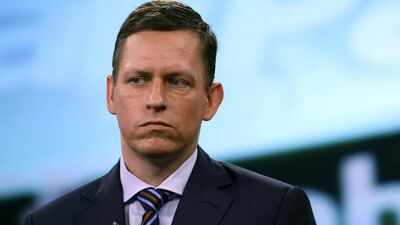
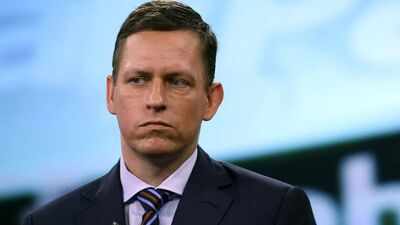
Peter Thiel has pushed back against claims that China is behind growing anti-AI sentiment in the US, saying Americans should look at their own actions instead. In an interview with Axel Springer CEO Mathias Döpfner on the “MD Meets” podcast recently, the PayPal co-founder said he is “inclined to believe” China could be fueling some anti-AI content, but does not see it as the main reason for the change in public sentiment. “This is mainly what we’re doing to ourselves,” Thiel said. “It’s often somewhat too easy to simply blame it on China.”
Peter Thiel says US is largely responsible for AI backlash
Peter Thiel’s comments come as some US technology executives have blamed China, America’s main AI rival, for growing criticism of the technology. Thiel, who has himself been a strong critic of China, said the country should be taken seriously but argued against blaming it for every development around AI.Asked whether China was promoting anti-AI material on American social media, Thiel said he had not studied the issue closely. He said he was inclined to believe it was happening, but added that it was not the main factor behind the backlash.Thiel also criticised Pope Leo XIV’s May 2026 AI encyclical, describing it as anti-AI. He argued that the Chinese Communist Party would not listen to the Pope, while people in the US might.“I’m not saying he was an agent of the communists,” Thiel said, “but he was at least acting as a useful idiot for the CCP.”Thiel later said he may have put the point too strongly, but repeated his argument that the Pope’s message could have an effect in the US while China would not follow it.
AI debate increasingly linked to US-China rivalry
Thiel’s comments come as AI development has become closely tied to competition between the US and China. The US has accused Chinese AI companies of copying American AI technology, while China has rejected those claims.At the same time, concerns about AI’s impact on jobs, safety, security and society have grown in the US. Thiel’s argument is that those concerns should not automatically be attributed to Chinese influence. In the “MD Meets” interview, he said the US should instead examine how its own decisions and discussions are shaping public attitudes toward AI.