









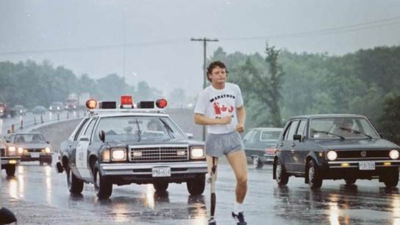
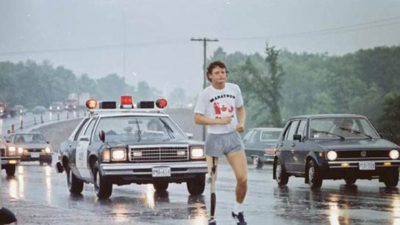
The most striking detail in Terry Fox’s story is the image of a 21-year-old standing at the edge of the Atlantic, dipping his artificial right leg into the water before beginning to run across Canada. On April 12, 1980, that was how Fox started his Marathon of Hope, a journey that would eventually cover 5,373 kilometres in 143 days.Three years earlier, Fox had been an ordinary teenager with a growing interest in sports. Then, in March 1977, at just 18, he discovered he had osteogenic sarcoma, a form of bone cancer, in his right leg. Doctors amputated the leg 15 centimetres above the knee. He subsequently underwent 16 months of treatment.The operation changed his body, but something he saw during treatment changed his purpose.Fox had spent time around other young cancer patients and was struck by the suffering he witnessed. He began thinking about how little money was available for cancer research. Around the same time, he read about an amputee who had completed the Boston Marathon. The idea of running himself, once unimaginable, began to take shape.It was not an overnight transformation. Fox trained for months before the Marathon of Hope. According to the Terry Fox Foundation, he ran more than 5,000 kilometres during training. His artificial limb was not some futuristic piece of sports equipment. Historical accounts describe it as a prosthetic made with materials including fibreglass and steel.
Terry Fox ran 42 kilometres daily
Fox planned to cross Canada from the Atlantic to the Pacific, raising money and awareness for cancer research along the way. He ran close to 42 kilometres daily. His route took him through six provinces, and crowds gradually began gathering along roads and in towns to watch the young runner pass. “He ran through snow, rain, wind, heat, humidity. He stopped in more than 400 towns, schools and cities to talk about why he was running. He started at 4:30am in the morning, and often did not finish his last mile until 7pm at night,” Terry Fox Foundation says on its website.There was also a deeper irony to the journey: Fox was running to raise money for cancer research while still carrying the possibility that cancer could return.On September 1, 1980, near Thunder Bay, Ontario, that possibility became reality. After running about 18 miles that day, Fox developed severe chest pain and stopped. The cancer had spread to his lungs. He had run 5,373 kilometres over 143 days and was forced to abandon the journey.Fox did not live to see the long-term impact of the campaign. He died on June 28, 1981, at 22.