








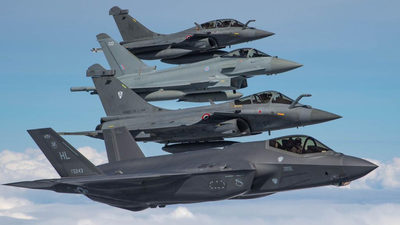
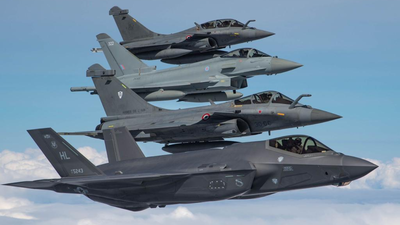
The Indian Air Force is set to host the second edition of Tarang Shakti, its biggest multilateral air exercise yet. The exercise is being held at the Jodhpur air base from September 26 to October 11, bringing together nearly 40 air forces including those from the United States, France and Germany. The exercise, conducted in the backdrop of lessons drawn from Operation Sindoor last year, will see fighter jets, transport aircraft and specialist assets from partner air forces operate alongside the IAF in a realistic combat environment, with officials describing it as a platform to test tactics, procedures and interoperability among friendly forces.
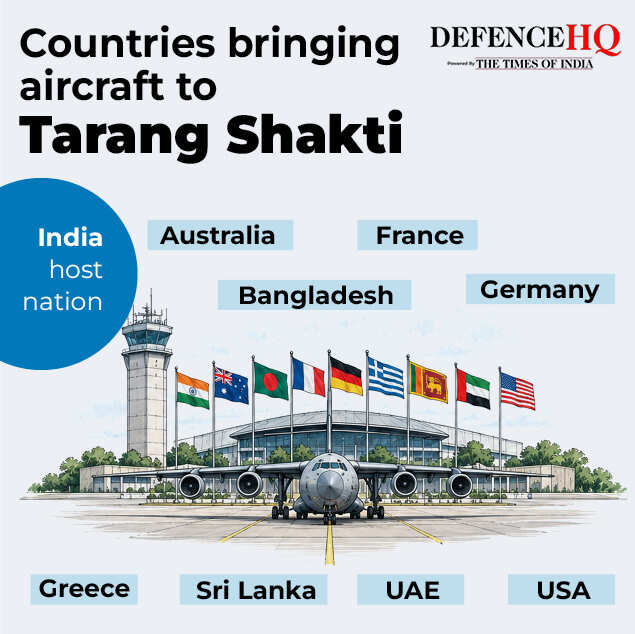
40 air forces from around the world are bringing aircraft to Exercise Tarang Shakti.
Tarang Shakti: Full spectrum of aerial warfare and beyond
The primary reason for holding Exercise Tarang Shakti is to improve military interoperability, share operational best practices, and strengthen strategic defense partnerships among global air forces. Hosted by the Indian Air Force (IAF), it serves as India’s largest multinational air combat exercise, moving beyond traditional bilateral drills to foster collective security and cooperation. The exercise allows pilots and ground crews from multiple nations to fly, communicate, and coordinate complex tactical maneuvers together, bridging differences in work cultures and combat philosophies.
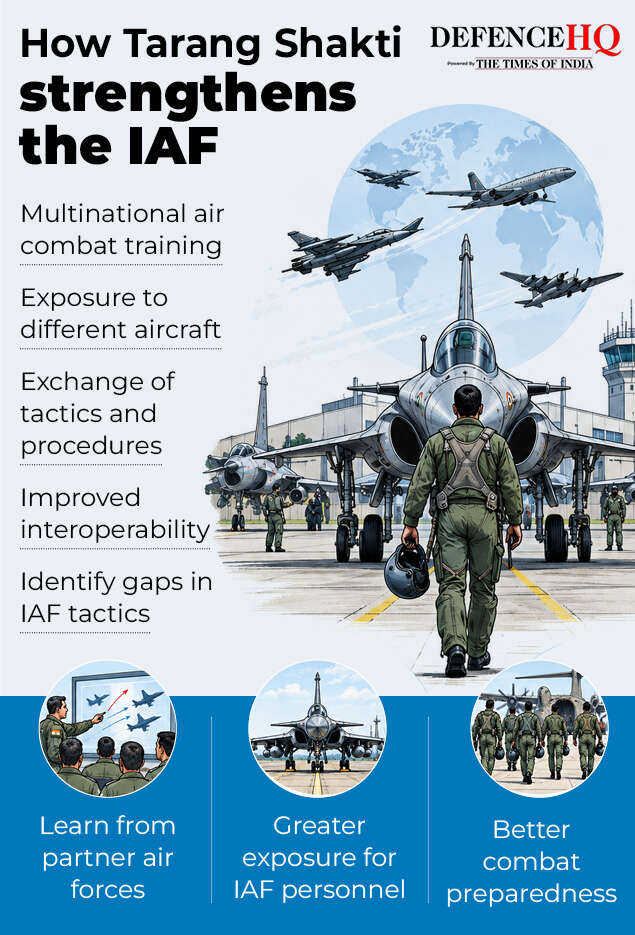
The Indian Air Force will derive many lessons from this key exercise.
Participants test combat assumptions and exchange real-world lessons from modern air warfare environments, refining joint counter-air, air defense, and reconnaissance strategies. Promoting indigenous capabilities as it provides a major global platform for India to showcase its domestically manufactured defense equipment—such as the LCA Tejas, ALH Dhruv and LCH Prachand. Thus demonstrating to the visiting air forces the country’s booming indigenous aviation ecosystem. The IAF’s top of the line Rafale fighter aircraft will also be participating in the exercise.By bringing together dozens of participating and observing nations, multinational wargames also provide an opportunity to extend defence diplomacy to members of participating nations through peer-to-peer connect. Such relationships help foster better understanding and paves way for greater cooperation in the future.
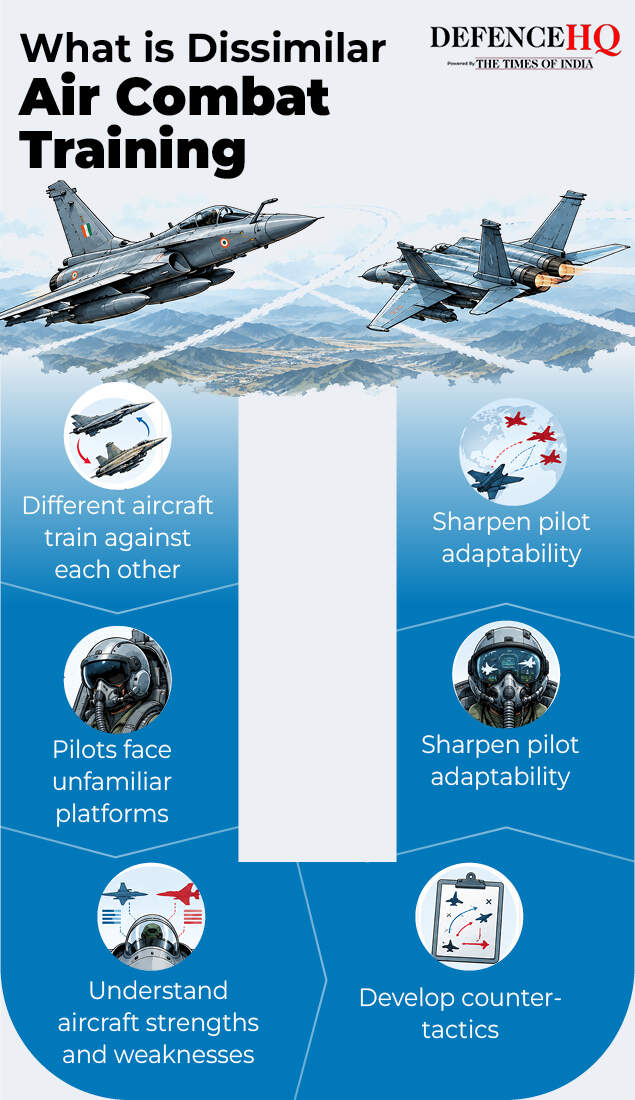
DACT helps fighter pilots and air tacticians build core competency against other types of fighters.
A key element of such exercises is Dissimilar Air Combat Training (DACT), where aircraft of different types and origins are pitted against each other rather than against similar platforms. This allows pilots to understand the strengths and weaknesses of unfamiliar aircraft, through which pilots learn to adapt and overcome. This helps in sharpening tactics against adversary-type jets, and prepare for scenarios where the enemy may be flying something entirely different from what they train against at home.
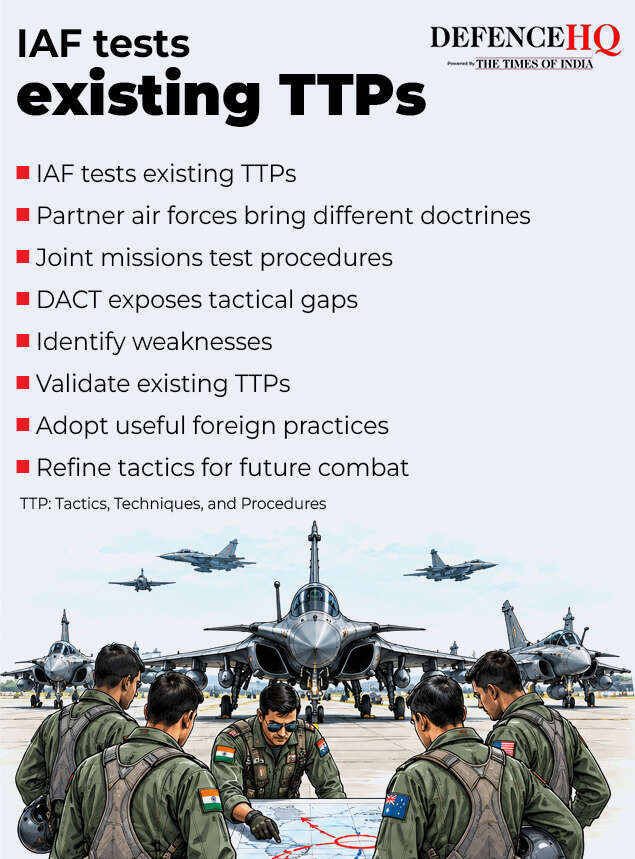
The IAF will get a chance to improve its battle tactics during Exercise Tarang Shakti.
Another advantage of hosting these exercises is that the IAF gets to test its Tactics, Techniques and Procedures (TTP) against a force that has formulated its own set of strategy that have evolved from a different type of presumptions and threat environment. An exercise of such nature allows participating air forces and especially the hosting air force to execute, validate and perform a gap analysis of its own TTPs, thereby strengthening them. As the hosting air force sets the ground rules for the entire exercise can be tailored to test and improve the air force’s war fighting plans.More, on the ground level, hosting an international exercise of this nature opens up for cross pollination of best practices the entire operational gamut of aerial operations. When IAF goes out for an exercise abroad, it is only the pilots and a limited number of crew who get exposed to the newest and best practices followed by other air forces. While hosting the exercise at home, a much larger number of IAF personnel get exposed to the practices followed by other air arms, who to learn from the IAF.
The F-35 in the Indian skies
The presence of the American F-35 is expected to be one of the biggest draws of this edition. Unlike the previous two appearances at aero-shows in Bengaluru, this will be the jet’s first outing in a military exercise on Indian soil. Last year an F-35 of the UK’s Royal Navy was stranded at the Thiruvananthapuram Airport for 37 days after it developed a snag. But this is the first time that the aircraft will show-off its combat capabilities in an operational scenario over the sub-continent.
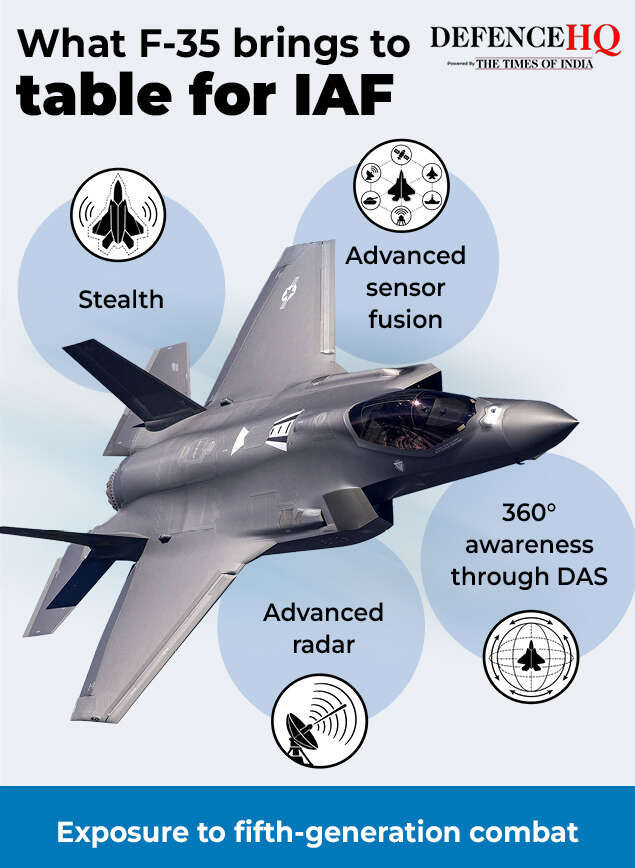
The Indian Air Force is going to train against a fifth-generation fighter aircraft.
The F-35A is the most advanced fighter aircraft in service today. The aircraft, designed to be nearly invisible on radar scopes is the pinnacle of critical combat and aviation technologies. Besides stealth, the fighter comes equipped with a state of the art sensor fusion capability that merges data from multiple onboard systems into a single, simplified picture for the pilot. This improves the situational awareness of the pilot, helping the individual make timely decisions in order to improve the combat effectiveness.Apart from the AN/APG-81 or AN/APG-85 radar, the aircraft’s Distributed Aperture System (DAS) gives pilots a 360-degree view around the aircraft. This system lets the pilot keep a tab of the environs passively without emitting any radar waves that can be captured by radar warning receivers of adversarial fighters and thus betray the location of the otherwise stealthy fighter. Another key capability that keeps the F-35 at the top of the fighter food chain is the capability to merge data from multiple onboard systems, giving unparalleled situational awareness to the pilot. Through the multifunctional advanced data link, F-35s can interact with each other, ensuring that the pilots see the same tactical picture.Exposure to aircraft such as the F-35 is seen as valuable for the IAF as it looks to strengthen its posture against both China and Pakistan. Understanding how a fifth-generation stealth fighter operates, how it integrates sensor data and how it complicates detection for adversary radars gives Indian pilots and planners a clearer sense of what such platforms bring to a modern battlefield, at a time when China continues to expand its own stealth fighter fleet and Pakistan looks to modernise its air force with Chinese assistance. This kind of exposure also informs India’s own thinking on what it wants in its upcoming Advanced Medium Combat Aircraft programme.India has had similar engagements with advanced air forces in the past, including participation in exercise Red Flag in the United States, exercise Orion in France, and exercise Pitch Black in Australia earlier this July, where IAF crews flew alongside the F-35 for the first time. Each of these exercises has helped the IAF benchmark its pilots and platforms against some of the most capable air combat training environments in the world. But what makes this exposure different is that this time, the IAF will be drawing the rules of engagement, giving it the ability to get what it seeks from the engagements that are about to get underway under the desert sun of Rajasthan.Tarang Shakti is being positioned as more than a routine training exercise. With Operation Sindoor’s lessons feeding directly into its planning and a fifth-generation fighter like the F-35 flying in an Indian exercise for the first time, the drill offers the IAF a rare opportunity to test its assumptions, expose its pilots to unfamiliar technology, and prepare for the kind of high-intensity, multi-domain conflicts that officials say will define future air warfare in the region.