









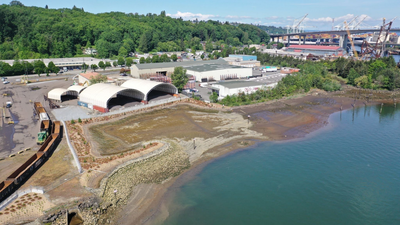
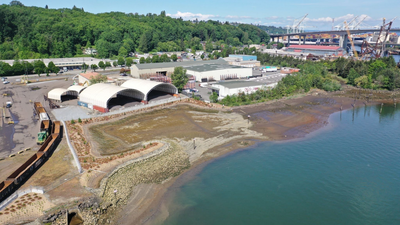
For decades, Seattle’s Lower Duwamish River was reshaped to support industry, with large sections of its natural shoreline straightened, filled and hardened. By the 1940s, about 97% of the river’s original habitat had been lost. Now, a section of that habitat is being brought back. According to the National Oceanic and Atmospheric Administration’s (NOAA) Damage Assessment, Remediation, and Restoration Program, a 2.8-acre restoration project has been completed along the river following a more than $23 million pollution settlement. Contaminated soil and old shoreline structures have been removed, while new marsh and riverbank habitat has been created. Fish have already been seen using the restored area.
How the Lower Duwamish lost most of its natural habitat
The Lower Duwamish River was once a much more complex natural system, with winding channels, mudflats, marshes and shallow areas that provided shelter and feeding grounds for fish and wildlife. That changed as Seattle’s industrial waterfront expanded. The river was straightened and filled, while much of its shoreline was reinforced to accommodate industrial activity. According to NOAA, around 97% of the river’s original habitat had disappeared by the 1940s.The changes had consequences beyond the loss of scenery. Shallow-water and marsh habitats are particularly important for young salmon, including Chinook salmon, as they move through the river on their way towards the ocean. The river has also experienced decades of contamination from hazardous substances. NOAA says those releases injured natural resources, including fish, birds, wildlife and their habitats.
A $23 million settlement helped fund the work
The latest restoration follows a settlement reached in July 2024 between members of the Elliott Bay Trustee Council and General Recycling of Washington and two affiliated companies. The settlement, valued at more than $23 million, addressed claims associated with injuries to natural resources caused by hazardous-substance releases in the Lower Duwamish River.Rather than simply removing pollution, the agreement also supported work to restore habitat along the river. Construction included removing 7,215 cubic yards of contaminated soil, which was taken to an approved upland disposal facility. Crews also removed 390 linear feet of hardened shoreline and 96 creosote-treated pilings, along with other debris. The shoreline was then reshaped to make room for a more natural mix of habitats.
2.8 acres of habitat have been restored
The completed work covers 2.8 acres in total. Of that area, 2.2 acres now consist of new on and off-channel marsh, intertidal and riparian habitat. Another 0.6 acres of subtidal habitat on and next to the Lower Duwamish River has been protected.These habitats are intended to give fish and wildlife access to shallow, sheltered areas that have become increasingly rare along the industrialised river. For juvenile salmon, such areas can provide places to rest, feed and avoid stronger currents. The restored marshes and riverbanks can also support insects, plants, birds and other wildlife as the ecosystem develops. The transformation is still in its early stages. NOAA says the habitat will take years to become fully established.
Fish have already started using the site
There is already an encouraging sign that the new habitat is serving its intended purpose. Fish have been observed using the restored area, even though the vegetation and other parts of the ecosystem are still developing. Over the coming years, marsh and riverbank plants are expected to become established. Other organisms, including worms and other small creatures, will colonise the newly created mudflat areas. Those organisms can become part of the food web supporting fish, birds and other wildlife. For salmon moving through the Lower Duwamish, the new habitat could therefore become more useful as it matures.
The restoration will be monitored for decades
Completing the construction does not mark the end of the work. Under the settlement, General Recycling is responsible for active maintenance and monitoring of the restored site for 10 years. The company will then continue maintenance and stewardship for another 20 years. After 30 years, the Trustees will take responsibility for the site’s long-term stewardship using funds provided by General Recycling.The project is also only one part of a much larger effort to restore the Lower Duwamish and Elliott Bay. The Elliott Bay Trustee Council includes NOAA, the U.S. Department of the Interior, the Muckleshoot Indian Tribe, the Suquamish Indian Tribe of the Port Madison Reservation and the State of Washington. The river still has a long way to go. Decades of industrial development removed most of its original habitat, and restoring an ecosystem cannot happen overnight. But the removal of contaminated soil, old shoreline structures and creosote pilings has made room for something that had largely disappeared: functioning river habitat. With fish already moving into the restored area, the 2.8-acre site offers an early glimpse of what a healthier Lower Duwamish River could look like as restoration efforts continue.