









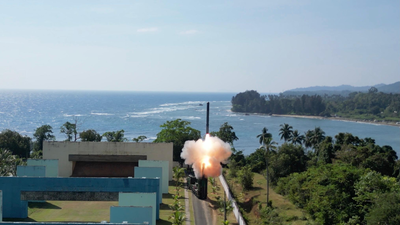
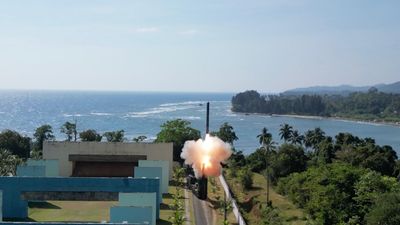
An unusual geopolitical twist just played out in the Indo-Pacific. US and Philippine forces trained together simulating the Brahmos anti-ship missile in Exercise MASA 2026, an annual drill between the Philippine Marine Corps and US Marine Corps. What makes this notable is that the Brahmos, the US Naval Institute reported. The Brahmos has jointly developed by India and Russia, this means that American forces are now training alongside a missile Washington has otherwise been trying to steer allies away from, given the ongoing sanctions on Moscow.The drills, held at a remote outpost in northern Luzon last month, practised building a kill chain using drones and ground-based anti-ship missiles against simulated targets. At Manila’s northernmost Marine base, planners used Hermes drones to track a surface action group, feeding data to support a BrahMos strike against simulated Chinese warships, including two Type 052D destroyers, a Type 054A frigate and a Type 901 support ship, USNI reported.This fits into a broader US effort to boost long-range strike capability among allies near the South China Sea, following the earlier debut of new American missile systems in northern Philippines near Taiwan. Manila’s missileers are now developing tactics for the Brahmos, acquired under a $375 million deal in 2022, marking the first operational use of this missile by any foreign military.At the same time the US Marine Corps is holding a multilateral exercise in Indonesia. The wargame being held in Indonesia is called Exercise Super Garuda Shield, in which according to the Indonesian military, the Indian Army is also participating.India, along with partner nations, is working to keep the sea lanes in the broader Indo-Pacific region secure and free, this at a time when China’s growing assertiveness and territorial ambitions have kept tensions on the simmer in the region. “Secure sea lanes, freedom of navigation, respect for international law and unhindered maritime trade are pivotal for collective security & prosperity of the Indian Ocean Region,” stated Raksha Mantri Shri Rajnath Singh, during his visit to Sri Lanka. India is working with regional and global partners to keep the sea lanes open for vessels of all nationalities.