








NEW DELHI: Although six years late, enumerators have started knocking on doors for the decennial headcount in Ladakh and snowbound regions such as Jammu and Kashmir, Himachal Pradesh and Uttarakhand starting September 1.But doubts and fears have preceded the Census, turning what was meant to be a routine exercise to track population growth and aid policy planning into a fresh political flashpoint.Until now, the caste census had been the main point of contention between the opposition and the government. The opposition had questioned the intent and methodology of an exercise being conducted in the country after almost 100 years.The contention has now moved beyond the caste census, and the opposition is also raising questions over the methodology of population enumeration, alleging that it too has a “deeper nefarious purpose”.
What is the controversy?
On August 14, the Centre notified the list of questions that officials will ask during population enumeration. The questionnaire, however, contains 14 new or modified questions compared with the 2011 Census.These include spouse’s name, nationality as declared, father’s particulars, mother’s particulars, SC/ST/caste, literacy and digital literacy, highest educational level attained and stream/discipline, place of Covid-19 vaccination, total number of bank accounts, mobile number, Aadhaar number, voter ID number, passport number for Indian passport holders, and availability of a driving licence.Interestingly, several of these questions, including details of a person’s father and mother and their places of birth, were also part of the National Population Register (NPR) schedule notified in 2020.Moreover, the Union Budget presented on February 1 this year allocated Rs 6,000 crore for the NPR and Census 2027, even though the government has not yet notified any schedule for the NPR.The Budget document said the allocation included provisions for the Office of the Registrar General and Census Commissioner of India and various schemes of the Registrar General of India, with Rs 6,000 crore earmarked for NPR and Census 2027.
What are the opposition’s charges
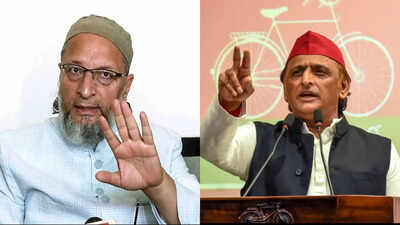
Following the notification of the questionnaire, the opposition has accused the Centre of turning the Census exercise into a “backdoor for the NPR, and eventually, NRC”.Congress Rajya Sabha member Jairam Ramesh said the methodology of asking questions in Census 2027 is flawed and alleged that questions on religion, date of birth, place of birth and parents’ details had never been asked in previous enumerations.“Census is confidential. Clearly, Census 27 has a deeper nefarious purpose,” he said in a post on X.Similarly, former West Bengal chief minister Mamata Banerjee alleged that the Centre was planning to conduct the Census in the form of NPR.“They have started the census. Census in the form of NPR. You have to provide your bank account number, mobile number and Aadhaar number. You must disclose the full details of all family members,” Mamata said.“No political party has been informed. At least the Trinamool Congress was not informed. Nobody knows whose name will be deleted. Is it going to be another SIR? Who knows,” she added.Even during the run-up to the Bengal assembly elections, she alleged that the Centre was planning to ‘take away’ people’s citizenship in the name of NRC.Former Kerala chief minister Pinarayi Vijayan also raised questions over the inclusion of the new questions, arguing that the Census should not be used to divide people.“The reported inclusion of questions about parents’ place of birth and religion in the upcoming Census is deeply troubling. The Census must not become a backdoor for the NPR and, eventually, the NRC. Citizenship cannot be tied to religion, and no census should be used to divide our people. The Union Government must immediately drop such divisive questions. Secular forces must stand united against this dangerous move,” Vijayan said.
Difference between Census and NPR
Census and NPR differ in their legal basis, objectives and the nature of information they are designed to collect.The Census is a statistical exercise meant to produce data on population, literacy, occupation, migration, housing and, in 2027, caste. It is used for making policies, allocating resources and delimitation.On the other hand, the National Population Register is a continuously updated register of “usual residents” created under the Citizenship Act, 1955.It is designed to maintain an identifiable database of people who have lived in a locality for at least six months or intend to stay there for the next six months, irrespective of their citizenship.The NPR collects detailed identity information, including names, parents’ particulars, place of birth, nationality as declared, address and identity documents such as Aadhaar, voter ID and passport, as well as mobile numbers. The data collected through NPR is linked to the proposed National Register of Citizens.Under Rule 3 of the Citizenship Rules, the Centre may order preparation of the National Population Register, from which the Local Register of citizens is prepared after verification.Rule 4 provides that individuals whose citizenship is doubtful can be flagged in the Population Register for further enquiry.The NPR data was first collected in 2010 alongside the 2011 Census house-listing exercise and updated through a door-to-door survey in 2015.However, both the Census and NPR are conducted by the Office of the Registrar General and Census Commissioner, under the Union Ministry of Home Affairs.
Can Census data be shared?
The inclusion of the new questions has raised a larger question: Can information collected during the Census be accessed or used by government agencies for purposes beyond the exercise itself?The law says no. Section 15 of the Census Act, 1948 provides a strong legal shield around personal information collected during the Census.“No person shall have a right to inspect any book, register or record made by a census-officer in the discharge of his duty,” the Act says.“No entry in any such book, register, record or schedule shall be admissible as evidence in any civil proceeding whatsoever or in any criminal proceeding other than a prosecution under this Act or any other law for any act or omission which constitutes an offence under this Act,” it further says.This means that the information collected through the census cannot be used by other government agencies to determine the citizenship of a person.Speaking to The Times of India, advocate Ajinkya Udane said it would therefore be incorrect to accuse the government of divulging information collected through the Census.“Through the census, private information of people is being asked. However, the Census Act bars the government from divulging this information to its agencies,” Udane said.“So, to accuse the government of doing something which the law bars it from doing is not correct,” he added.Cyber and privacy law expert advocate Prashant Mali, however, stressed that Census data must remain a statistical instrument and “not become a backdoor for state surveillance”.“Section 15 of the Census Act creates a strong statutory confidentiality barrier. Individual census records are not open to inspection and are not admissible as evidence. Therefore, census information cannot legitimately be converted into an evidentiary database for citizenship determination merely because another government authority wants to use it,” Mali said.He said that even if a census record, or personal information traceable back to it, is accessed or used in a manner prohibited by Section 15, describing it as “independent intelligence” would not cure the underlying violation.“Substance must prevail over form. If the underlying census record or identifiable information has been accessed or used contrary to Section 15, I feel calling it independent intelligence does not cure the problem,” he said.“I feel the State cannot do indirectly through a citizenship inquiry what Section 15 of the Census Act prohibits it from doing directly through the Census record. A lawful purpose for processing does not automatically create a lawful source of data,” he told The Times of India.During the conversation, Mali said that the interaction between the Digital Personal Data Protection Act (DPDPA) and the Census Act will also be interesting to watch during the exercise.“DPDPA (Digital Personal Data Protection Act) Sections 3–17 are scheduled to come into force 18 months after 13 November 2025, i.e. 13 May 2027, while Census 2027 field operations occur around that period,” Mali said.
Share your thoughts in the comments
Be respectful · TOI community guidelines
“This makes the interaction between the Census Act and DPDPA particularly interesting for the 2027 exercise,” he added.The Digital Personal Data Protection Act (DPDPA) is primary law which will dictate how the personal data is collected, processed and stored.It sets out obligations for entities handling personal data – such as obtaining consent, limiting use to the stated purpose, and ensuring data security – and grants individuals rights over their own data, including access and correction.