








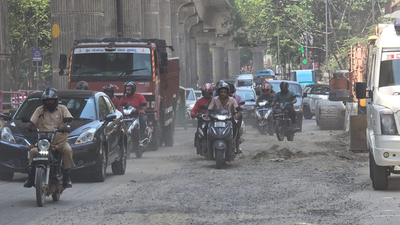
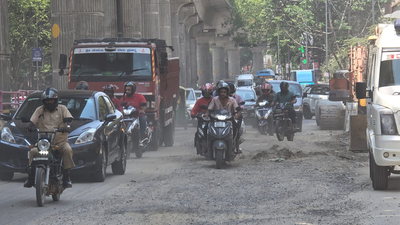
Bengaluru’s proposed tunnel road has brought an old question back into focus: can the city actually build its way out of its traffic mess? The answer is unlikely to come from one mega project. Tunnels, flyovers and wider roads can ease congestion on particular stretches, but the relief may not last if the number of vehicles keeps climbing. What Bengaluru needs is a transport system that makes it easier for people to leave their cars at home, while also making better use of the roads it already has.The tunnel roadThe attraction of a tunnel road is easy to understand. It can take traffic below some of the city’s busiest roads, bypass crowded junctions and create a new route without requiring large-scale land acquisition on the surface.
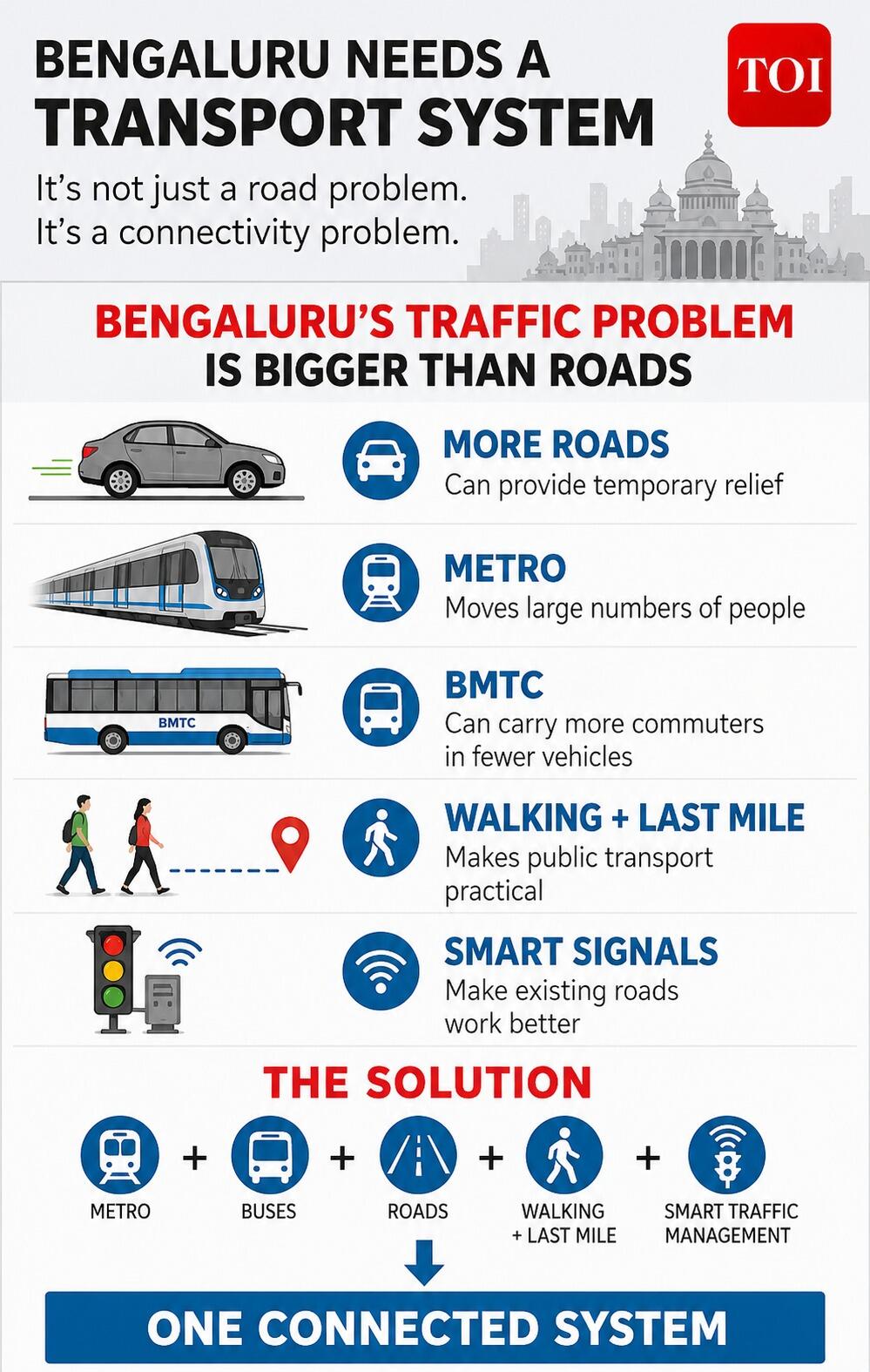
But there is a catch. Traffic does not end when a tunnel ends. If thousands of vehicles emerge onto a road that is already struggling to cope, the congestion could simply move a few kilometres down the road. The success of the project will therefore depend as much on how it connects with the existing road network as on the tunnel itself.Chief minister DK Shivakumar has argued that widening existing roads is difficult because much of Bengaluru was not planned for its present scale. He has also pointed to the city’s rapid growth and rising vehicle numbers as reasons why new mobility infrastructure is needed.Have more roads really solved the problem?Bengaluru has tried the road-building approach before. Flyovers, road widening and elevated corridors have all been presented as ways to tackle specific congestion points. Some have certainly helped traffic move better for a period.
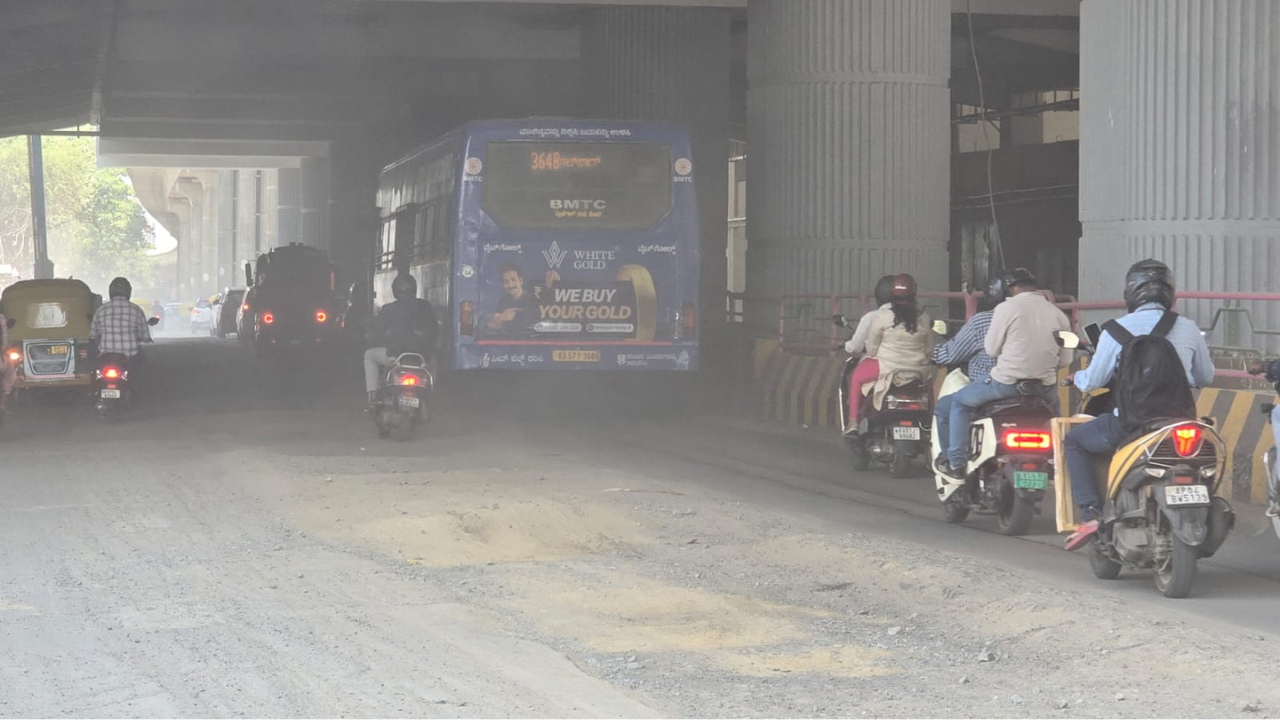
For many commuters, the decision to use public transport comes down to convenience.
But the city has also seen a familiar pattern: a new stretch opens, traffic improves, vehicle numbers rise and congestion returns. More road space can make driving more convenient, which in turn can encourage more people to use cars. This makes road construction a race that becomes harder to win every year.Bengaluru’s problem is bigger than roadsThe city’s traffic problem is also a consequence of how Bengaluru has grown. Large employment centres have emerged in particular parts of the city, while housing has spread much farther out. The result is millions of people travelling long distances, often at roughly the same time every day.
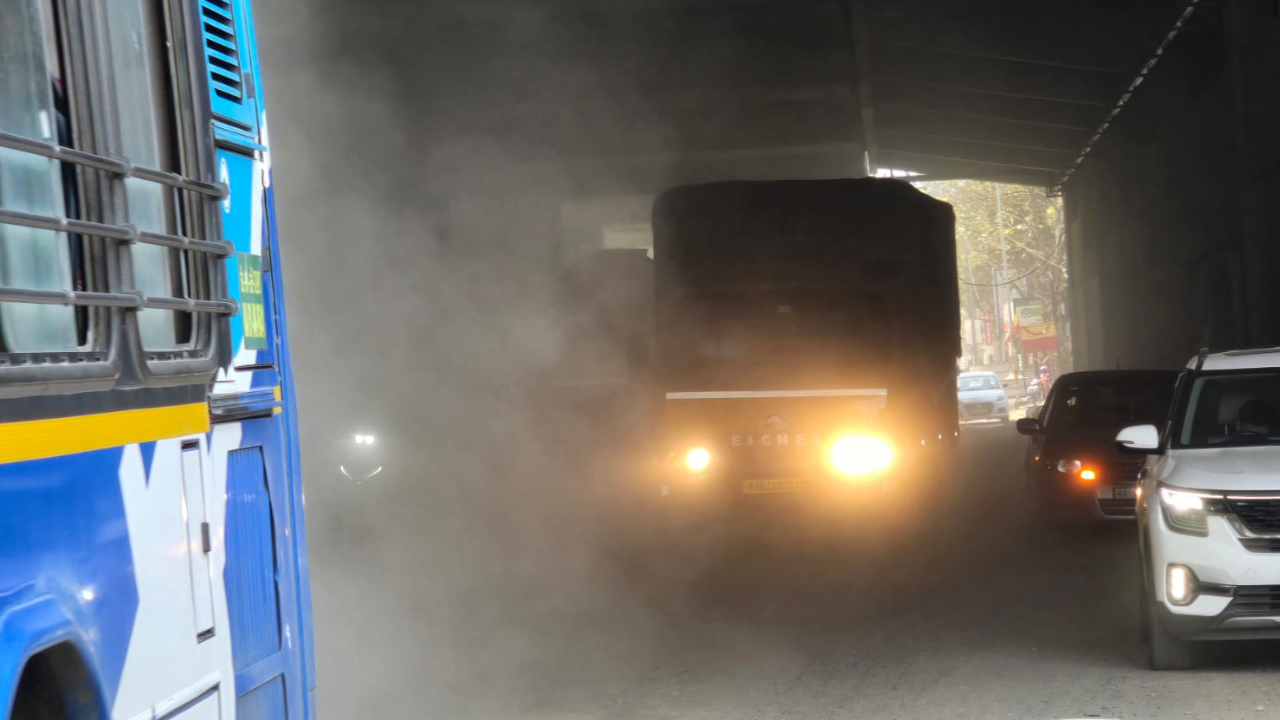
Then there are the smaller problems that add up: badly designed junctions, parking on busy roads, construction work, narrow stretches and poor last-mile connections. Fixing one road cannot solve all of these at once.Metro can move more people, not just more carsThis is where public transport becomes crucial. Bengaluru’s expanding Metro network can carry vastly more people through a corridor than private cars can. But a Metro station is useful only if commuters can get to it easily and complete the rest of their journey without too much hassle.Better feeder buses, autos, walking routes and safe pedestrian access are therefore just as important as adding new Metro lines. For many commuters, the decision to use public transport comes down to convenience. If reaching the station is difficult, the car remains the easier option.
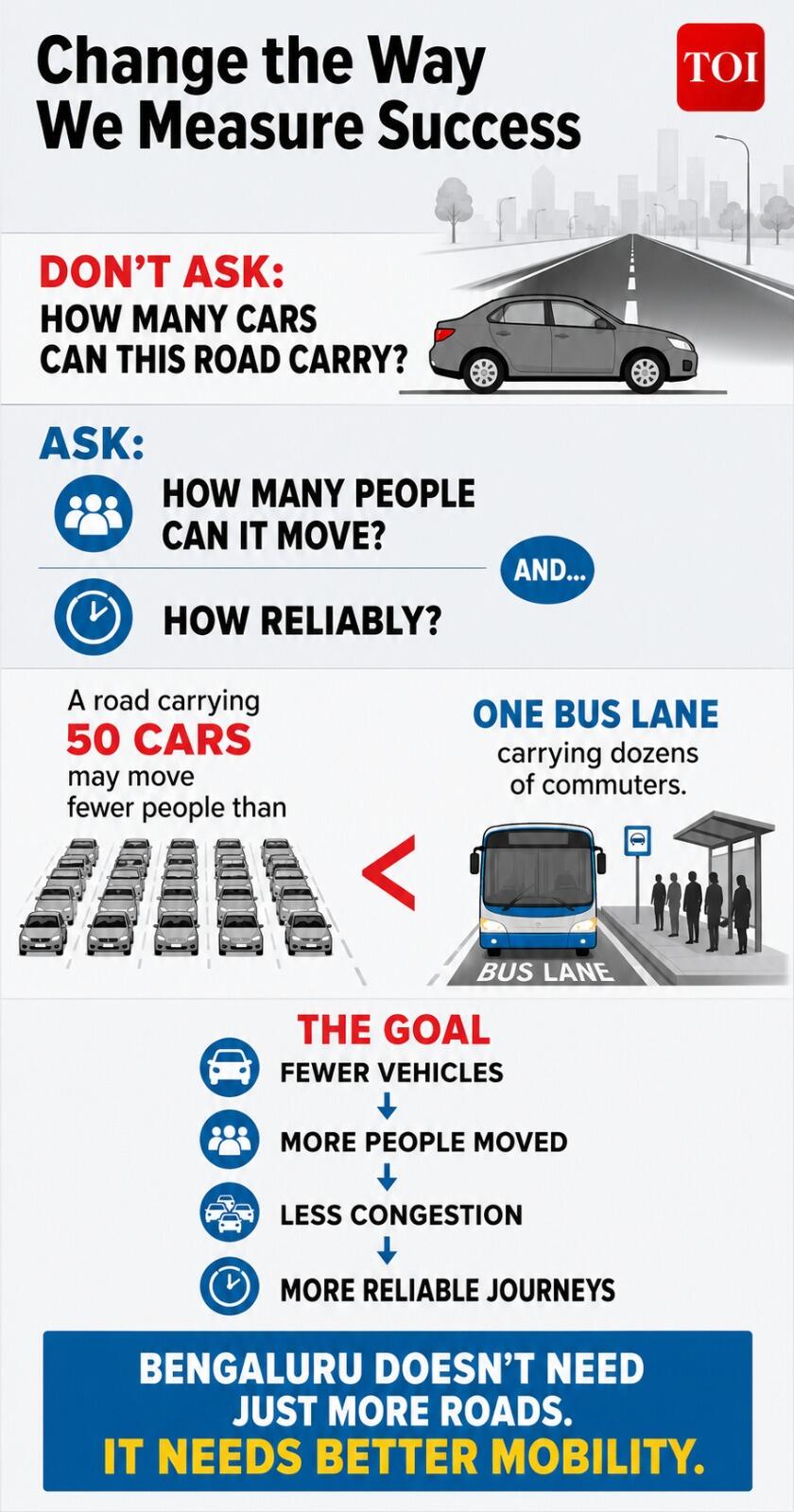
The tunnel road should ultimately be judged on more than whether cars can travel faster through a particular corridor.
The bus that is stuck in trafficBuses can make an even bigger difference because they already serve a large section of the city’s commuters. The problem is that BMTC buses are often caught in the same traffic as everyone else.Dedicated bus lanes, better routes, more frequent services and signal priority could help buses carry more people without requiring another major road project. On a crowded Bengaluru road, a lane carrying dozens of people in a bus is arguably more valuable than a lane carrying a handful of cars.Don’t just fix roads — fix bottlenecksOne of Bengaluru’s biggest challenges is that traffic rarely stops at one location. A project may clear a junction only for vehicles to queue up at the next one.That means the city needs to look at entire corridors rather than individual trouble spots. Sometimes a redesigned junction, a better signal system or the removal of a particular bottleneck can make a bigger difference than kilometres of new road.Technology can unlock existing capacityThere is also plenty that Bengaluru can do without digging up another road. Traffic signals can be coordinated more intelligently. Real-time data can be used to manage congestion. Parking can be better regulated and enforcement can be strengthened.None of these measures has the glamour of a tunnel or flyover. But they can often be introduced faster and at a fraction of the cost, while making the existing network work more efficiently.The cost of building moreBig infrastructure projects are expensive, and tunnel construction brings its own technical and financial challenges. There is also the disruption that comes with years of construction.That does not automatically make the tunnel road a bad idea. Bengaluru may well need new road capacity in some places. But every major investment should be judged against alternatives. Could the same money move more people if it went into Metro connectivity, bus lanes, pedestrian infrastructure or last-mile services?The important question is not simply how many vehicles a project can accommodate. It is how many people it can move, and how reliably.Build for people, not just vehiclesThis may be the most important shift Bengaluru needs to make. The city cannot keep expanding road capacity at the same pace as vehicle ownership.So, yes, Bengaluru may have to build its way out of traffic. But building should not mean only pouring more concrete or digging more tunnels. It should mean building a transport network in which Metro, buses, roads, walking and cycling complement one another.The real measure of successThe tunnel road should ultimately be judged on more than whether cars can travel faster through a particular corridor. The bigger test is whether it helps people get across Bengaluru more quickly and reliably.If success is measured by how many cars a road can carry, the city could remain trapped in a never-ending cycle of expansion and congestion. But if the goal is to move more people with fewer vehicles, the solution becomes much broader.Bengaluru’s traffic crisis will probably not be solved by a single tunnel, flyover or road. It will be solved when the city starts treating mobility as a system rather than a collection of individual roads.