









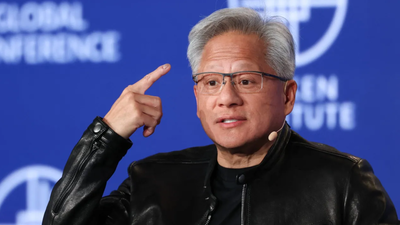
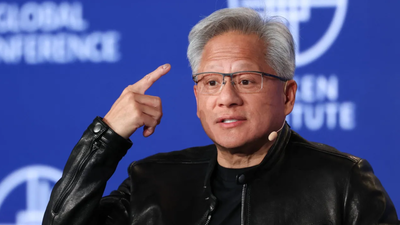
Nvidia CEO Jensen Huang has defended the company’s growing role in financing the artificial intelligence boom. Huang has rejected the claims that its investments amount to artificial intelligence is inflating demand. “I think they’re missing a very big point,” Huang said on CNBC’s Mad Money after Nvidia posted better‑than‑expected quarterly results. Huang argued that AI startups are unlike any previous generation, requiring tens of billions of dollars to get funded and become profitable. “When was the last time anybody heard of a startup that needed billions of dollars to get off the ground? That just never happened. But that’s really the nature of AI,” he said. Nvidia has invested across the ecosystem, from OpenAI and Anthropic to neocloud providers renting Nvidia‑powered compute.
How Nvidia became a financial backstop for the AI boom
Nvidia has amassed enormous cash reserves thanks to its dominant position as the leading supplier of chips powering large language models behind products like OpenAI’s ChatGPT. The company has funneled that windfall into investments across the AI ecosystem, backing model developers such as OpenAI and Anthropic as well as “neocloud” providers that rent out Nvidia-powered computing capacity to customers.More recently, Nvidia has gone further, using its balance sheet to provide direct financial backstops for major data center projects. That includes a $105 billion commitment toward a massive compute campus under construction in Ohio, where OpenAI is expected to be the primary tenant. Nvidia has also announced a partnership with several of Wall Street’s largest firms to help arrange up to $500 billion in financing for data centers more broadly.
Why critics are calling it ‘circular financing’
That latest wave of deals has intensified scrutiny of Nvidia’s role in bankrolling the industry it sells chips to. Critics have described the arrangements as a form of circular financing, drawing comparisons to some of the more troubled financing structures of the dot-com era. In these so-called circular deals, a company provides funding to customers who then use that same money to purchase the funder’s own products — a structure that raises questions about whether resulting demand and sales are genuinely organic or artificially propped up.
Jensen Huang ‘s defense: Frontier AI labs need a different kind of partner
In the CNBC interview, Huang argued these financing arrangements simply reflect the unprecedented amount of capital required to build frontier AI companies today. He said Nvidia wants to serve a dual role with these companies — as an equity investor and as a broader partner — describing several of the leading AI labs as once-in-a-generation companies that Nvidia wants to support directly, in hopes that they build their technology stacks on top of Nvidia’s platform and scale their businesses alongside it.Huang also addressed why these companies can’t simply borrow the capital they need through conventional channels. He said many of them currently lack the financial profile needed to raise low-cost capital on their own — they aren’t yet investment grade and don’t have the financial or capital track record needed to attract cheaper financing elsewhere — which he framed as precisely the gap Nvidia is positioned to fill.
Addressing Nvidia’s own risk exposure
Huang also pushed back on concerns that Nvidia could be left exposed if one of the companies it has backed struggles financially. He argued that Nvidia’s computing infrastructure isn’t tied to any single customer, since it can be redeployed across different customers and workloads, which he said limits the company’s exposure to any one investment. He expressed confidence that the capital Nvidia has deployed will generate strong returns, characterizing the overall risk as low.
The numbers behind Jensen Huang’s confidence
Nvidia’s latest earnings appear to back up that confidence. For its fiscal 2027 second quarter, the company reported $96.2 billion in quarterly revenue, more than double what it reported a year earlier, while data center revenue climbed 117% to $89 billion. Looking ahead, Nvidia projected roughly 70% revenue growth for fiscal 2028.Nvidia shares rose about 4% in extended trading following the results. Despite the strong quarter, the stock is up just 12% for the year so far, a relatively modest gain that reflects broader investor unease about the sustainability of the wider AI trade.