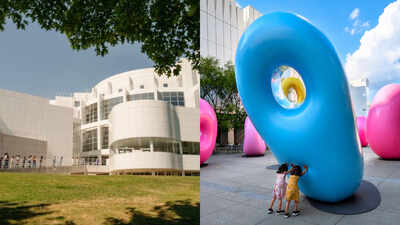









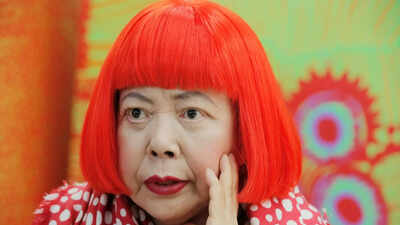
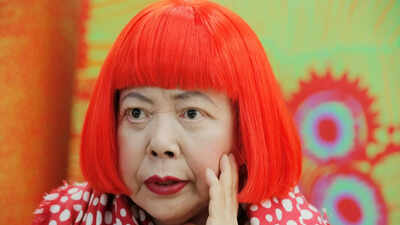
Yayoi Kusama, Japanese contemporary art icon known for her polka dots, died on August 14 at a hospital in Tokyo, her studio said Thursday. She was 97.Kusama’s career spanned more than seven decades and crossed painting, sculpture, installations, performance, film and literature. Her repeated patterns, mirrored spaces and immersive installations eventually made her one of Japan’s best-known contemporary artists.Her studio said Kusama continued painting until her final days and would carry forward her wishes through art, bringing “hope and strength for the future” to people around the world, according to the Associated Press.
Why did dots become Kusama’s defining language?
Kusama traced her fascination with repeated patterns to hallucinations she experienced as a child, when she said she saw the world covered in spots.Those visions became a recurring element of her work. Polka dots appeared across her paintings, sculptures and installations, alongside nets, swirls and other repeated forms. Her mirrored installations further expanded the idea, using reflections, lights and repetition to create seemingly endless spaces.In a 2012 AP interview, Kusama said: “Polka dots are fabulous.”
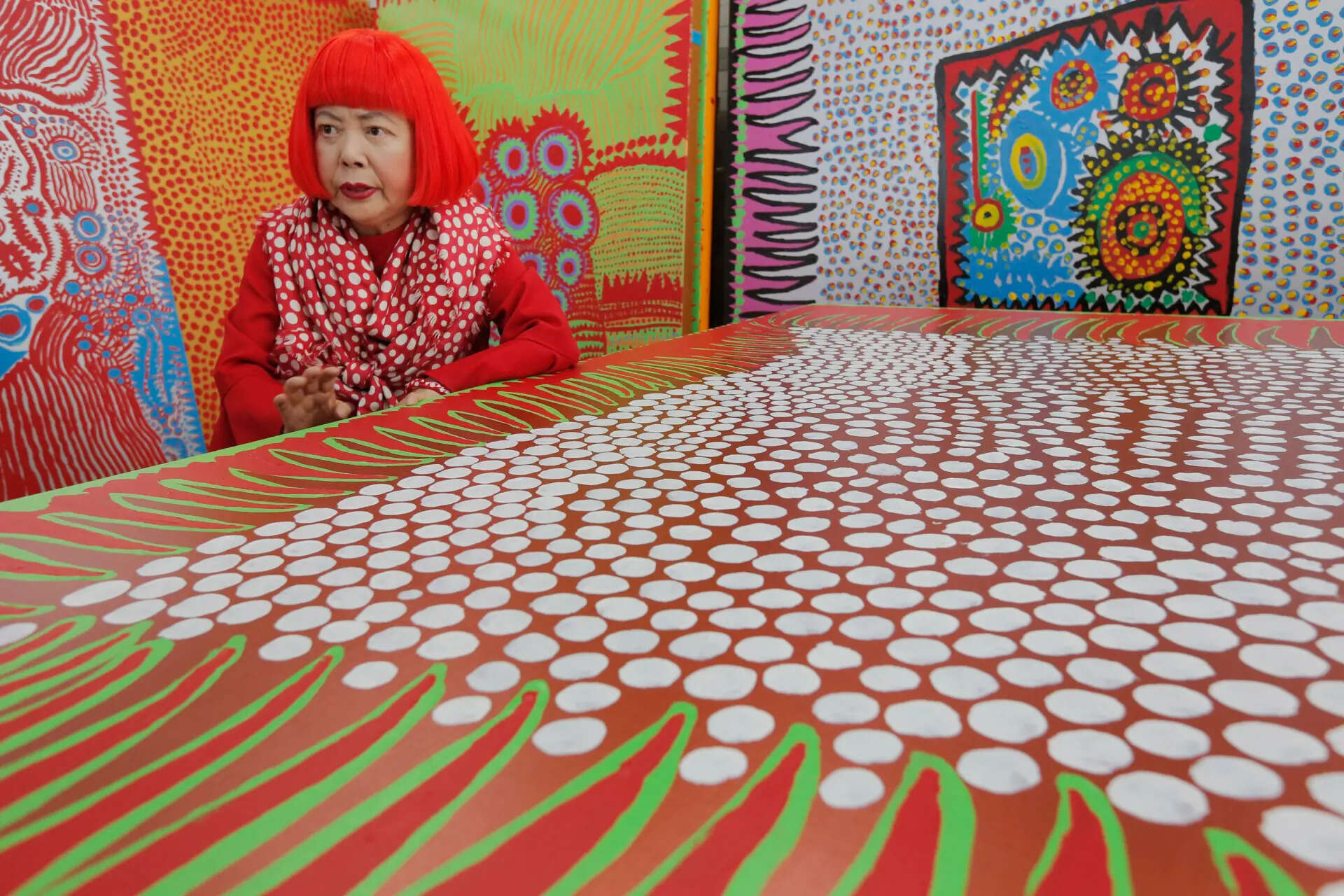
Japanese avant-garde artist Yayoi Kusama speaks during an interview at her studio, filled with wall-sized paintings throbbing with her repetitive dots, in Tokyo on Aug. 1, 2012. (Photo: AP)
Repetition remained central to her work as she moved from paintings to sculptures and large-scale installations.
Why did Kusama leave Japan for New York?
Born into a middle-class family in Japan, Kusama wanted to pursue art despite pressure to follow a more conventional path. She left for the United States in 1957 and moved to New York, where abstract expressionism and action painting dominated the art scene.Her painstaking fields of repeated forms stood apart from the sweeping gestures and drips that were popular at the time. Kusama spent years struggling financially and received little recognition before her work began attracting wider attention.In New York, she became acquainted with artists including Andy Warhol, Georgia O’Keeffe and Joseph Cornell. She also staged anti-war “happenings” during the late 1960s, using painted dots and circles on human bodies and staging provocative public performances.Some participants were arrested for obscenity, while the performances brought further attention to Kusama’s work.Over the years, critics described her as Pop, avant-garde and feminist. Kusama, however, considered such labels inadequate for describing her art.
How did Kusama become a global art icon?
Kusama’s international reputation grew steadily in the later decades of her career, with exhibitions at major institutions including New York’s Museum of Modern Art and the Whitney Museum of American Art.Her works ranged from Macaroni Girl, a female figure covered in macaroni, to The Visionary Flowers, featuring giant sculptures of twisting tulips.
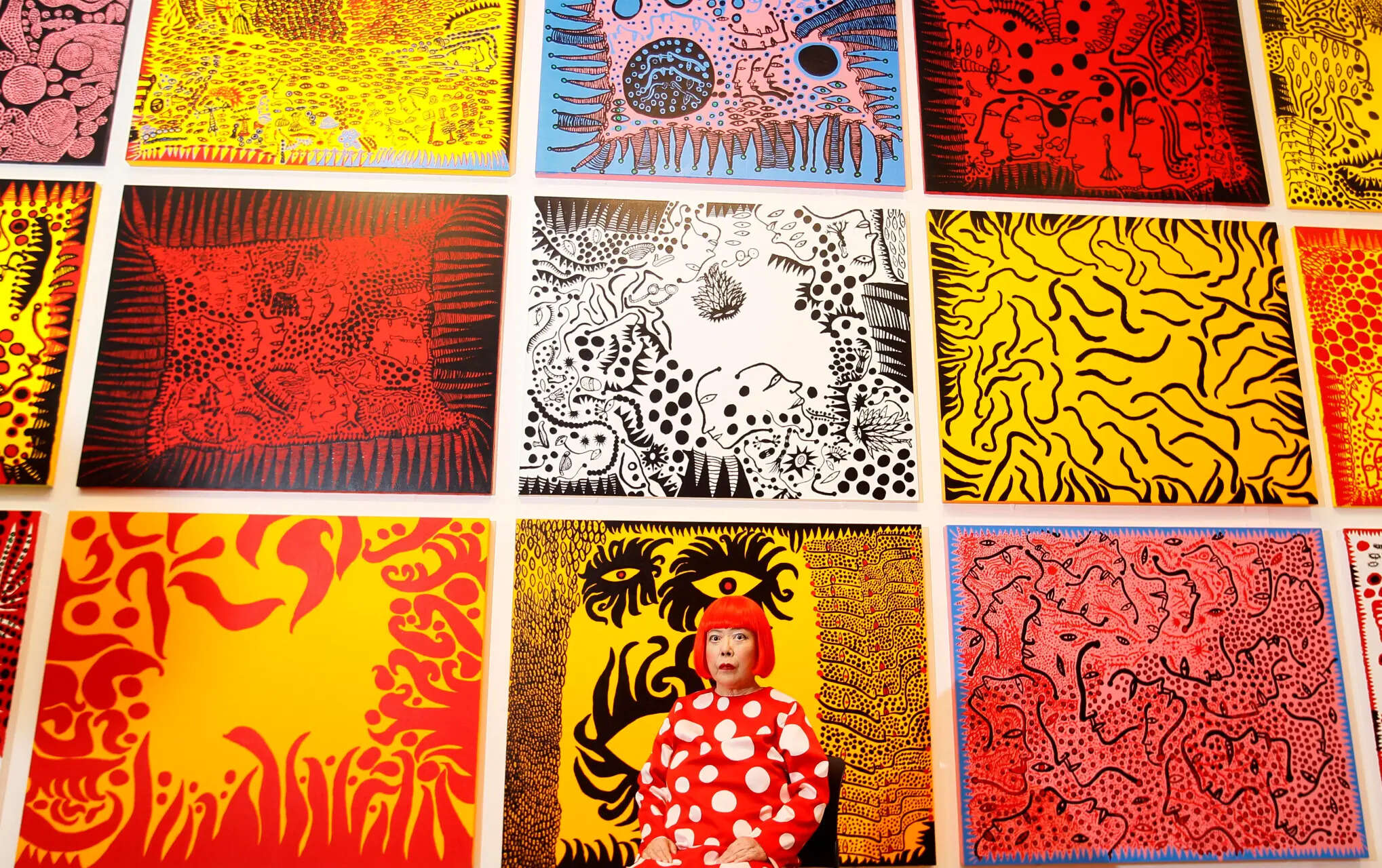
Japanese artist Yayoi Kusama poses for photographers in front of her painting ‘Love Arrives at the Earth Carrying with it a Tale of the Cosmos’, center bottom, and other paintings at the Tate Modern in London, Tuesday, Feb. 7, 2012. (Photo: AP)
Her mirrored installations became particularly popular, using reflections and repeated shapes to immerse visitors in environments that appeared to stretch endlessly.The commercial value of her work also grew. Christie’s auctioned one of her works for $5.8 million in 2008. In 2016, Japan awarded her the Order of Culture, one of the country’s highest honours for artists.
How did Kusama’s art enter popular culture?
Kusama’s distinctive visual style eventually moved beyond museums and galleries.She collaborated with fashion brands including Louis Vuitton, while her signature patterns appeared on licensed products ranging from T-shirts and teacups to key chains.Her distinctive public image, including her orange bob-cut wig and patterned clothing, also became part of her global identity and was used in promotional displays.
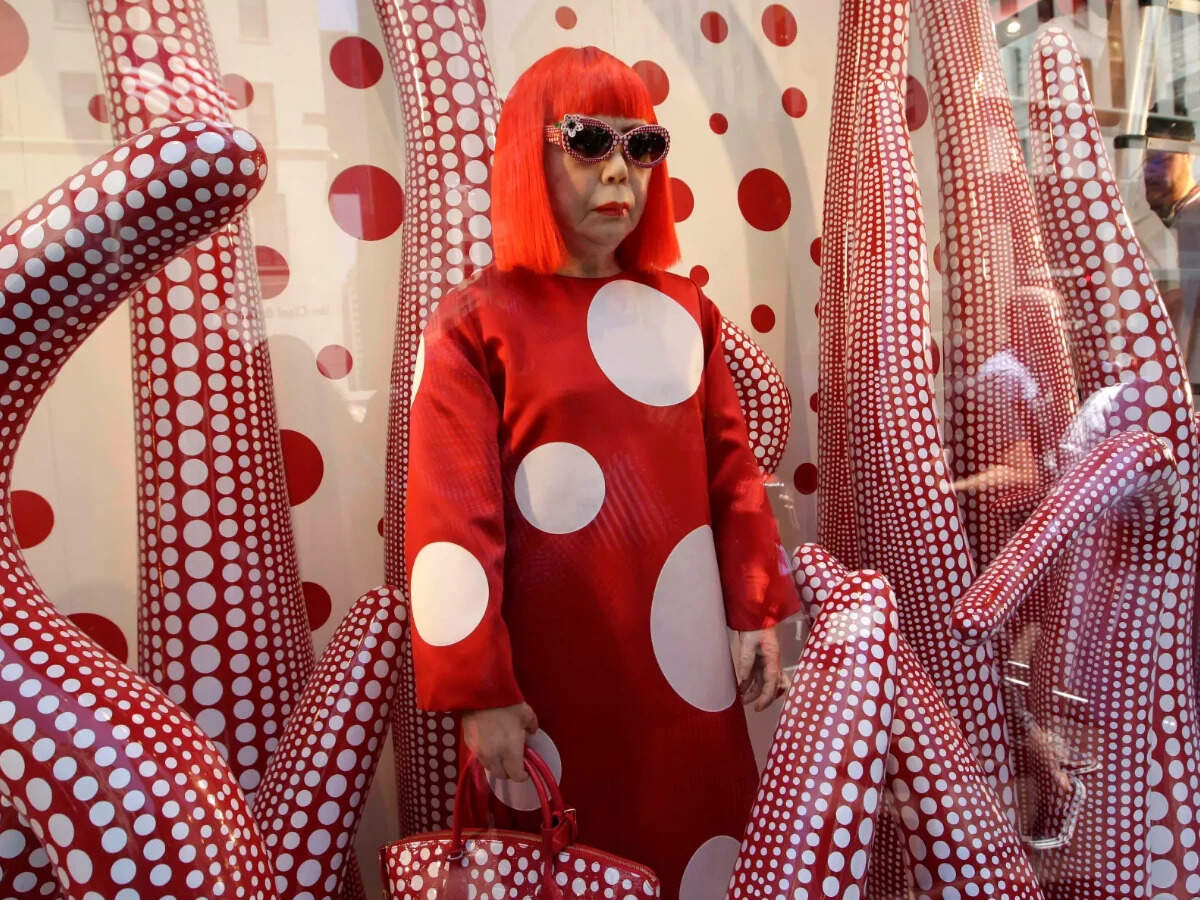
A wax model of Japanese artist Yayoi Kusama is displayed in the windows of Louis Vuitton’s flagship Fifth Avenue store in New York, Tuesday, July 10, 2012. (Photo: AP)
Kusama continued creating until the end
Kusama spent decades in and out of psychiatric institutions while continuing to make art. She repeatedly spoke about her determination to keep painting and creating.In her 2012 AP interview, she said she wanted to make “a thousand paintings, maybe two thousand paintings,” adding: “I will keep painting until I die.”
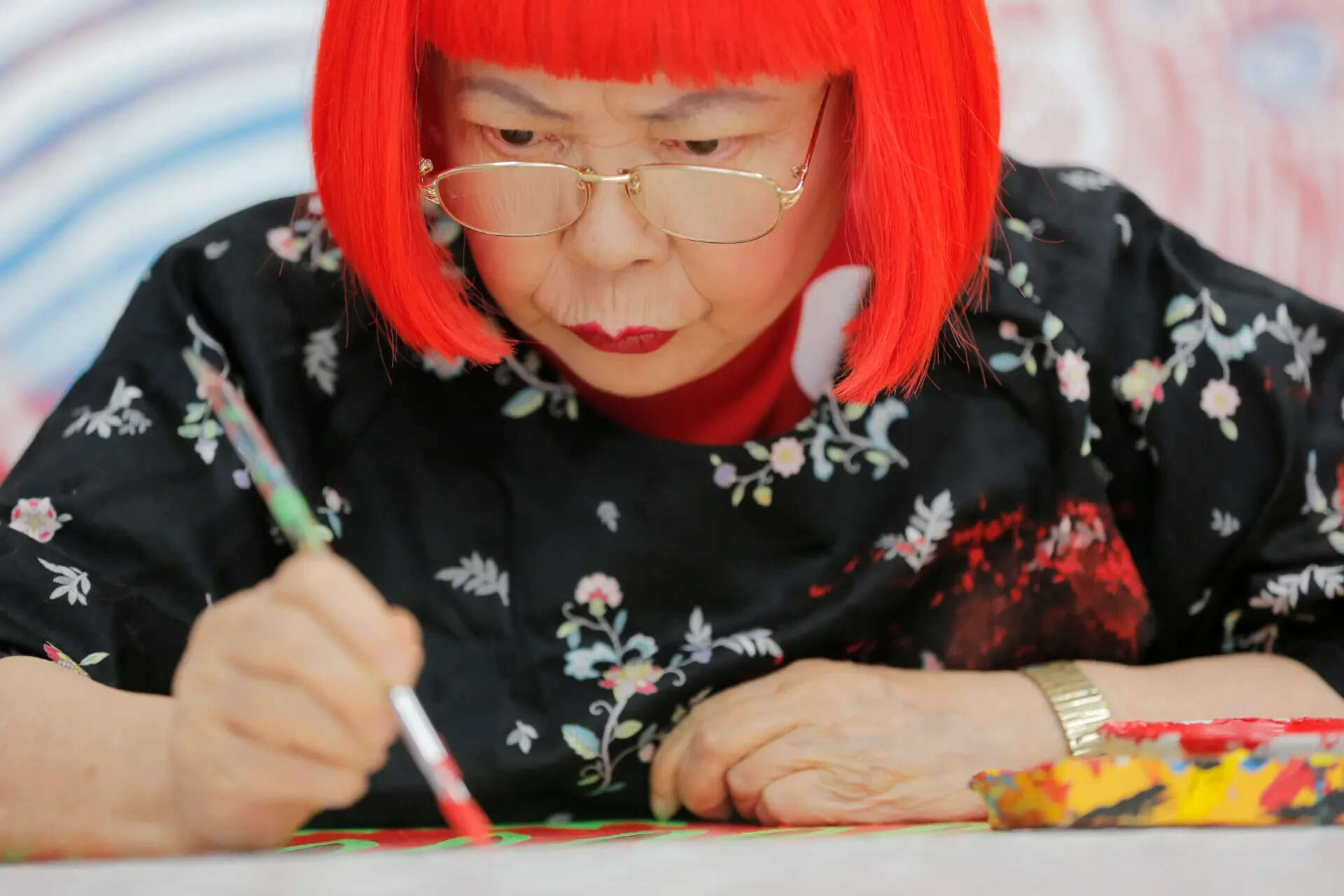
Japanese avant-garde artist Yayoi Kusama works at her studio in Tokyo, Wednesday Aug 1, 2012. (Photo: AP)
She also described the act of creating as a process of discovery, saying she could pick up a brush and begin working without knowing exactly where the process would lead.After receiving Japan’s Order of Culture in 2016, Kusama said she was giving everything to her art so that people would “continue to be interested in my art, even after I am dead.”