







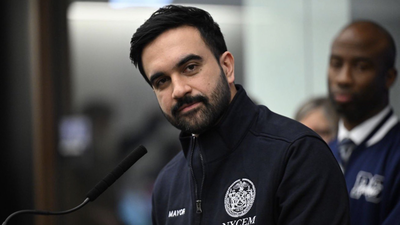
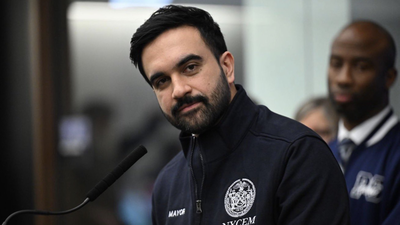
New York City Mayor Zohran Mamdani has come up in support of Teamsters-backed bill that would require Amazon and other delivery companies to directly employ thousands of drivers, escalating a fight with the retail giant even as it warns the measure could push its delivery operations out of the five boroughs entirely, according to a New York Post report. Mamdani took to social media platform X to share his opinion of the matter. “If it looks like an Amazon delivery and drives like an Amazon delivery, then it’s an Amazon delivery, right? Not according to Amazon. Big companies like Amazon have built a vast network of subcontractors who deliver their packages while shielding them from accountability. It leaves our workers unprotected and our streets less safe. It’s time for a change. I’m proud to support the Delivery Protection Act to crack down on exploitative subcontracting and build an economy that works for everyone,” wrote Mamdani.
What the bill Zohran Mamdani is supporting will do
The Delivery Protection Act backed by Mamdani would bar companies from subcontracting core warehouse and delivery work at last-mile facilities, instead requiring those workers to be directly employed by the facility operator. In a statement, the mayor argued that corporations like Amazon have built billion-dollar business models by shielding themselves from accountability through exploitative subcontracting arrangements, and described the measure as “common-sense regulation that protects delivery workers.”
The cost concern
Critics warn the legislation carries a steep price tag for ordinary New Yorkers. A study by consultancy AKRF found the law could add an extra $664 a year to the cost of deliveries for New York households, a figure that has become central to opposition arguments. A spokesperson for the Business Council of New York State echoed that concern, arguing the law would simply drive up prices for consumers.
Amazon’s warning
Amazon, which works with more than 40 local Delivery Service Partners employing over 5,000 people across the city, has said the bill could prompt it to relocate its delivery operations outside city limits altogether. According to AKRF’s earlier analysis, such a move would make deliveries both slower and more expensive for residents. An Amazon spokeswoman told the Post the company remains committed to creating good jobs and supporting its employees and small-business partners in New York City, while providing fast and reliable delivery, but said the legislation as written would undercut that commitment by threatening small businesses, putting more than 5,000 jobs at risk, and potentially forcing the company to consider moving delivery operations out of the city.
Opposition mobilises
Opponents of the bill organised their own show of force Monday, with delivery workers and small-business owners holding a press conference in East Harlem urging city leaders to reject the measure. The New York Delivers coalition, whose members gathered at Thomas Jefferson Park, argued that the bill, known as Intro 518, threatens thousands of delivery jobs and small businesses while raising costs for city residents. The coalition estimated that as many as 10,000 delivery jobs citywide could be at risk, including roughly 3,500 last-mile delivery jobs concentrated in Harlem and four neighboring council districts. The group also noted that 82% of the last-mile delivery workforce lacks a college degree and 84% is non-white, framing the bill as a threat to a workforce with limited alternative employment options.
A small-business owner’s perspective
Rudy Cazares, a New York City native who runs an Amazon Delivery Service Partner and also contracts with FedEx, told the Post the legislation would put him out of business entirely. He said he currently employs around 130 people, with more hired during peak periods like the holidays, and that his drivers start at $23.75 an hour, with experienced drivers earning closer to $27. He emphasised that his employees are all W2 workers, whether full-time or part-time, receiving benefits and having payroll taxes paid on their behalf. Cazares pushed back on the idea that companies like his merely serve as a buffer between Amazon and its drivers, explaining that his company hires its own staff and operates its own vehicles, with Amazon controlling package sorting and staging before his drivers pick them up for delivery. While he acknowledged Amazon pressures its delivery partners to find efficiencies, including through technology, he argued that city officials should address those concerns without eliminating the businesses themselves, saying small businesses like his haven’t been part of the conversation shaping the bill.
Where city officials stand
City officials have signaled caution about the bill’s potential fallout. Carlos Ortiz, deputy commissioner of external affairs for the Department of Consumer and Worker Protection, told an April Council hearing that the city wants to avoid unintended consequences from the measure. A spokesperson for Council Speaker Julie Menin previously said the Manhattan Democrat was allowing the bill to proceed through the legislative process to gather input and engagement from stakeholders before taking a position.
The union’s response
A Teamsters union spokesperson pushed back sharply on Amazon’s framing of the legislation, arguing that the company would say or do whatever necessary to deny workers stronger rights and wages, and accused journalists of an obligation to scrutinise what the union described as corporate anti-worker messaging rather than simply repeating it. A FedEx spokesperson, meanwhile, noted that last-mile delivery facilities have become an increasingly essential part of the city’s logistics infrastructure as e-commerce has grown, and said the company was aware of the bill and working with the New York Delivers coalition, directing further questions on the legislation to that group.