








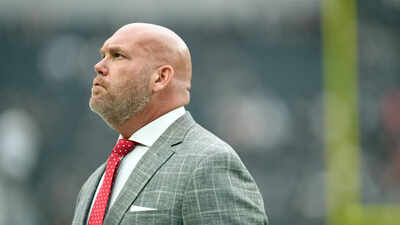
Former Arizona Cardinals general manager Steve Keim was listed as an executive at a company now accused of taking hundreds of thousands of dollars from former NFL players. Keim says he was one of the people who lost money.Keim told ESPN that he worked with Mohamed Coulibaly and promoted his company because he believed the business was legitimate. Coulibaly, 23, was found dead in a swimming pool in New Jersey on July 31. His death remains under investigation, while former NFL players and other investors are still trying to determine whether they can recover their money.
Why is Steve Keim’s name at the center of the Mohamed Coulibaly allegations?
A November 2025 pitch deck identified Keim as Motion Venture’s chief operation/growth officer. According to NBC Sports, the deck described him as someone involved in expansion strategy, partnerships, budgeting and other major business decisions.That title puts Keim unusually close to the company on paper.Keim, however, told ESPN that he never received a salary or insurance from the business. He said he invested his own money, continued rolling profits from his Shopify investments back into the company and ultimately lost seven figures.“I’ve not been compensated. So not only has my name been used, I’m a victim,” Keim told ESPN.Keim also said Coulibaly used his name to help legitimize the company. He acknowledged promoting the investment to friends and family because he believed in it at the time.One of the people connected to Keim was Seattle Seahawks general manager and president of football operations John Schneider. A Seahawks spokesperson told ESPN that Keim introduced Schneider to the investment opportunity and confirmed Schneider invested money and suffered a loss.The questions around Motion Venture began well before Coulibaly’s death.Barron’s published an investigation on July 15 alleging that Coulibaly’s operation targeted professional athletes with e-commerce investments involving Shopify stores. The report alleged that fake sales were entered into dashboards to make some stores appear more successful.One transaction highlighted by Barron’s showed a $5,000 order from Luxembourg for 100 desktop humidifiers and 120 USB-powered cup warmers. The person living at the listed shipping address told the publication he never placed the order.Coulibaly disputed portions of the reporting before his death.“I strongly dispute a number of the factual assertions and characterizations contained in the Barron’s article and any follow-up reporting that relies upon them,” Coulibaly told the New York Post, according to NBC Sports.Keim said he also began questioning the business before Coulibaly died. According to ESPN, Keim traveled to Philadelphia to meet with bankers and later confronted Coulibaly over concerns that he might have been scammed himself. Keim said he then informed investors about what he had learned and apologized.His presence in the pitch deck remains important, but ESPN also reported a detail that cuts the other way. Barry Minkow, who filed a complaint with regulators after being hired by three investors, wrote that his investigation found no evidence that his clients invested because of representations made by Keim. Minkow said he viewed Keim, and potentially Schneider, as victim investors.
Can former NFL players recover their money after Mohamed Coulibaly’s death?
That has become the biggest unresolved issue.Former New York Giants linebacker Tae Crowder told ESPN that he lost at least $500,000. He said the investment effectively wiped him out. Former NFL running back Matt Breida invested $250,000 in another portion of the arrangement, while a third former player invested $675,000, according to contracts and complaint documents reviewed by ESPN.The players initially invested in Shopify stores and received some returns, which they said they reinvested. They later put larger amounts into what the complaint described as an escrow structure.According to ESPN, the agreements included language guaranteeing investors at least their original money back after specified periods. The players said those deadlines passed without repayment.Crowder told ESPN that he repeatedly sought his money and eventually sent Coulibaly a demand through an attorney in May. Breida said investors were repeatedly given explanations involving banks, holds and overseas parties.The company’s presentation also featured recognizable NFL names. In addition to Schneider, the pitch materials listed figures including Philadelphia Eagles defensive tackle Jalen Carter and other current and former players as notable clients or partners. NBC Sports reported there was no indication everyone listed had approved the use of their names.That visibility mattered. Crowder told ESPN that seeing legitimate NFL names connected to the company helped convince him that the opportunity was credible.Coulibaly’s death now makes the recovery process more complicated. Crowder’s attorney told ESPN that potential claims could still be brought against Coulibaly’s estate. Crowder had also met with federal investigators before Coulibaly died.As of Aug. 11, ESPN said it could not confirm any lawsuits or criminal cases connected to the allegations. NBC Sports also reported that no arrests had been made and no charges had been filed in connection with either the alleged scheme or Coulibaly’s death.The financial losses are already real for the investors who spoke publicly. What authorities still have to establish is what happened to their money and whether any assets remain available to recover.Keim now has another question to answer as well: how a former NFL general manager ended up with an executive title inside a company he says eventually cost him more than $1 million.