








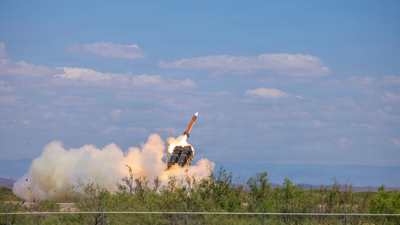
As Russia and Iran continue to sling ballistic missiles at Ukraine and the wider west Asian region, respectively, both these theatres seek air defence interceptors to blow this threat in the air. As both the conflicts continue, with no end in sight, the demand for two such interceptors, the Terminal High Altitude Area Defense (THAAD) and the MIM-104 Patriot are in high demand. With both the United States and its allies burning through their reserves. Both these missile systems are also in the forefront of the US island defence strategy, which rests on the three island chains that block China’s access to the open seas. The US, in case of a conflict with China, would operate from these islands, and these islands are expected to bear the brunt of Chinese missile attacks.Both the THAAD and the Patriot missile systems play a pivotal role in the United States’ layered missile defence strategy. Of these two weapon systems, the THAAD is designed and deployed to intercept both short and medium-range ballistic missiles at high altitudes. These systems provide a critical shield against ballistic missiles during the third and final phase called the terminal phase. The Patriot system, with its advanced radar and PAC-3 interceptors, has long been the backbone of air defence, capable of countering aircraft, cruise missiles and now increasingly ballistic missiles. In Ukraine, Patriot batteries have proven vital in intercepting Russian missile barrages, while in west Asia, they are central to defending against Iranian threats. Together, these two systems provide a credible defence against aerial threats.Technically, these two systems complement each other. The THAAD’s exo-atmospheric (outside the atmosphere) interception capability allows it to engage threats at much higher altitudes, providing a wider engagement envelope. The Patriot, on the other hand, with its advanced radar and PAC-3 interceptors, is more capable of handling lower-altitude threats. This layered approach is designed to ensure that adversaries don’t exploit altitude or ballistic trajectory to bypass defences.The prolonged conflicts in Ukraine and west Asia have shown the vulnerability of sustained missile and drone strikes that slowly chip away defensive capability. Russia’s extensive use of ballistic and cruise missiles against Ukrainian infrastructure has highlighted the need for reliable interceptors. Patriot batteries deployed in Ukraine have already demonstrated their effectiveness in combat, intercepting Russian missiles and bolstering Kyiv’s defences. In west Asia, the threat from Iranian ballistic missiles and drones directed at US bases and infrastructure in Gulf nations has demonstrated the need for forward-deployed THAAD and Patriot units. These systems have become so important that they their deployment is now seen as political signals of Washington’s commitment to its regional partners. The withdrawal of these systems from South Korea was also seen with skepticism from Seoul.The Pentagon’s recent push to expand production of interceptors for both systems reflects the operational strain these two conflicts are putting on the already dwindling stockpiles, driven by the demands of supplying partner nations and sustained deployment across multiple theatres. With stockpiles under strain due to transfers to Ukraine, active use in the Gulf and growing commitments in the Indo-Pacific, ensuring steady output of these interceptors is becoming increasingly important.