








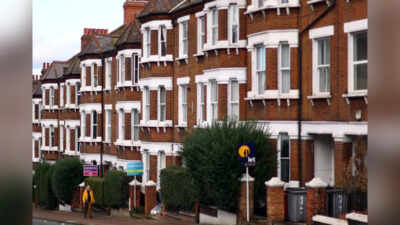
Britain’s housing market lost momentum in July as higher mortgage rates, stretched affordability and uncertainty linked to the Iran war weighed on demand, with house prices remaining broadly unchanged during the month, mortgage lender Lloyds said.House prices were flat in July, compared with a 0.2% increase in June and below the 0.1% rise economists had expected in a Reuters poll.On an annual basis, prices rose just 0.1%, down sharply from 0.7% growth in June and marking the weakest annual increase since November 2023, according to Lloyds data.The average UK property price stood at £299,253 in July, down £143 from the previous month, according to Lloyds’ monthly index.
Mortgage rates rise again as affordability remains stretched
Amanda Bryden, head of mortgages at Lloyds, said affordability remained a major hurdle for prospective buyers, with mortgage rates rising again following recent developments in the Middle East.“Affordability remains a challenge for many would-be buyers and, following recent events in the Middle East, mortgage rates have edged higher again after easing earlier in the summer,” Bryden said, as cited by Reuters.She said housing demand remained broadly steady but activity was responding quickly to changes in mortgage rates.She added that Lloyds expected market activity and house prices to remain relatively stable for the rest of the year, with the outlook depending on mortgage rates, inflation and household confidence.The conflict in the Middle East has added to concerns over inflation and increased expectations of higher interest rates.According to The Guardian, the average rate on a two-year fixed residential mortgage was 5.63% on Friday, while the average five-year rate stood at 5.67%, with both rates below 5% at the start of the year.The increase in borrowing costs has tempered what had been a stronger start to 2026 for Britain’s housing market.Previously released Bank of England data showed mortgage approvals in June were higher than economists had expected despite elevated borrowing costs.Investors were also fully pricing in a 25-basis-point increase in the Bank of England’s main interest rate in December as of Thursday, Reuters reported.
North-south divide widens across UK
The slowdown was uneven across the country, with Northern Ireland continuing to record the strongest annual price growth.House prices in Northern Ireland rose 7.4% from a year earlier, taking the average property value to £231,131, according to Lloyds data.Scotland recorded annual growth of 3.6%, with the average price reaching £223,246, while Wales saw prices rise 1.6% to £231,458.Northern England also outperformed southern parts of the country. Prices in the north-east increased 2.8% annually to £182,488, while those in the north-west rose 2.1% to £247,836.By contrast, the south-east recorded a 2% decline, with the average property price falling to £381,146. Greater London saw prices drop 1.3% to £533,930.The regional gap reflects differences in affordability and the balance between supply and demand. Nicholas Finn, managing director at London estate agent Garrington Property Finders, said the divide between northern and southern England was becoming more pronounced.In southern areas, he said, a higher supply of homes was attracting too few buyers, putting downward pressure on prices, while more balanced supply and demand in northern England was supporting prices.Anthony Codling, an analyst at RBC Capital Markets, described the market as being in “suspended animation”, according to The Guardian.He said prices were neither falling sharply nor rising decisively, with stretched affordability and mortgage rates limiting the recovery.The latest figures suggest that Britain’s housing market is entering the second half of 2026 with momentum significantly weaker than at the beginning of the year, as the cost of borrowing and wider economic uncertainty continue to influence buyer activity.