








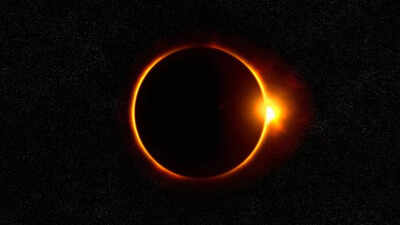
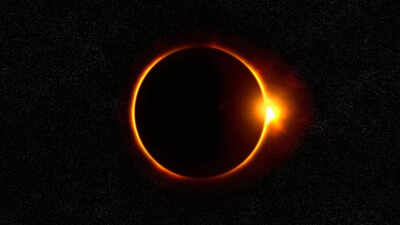
The Moon will slide fully across the Sun on the evening of August 12, dropping a narrow band of Europe into darkness for a little over a minute in some places and close to two in others. It is the first total solar eclipse anywhere on Earth since April 2024, and the first to cross the Iberian Peninsula in more than a century. Spain is the headline act here, simply because it is the only densely populated stretch of land the shadow touches.Totality begins over the Arctic, sweeps across eastern Greenland and western Iceland, clips a sliver of northeastern Portugal at Montesinho Natural Park, and then runs west to east across northern Spain. Everywhere else in Europe, and a chunk of North America, gets a partial bite out of the Sun instead.
Where the August 12 total solar eclipse will be visible
In Spain, León, Burgos, Valladolid, Santander, Bilbao, Zaragoza, Valencia and Palma all sit in the path of totality, with peak around 8:32-8:33 pm CEST. Madrid misses it by a hair at 99 percent obscuration. Iceland’s western coast, including Reykjavík and Ísafjörður, sees totality earlier at 5:48 pm GMT, though Látrabjarg holds it longest.Elsewhere, Dublin gets 94 percent, Paris 92, London 91. North America does far worse. New York manages 9 percent, Washington DC just 4, and Chicago a rounding error at 0.1 percent. St John’s in Newfoundland is the continent’s best seat at 53 percent. India sees nothing, since the eclipse happens well past midnight IST.
What makes this eclipse different from the 2024 one
Two things. It coincides with lunar perigee, so the Moon appears slightly larger than usual and totality stretches longer than it otherwise would. It also lands on the Perseid meteor shower, which peaks the same night. Watch the eclipse at sunset, then wait for the sky to fill with meteors.
How to watch the total solar eclipse live online
ESA is streaming it free on YouTube and ESA Web TV from 19:30 to 20:45 CEST, hosted by space scientist Dame Dr Maggie Aderin. The main feed comes from the Observatorio Astrofísico de Javalambre in Teruel, where 1 minute 21 seconds of totality hits at 20:31 CEST, with additional feeds from León and Frómista as cloud insurance. ESA is also running a free public event at the Palacio de Exposiciones y Congresos in León, mostly in Spanish.
Solar eclipse safety: What not to do while watching
Do not look at the Sun without certified eclipse glasses at any point outside totality. Sunglasses do not work. Binoculars and telescopes without solar filters are worse than nothing. The American Astronomical Society maintains a list of approved viewers. Shooting it? Your lens needs a solar filter too. The safest option costs nothing: a pinhole projector, or a kitchen colander held above the ground, which throws dozens of tiny crescent Suns onto the pavement.