









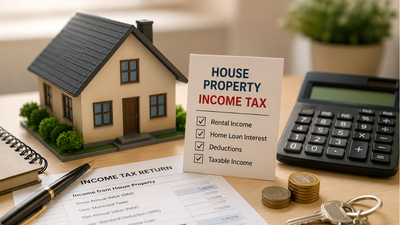
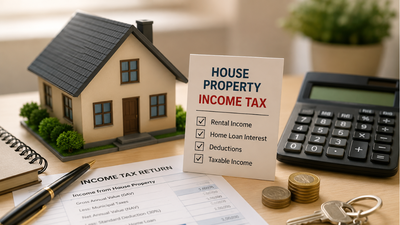
Whether you own a self-occupied house or earn rental income from a residential property, you are required to report it appropriately while filing your Income Tax Return (ITR). The Income Tax Act classifies earnings from residential and commercial properties under the head ‘Income from House Property’, with the method of reporting varying based on how the property is used.With the deadline for filing ITRs for individuals without business income approaching, taxpayers who own residential property should ensure they report it correctly in their tax return. Whether the house is self-occupied, rented out or jointly owned, the method of reporting—and the deductions available—can vary depending on the property’s usage. Here’s a guide to reporting income from house property while filing your ITR.
Who needs to report house property income ?
Any taxpayer who owns a property during the financial year may have to disclose it while filing their ITR. This includes:
- Individuals with a self-occupied house
- Owners of one or more rented-out properties
- Co-owners of a property
- Taxpayers with vacant properties that are treated as deemed let-out under the tax rules
The income or annual value of the property is reported under the ‘Income from House Property’ schedule in the applicable ITR form.
Self-occupied vs rented property
The tax treatment differs depending on whether the property is occupied by the owner or rented out.Self-occupied propertyA self-occupied house is one that is used by the owner for residential purposes. The annual value of such a property is generally considered Nil, provided the applicable conditions are met. However, taxpayers should still disclose the property details while filing their return and can claim eligible deductions, such as home loan interest, subject to the prescribed limits.Let-out propertyIf a property has been rented out during the financial year, taxpayers must report:
- Gross rent received or receivable
- Municipal taxes paid, if any
- Net annual value
- Eligible deductions, including the standard deduction and home loan interest
The rental income, after permissible deductions, is taxed under the head ‘Income from House Property’.Vacant or deemed let-out propertyIf a taxpayer owns more than two houses and the additional property (or properties) is not rented out, the additional properties may be treated as a deemed let-out property under the Income Tax Act. In such cases, the taxpayer may have to compute notional rental income and report it in the ITR.
How is income from house property calculated?
For a let-out property, taxable income is generally calculated after the following adjustments:
- Gross Annual Value (GAV), or the rent received/receivable
- Less: Municipal taxes paid by the owner
- Net Annual Value (NAV)
- Less: Standard deduction of 30% of the Net Annual Value
- Less: Eligible deduction for interest paid on a home loan under Section 24(b)
The resulting figure is the taxable income (or loss) from house property that is reported in the ITR.
How to report house property in your ITR
While filling the ‘Income from House Property’ schedule, taxpayers may need to provide details such as:
- Nature of the property (self-occupied or let-out)
- Address of the property
- Rental income received, if applicable
- Municipal taxes paid
- Interest paid on a housing loan
- Details of co-ownership, if the property is jointly owned
Keeping documents such as the home loan interest certificate, municipal tax receipts and rent agreements handy can help ensure accurate reporting.
Which ITR form should you use?
The ITR form depends on the taxpayer’s income profile and the number of properties owned.
- ITR-1 can be used by eligible individuals with income from salary, one or more eligible house properties (subject to the form’s conditions), and other specified sources.
- ITR-2 is generally applicable where the taxpayer does not qualify for ITR-1, including in certain cases involving multiple properties or more complex income situations.
Taxpayers should verify the eligibility conditions before selecting the appropriate form.
Common mistakes to avoid
While reporting house property income, taxpayers should avoid:
- Failing to report rental income
- Claiming incorrect home loan interest deductions
- Choosing the wrong ITR form
- Incorrectly reporting jointly owned property
- Omitting property details or eligible deductions
Accurate reporting of house property income not only helps taxpayers claim the deductions they are entitled to but also reduces the chances of discrepancies, notices or delays in the processing of their income tax return.