









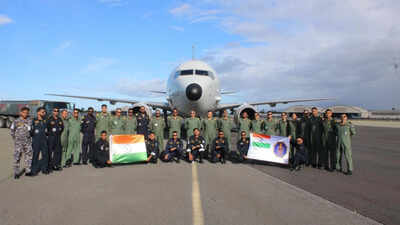
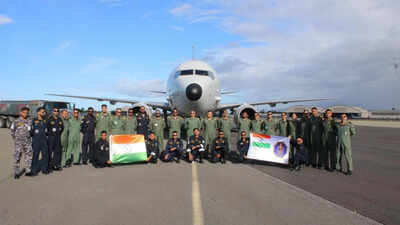
The Indian Navy has deployed a P-8I maritime patrol aircraft to Hawaii for the Rim of the Pacific (RIMPAC) exercise — the world’s largest naval exercise, hosted by the US Pacific Fleet. The 30th edition will include 30 nations, more than 30 surface ships, five submarines and over 200 aircraft, and will take place around Hawaii. Its theme is “Partners: Integrated and Prepared.” First held in 1971, RIMPAC seeks to improve interoperability among partner navies across the full spectrum of naval operations.According to the US Navy, the exercise is designed to strengthen collective readiness, reinforce international partnerships and promote a free and open Indo‑Pacific. RIMPAC will feature training events such as gunnery and missile exercises, counter‑piracy operations, mine countermeasures, amphibious warfare, anti‑submarine warfare and air defence.“By training together in complex, realistic scenarios, participating nations improve readiness, sharpen warfighting skills and strengthen the interoperability required to operate effectively alongside one another whenever and wherever needed,” says Vice Admiral Jeff Jablon, RIMPAC 2026 commander.The Indian and US navies regularly train together in exercises such as Milan, Malabar and La Pérouse. They also operate together in the northern Arabian Sea and off the Horn of Africa, and through the US‑led, Bahrain‑based Combined Maritime Forces (CMF); the Indian Navy currently heads a task force under the CMF. The two navies frequently coordinate on humanitarian assistance and disaster relief (HADR) operations. In November last year, then‑Navy Chief Admiral D.K. Tripathi visited the United States and met US naval leadership to improve coordination. Existing agreements — including the Basic Exchange and Cooperation Agreement (BECA) and the Communications Compatibility and Security Agreement (COMCASA) — help the two forces coordinate during peacetime, crises and contingencies.The P‑8I is a multi‑role long‑range maritime reconnaissance and anti‑submarine warfare (LRMR‑ASW) aircraft based on the Boeing 737‑800. It is capable of maritime surveillance and strike, electronic warfare, search and rescue, providing targeting data to weapon platforms and anti‑submarine operations. The platform has been used for reconnaissance and surveillance during the post‑Galwan high‑Himalaya stand‑off. The P‑8I can carry air‑to‑ship missiles and torpedoes. The Indian Navy currently operates a dozen P‑8Is and plans to acquire six more.