








Just a few years ago, ChatGPT was best known for answering questions and helping people write emails, essays or bits of computer code. In 2026, it has evolved into something much broader. According to OpenAI, it can research information, reason through complex problems, generate images, analyse documents, assist with software development, automate routine tasks and even remember user preferences across conversations when enabled. Rather than functioning as a single-purpose chatbot, it increasingly acts as an AI assistant that supports work, education, creativity and everyday decision-making. Its expanding capabilities reflect rapid advances in multimodal artificial intelligence, longer reasoning processes and improved personalisation. Here are ten of the most useful things ChatGPT can do, and why they matter for millions of people using AI every day.
10 things ChatGPT can do that most users still haven’t discovered
1. It can research topics instead of simply answering questions
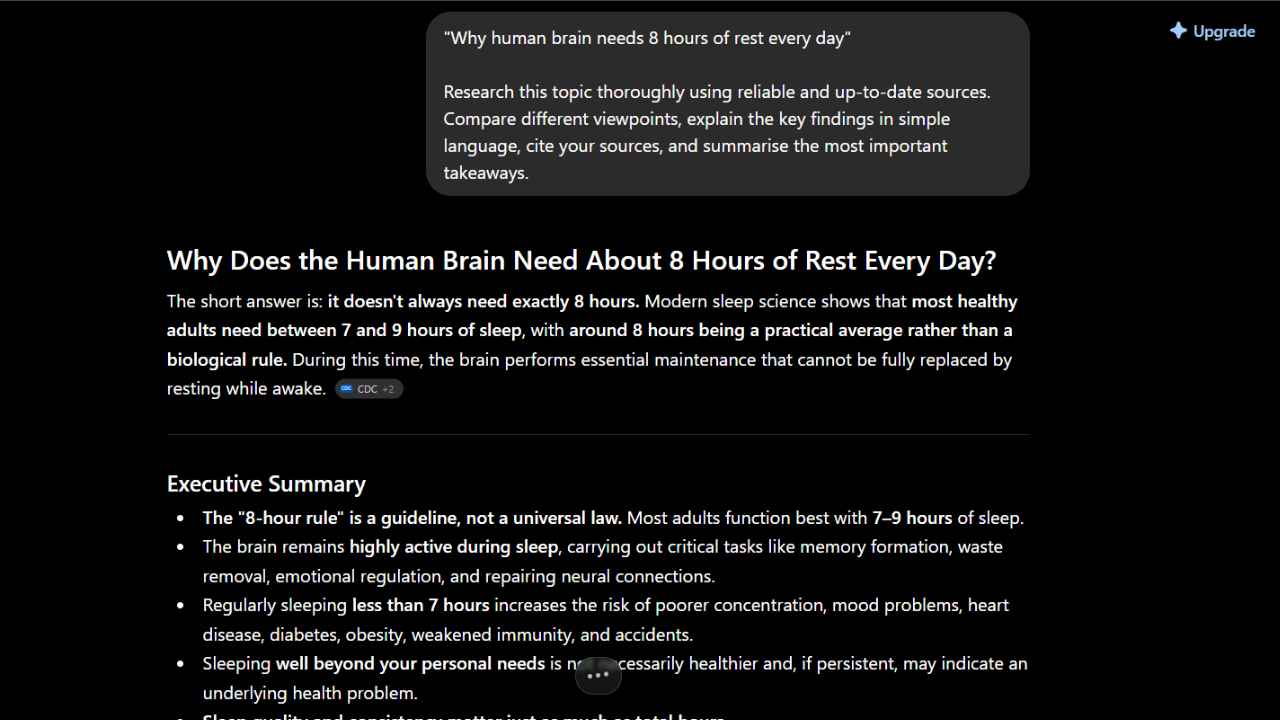
Modern versions of ChatGPT can perform multi-step research by searching trusted online sources, comparing information, identifying conflicting claims and producing structured summaries with citations.Unlike earlier AI models that relied solely on pre-trained knowledge, ChatGPT can now access current information (when web access is enabled), making it useful for researching scientific studies, market trends, policy changes and technical documentation.OpenAI describes this capability as helping users tackle “complex, multi-step research tasks” while producing sourced outputs.
Try this prompt:
“Research this topic thoroughly using reliable and up-to-date sources. Compare different viewpoints, explain the key findings in simple language, cite your sources, and summarise the most important takeaways.”
2. It understands images, documents and voice together
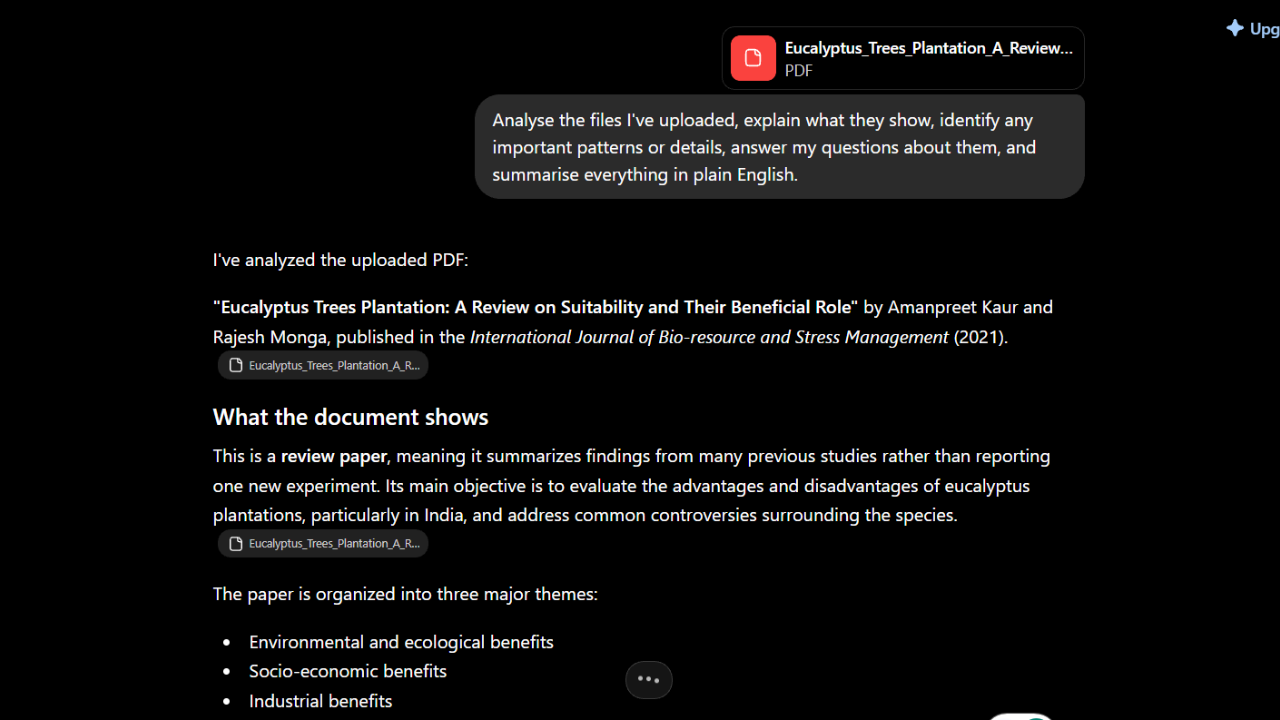
ChatGPT has become genuinely multimodal.Users can upload PDFs, spreadsheets, handwritten notes, charts, photographs or screenshots, ask spoken questions and receive responses that combine text, visual understanding and reasoning.Instead of treating text, images and audio separately, the model analyses them together to understand context more naturally.According to OpenAI, GPT-5 and recent multimodal models are designed to reason across multiple forms of input.
Try this prompt:
“Analyse the files I’ve uploaded, explain what they show, identify any important patterns or details, answer my questions about them, and summarise everything in plain English.”
3. It can generate and edit high-quality images from simple prompts
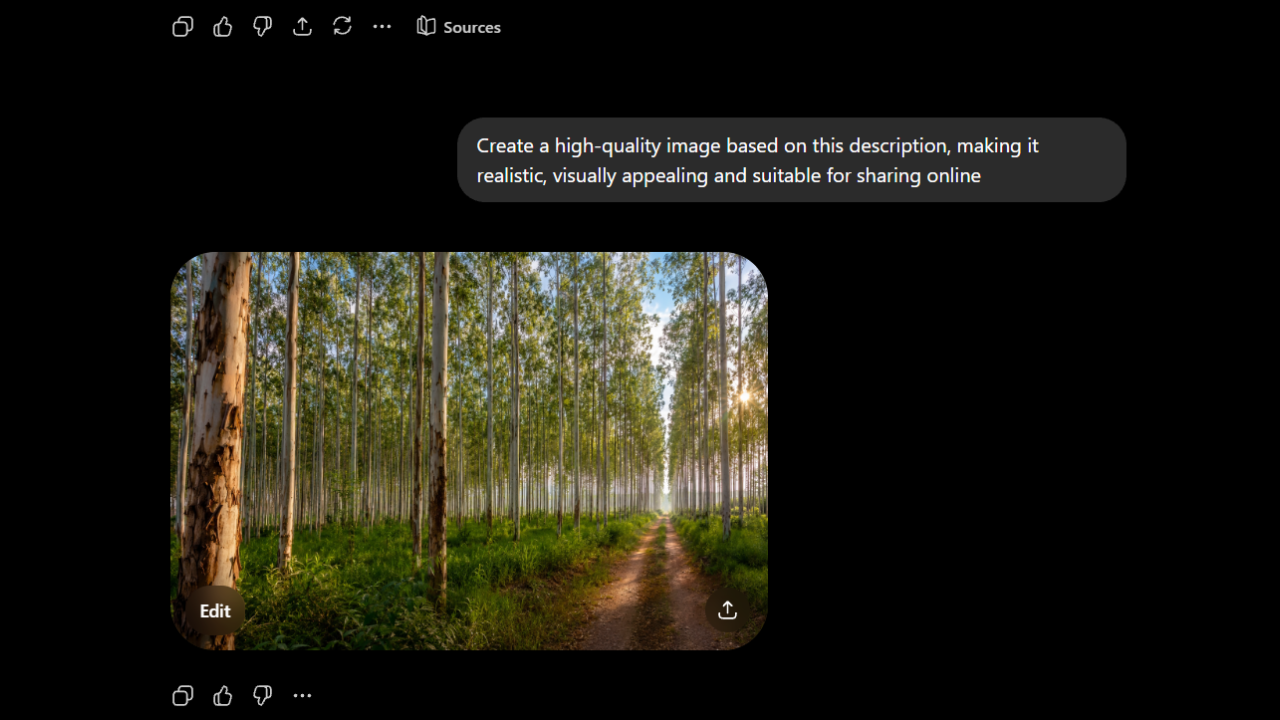
Image generation is no longer a separate experience.Users can ask ChatGPT to create illustrations, realistic photographs, diagrams, marketing graphics, social media visuals, logos and concept art or edit existing images using natural language instructions.Instead of learning specialist design software, many users can simply describe the changes they want.OpenAI notes that native image generation allows the model to produce and edit images while understanding the full conversational context.
Try this prompt:
“Create a high-quality image based on this description, making it realistic, visually appealing and suitable for sharing online.”
Or for editing:
“Edit this image according to my instructions while keeping it natural and high quality.”
4. It remembers your preferences to provide more personalised help
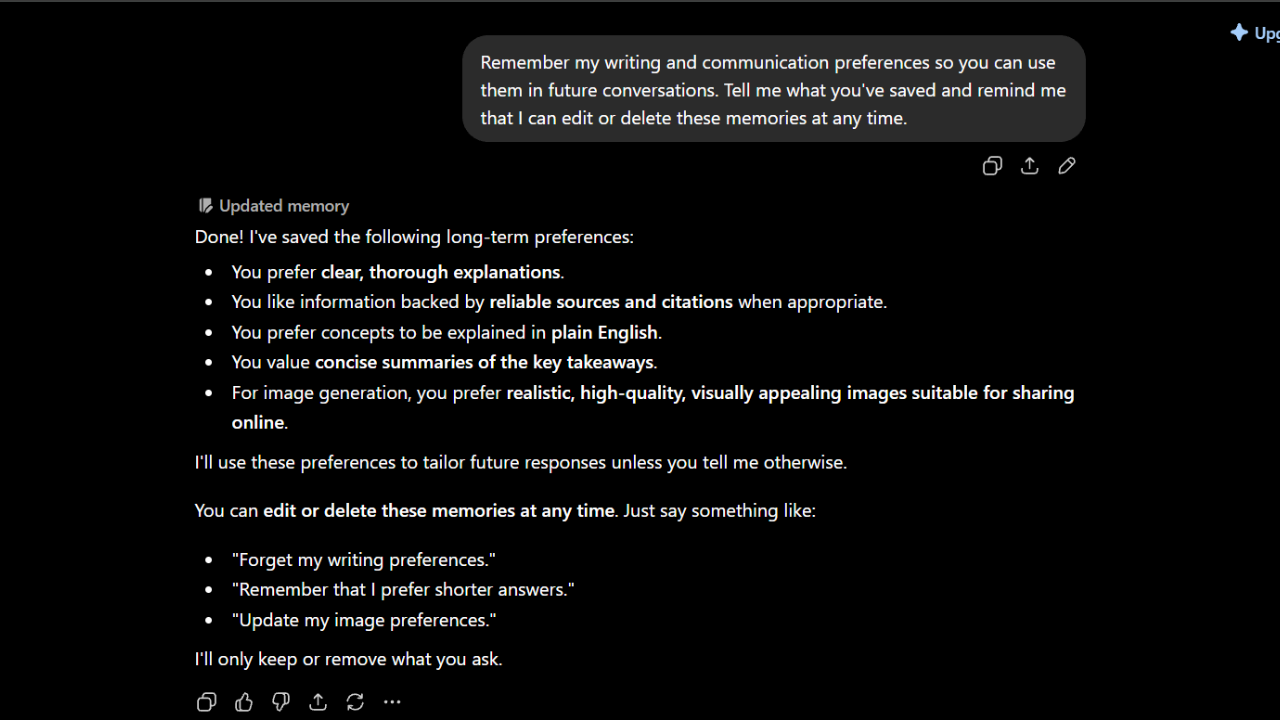
With memory enabled, ChatGPT can remember useful information between conversations, such as preferred writing style, favourite programming languages, recurring projects or communication preferences.This reduces repetitive instructions and helps create more personalised interactions over time.Users remain in control and can review, edit or delete stored memories whenever they choose.As OpenAI explains:“You’re in control of ChatGPT’s memory.”
Try this prompt:
“Remember my writing and communication preferences so you can use them in future conversations. Tell me what you’ve saved and remind me that I can edit or delete these memories at any time.”
5. It can write, debug and explain computer code more efficiently
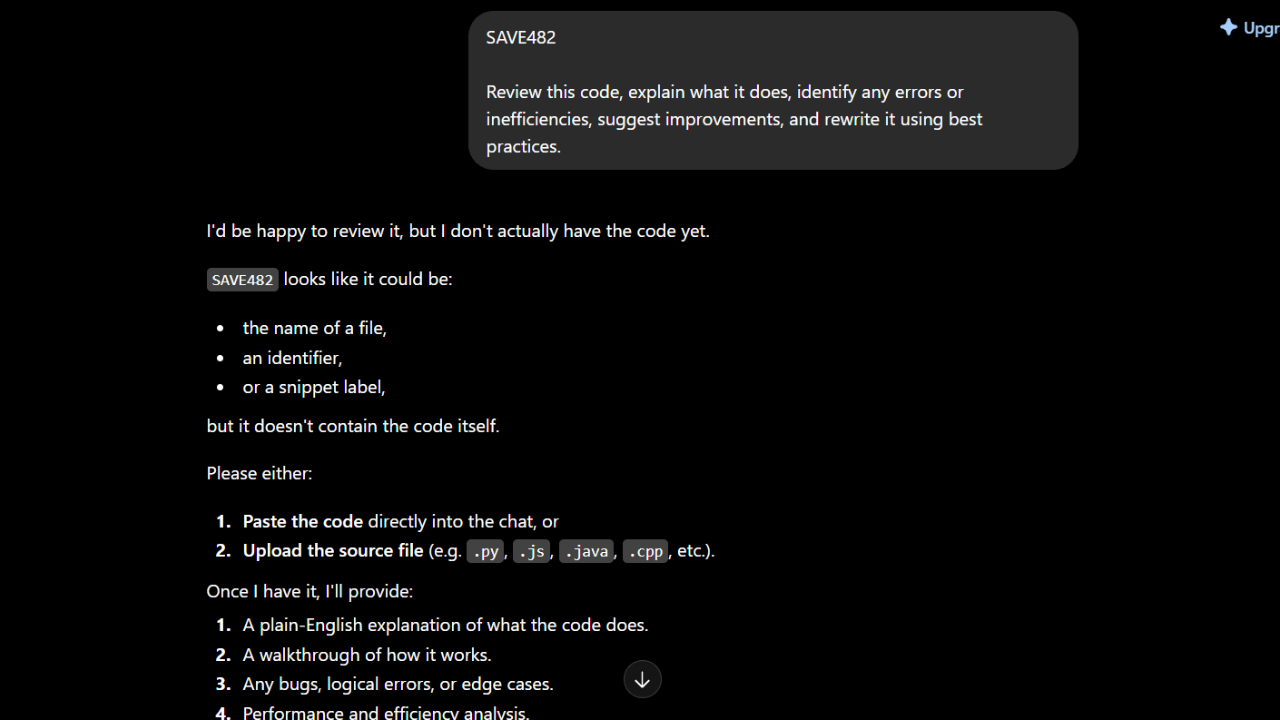
Software developers increasingly use ChatGPT throughout the development process rather than only for generating snippets of code.It can explain unfamiliar programming concepts, review code, identify bugs, suggest improvements, generate documentation and assist with testing.OpenAI has also introduced Codex-powered coding agents that can independently complete many software engineering tasks under user supervision.
Try this prompt:
“Review this code, explain what it does, identify any errors or inefficiencies, suggest improvements, and rewrite it using best practices.”
6. It can automate routine digital tasks
Beyond answering questions, ChatGPT is gradually becoming capable of completing actions on behalf of users.Depending on available integrations and permissions, it can help organise information, draft documents, manage repetitive workflows and interact with connected services.OpenAI’s Operator research preview demonstrates AI systems that can use websites similarly to human users by interacting with graphical interfaces.
Try this prompt:
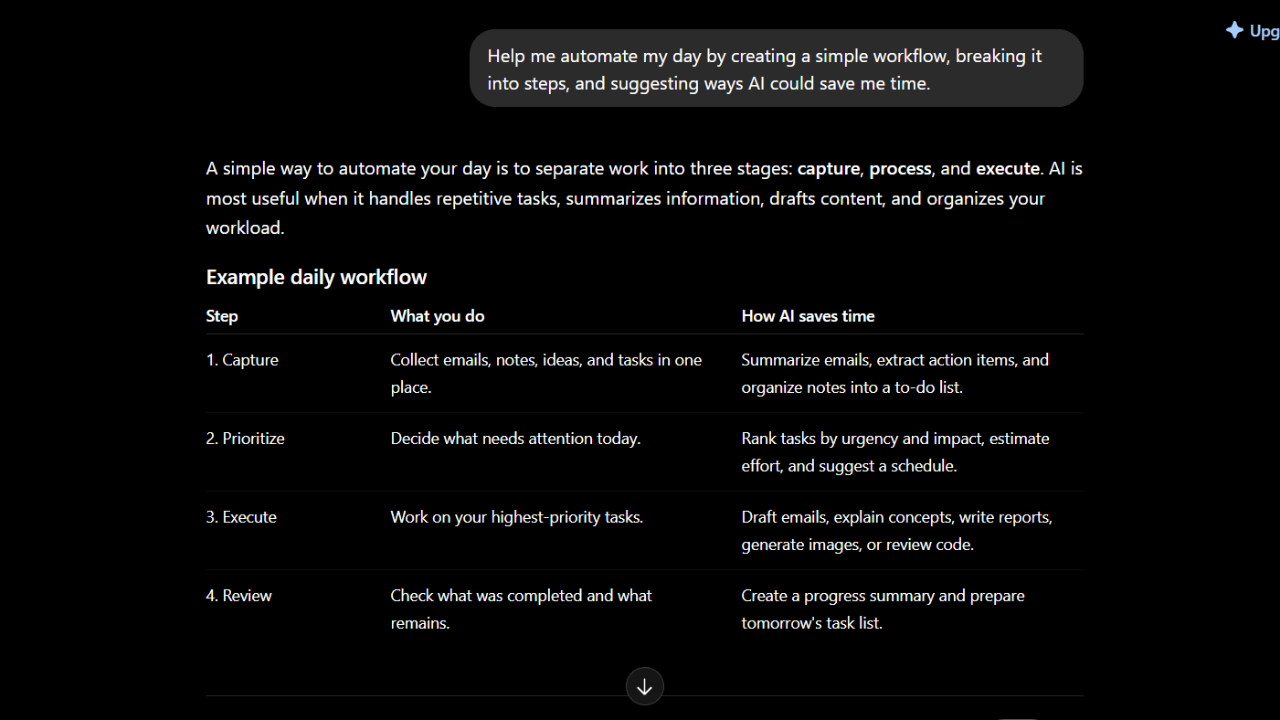
“Help me automate this repetitive task by creating a simple workflow, breaking it into steps, and suggesting ways AI could save me time.”
7. It helps people learn by adapting explanations to different skill levels
Rather than giving identical responses to everyone, ChatGPT can tailor explanations based on age, expertise and learning goals.Whether someone wants a beginner-friendly overview of quantum physics or an advanced explanation of statistical modelling, the same conversation can progressively increase in complexity.OpenAI highlights education as one of the major practical applications of conversational AI, enabling more personalised learning experiences.
Try this prompt:
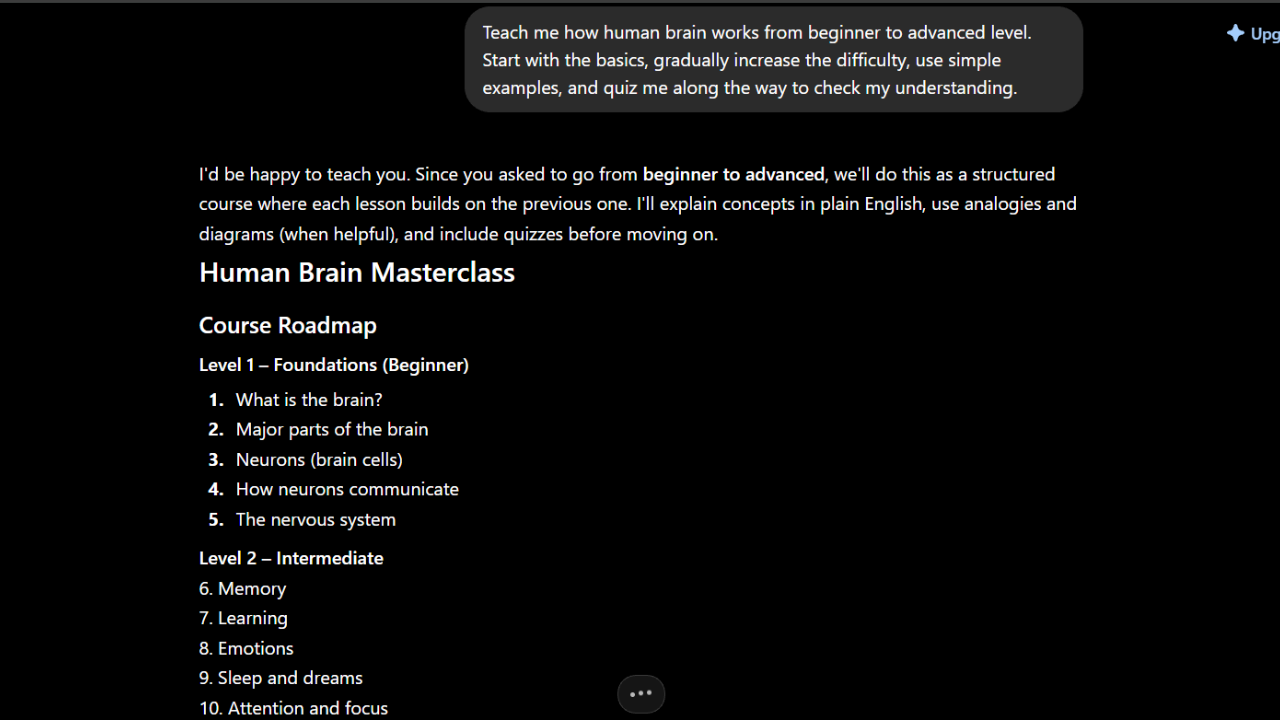
“Teach me this topic from beginner to advanced level. Start with the basics, gradually increase the difficulty, use simple examples, and quiz me along the way to check my understanding.”
8. It can analyse lengthy documents in minutes
Contracts, research papers, annual reports, policy documents and technical manuals often contain hundreds of pages.ChatGPT can summarise these documents, identify key findings, compare sections, extract important information and answer detailed questions based on uploaded files.This significantly reduces the time required for document review while helping users navigate large volumes of information.OpenAI recommends using document uploads for analysis and question answering across supported file types.
Try this prompt:
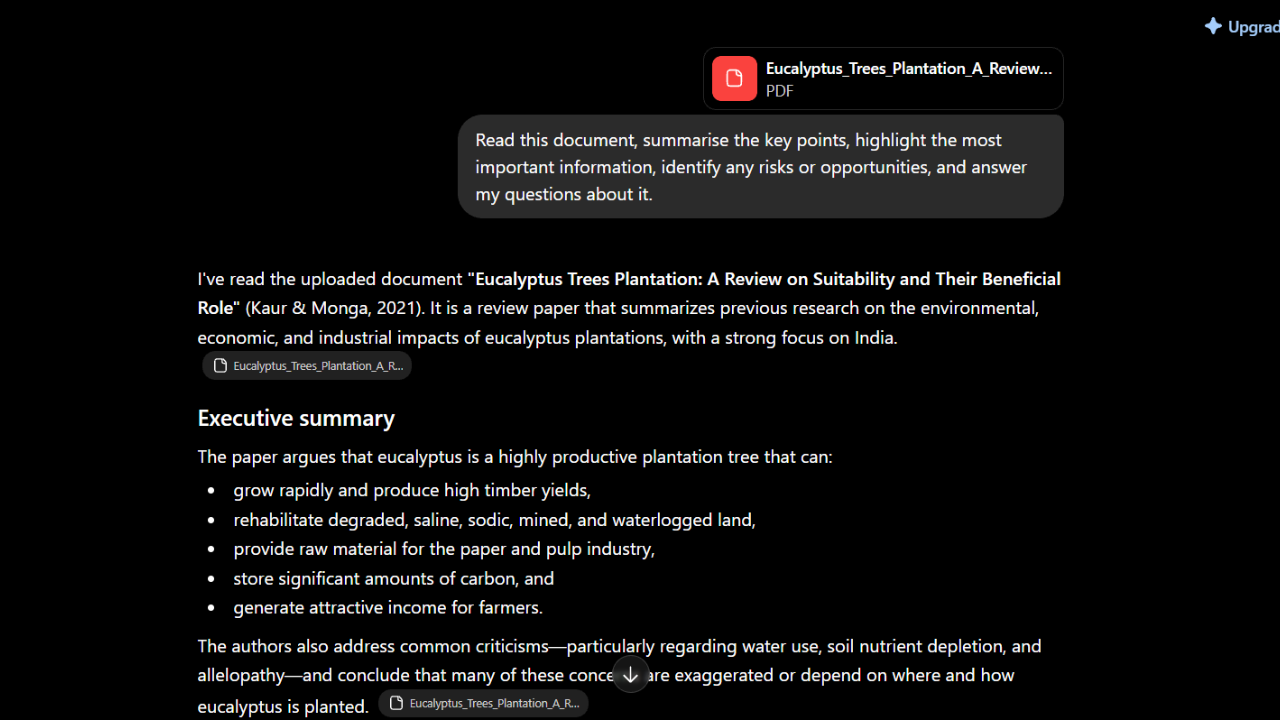
“Read this document, summarise the key points, highlight the most important information, identify any risks or opportunities, and answer my questions about it.”
9. It supports creative work far beyond writing
ChatGPT is increasingly used as a creative collaborator rather than simply a text generator.People use it to brainstorm marketing campaigns, develop business ideas, outline books, create lesson plans, design games, draft presentations, generate story concepts and refine content for different audiences.Its ability to iterate rapidly allows creators to test multiple approaches before settling on a final version.OpenAI describes ChatGPT as a tool that assists with writing, planning, brainstorming and creative workflows.
Try this prompt:
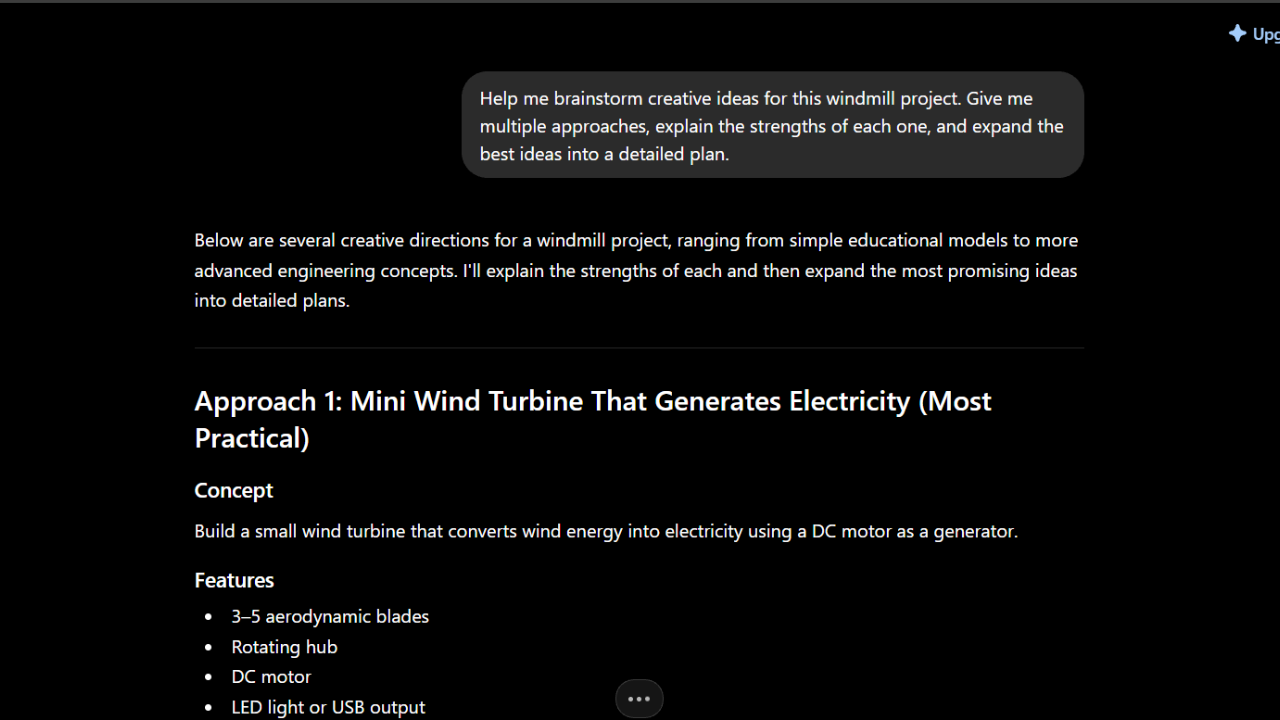
“Help me brainstorm creative ideas for this project. Give me multiple approaches, explain the strengths of each one, and expand the best ideas into a detailed plan.”
10. It is gradually evolving into a personal AI assistant
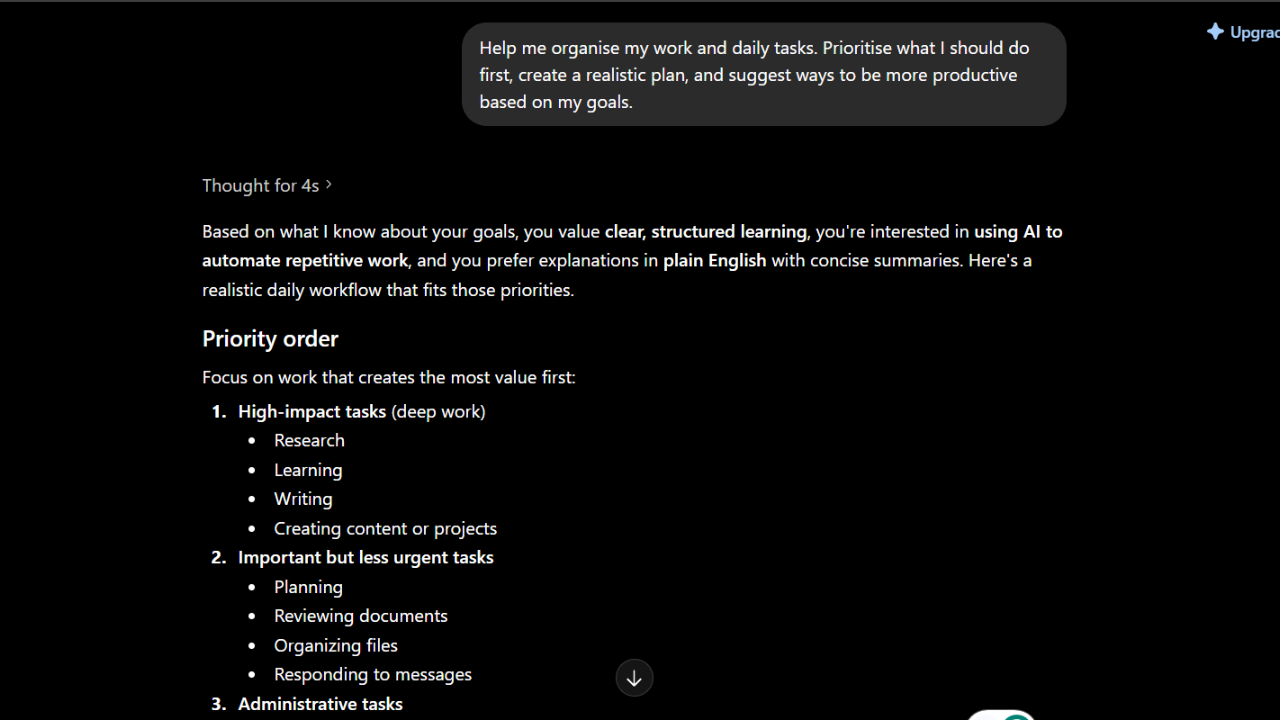
Perhaps the biggest shift is not a single feature but the combination of them all.By bringing together reasoning, web research, memory, multimodal understanding, coding assistance, image generation and workflow automation, ChatGPT is moving beyond the traditional definition of a chatbot.While it still requires human judgement and oversight, it increasingly functions as a versatile AI assistant capable of supporting everyday tasks across work, education and personal life.As OpenAI states, its long-term goal is to build AI systems that are “useful for everyone.”
Try this prompt:
“Help me organise my work and daily tasks. Prioritise what I should do first, create a realistic plan, and suggest ways to be more productive based on my goals.”