









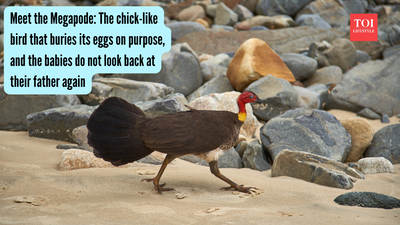
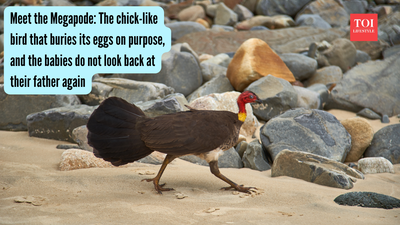
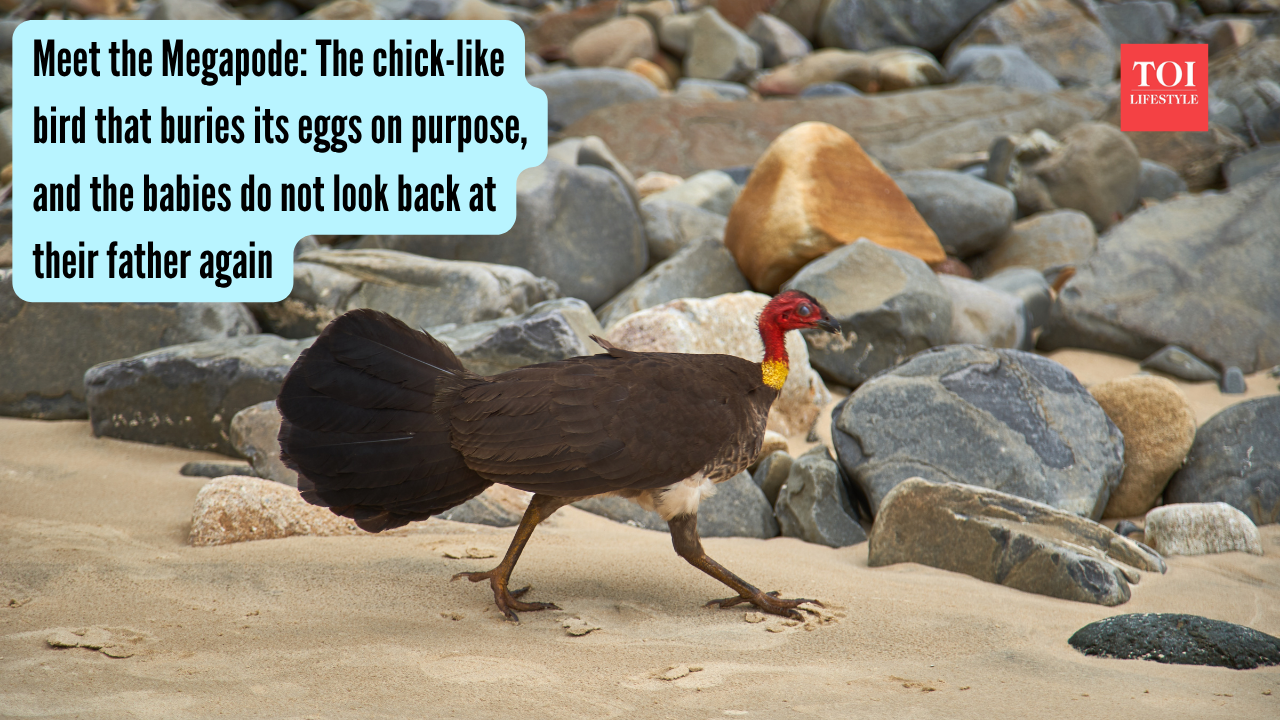
Australian Brush Turkey , a Megapode (photo via Canva)
Nature has unique surprises hidden in its embrace, and few creatures prove that better than a sturdy, big-footed bird most people have probably never heard of.While the vast majority of birds spend weeks faithfully sitting on their eggs and weeks more feeding helpless chicks, an unusual family of birds decided long ago to skip these steps completely. Instead of warming eggs with their own bodies, these birds build entire mounds of heat like expert civil engineers sand, soil, and rotting vegetation, then walk away the moment the job is done.While it may sound too efficient to be real, but it is surprising to know that it’s a survival strategy that has worked for millions of years across a range of islands in the Pacific.
Meet the Megapode : The bird that buries its eggs for hatching
A chicken-sized bird who is nicknamed the incubator bird or the mound-builder, has an unusual way of incubating its eggs. Rather than brooding over their eggs the way most birds do, megapodes use external heat sources to hatch their young, and once the chicks break free, the parents barely interact with them again.According to August Abbott, a Certified Avian Specialist with the Pet Advocacy Network, megapodes are a fairly small and geographically scattered family, with just 22 species spread across places like Papua New Guinea, Australasia, the Philippines, and the Nicobar Islands.As reported by A-Z Animals, Abbott explained that the name megapode comes from Greek words meaning “big feet,” rightly describing these stocky, chicken-or-turkey-like birds.
How do Megapodes incubate their eggs
Despite their poultry-like appearance, megapodes don’t incubate eggs the conventional way. Instead, they depend on naturally warm environments, be it geothermal ground near volcanoes, sun-baked sand in dry regions, or decomposing organic material that generates its own heat.Brianna Crane, Senior Aviculturist at the National Aviary, noted that different species use different materials for their mounds, including sand and plant matter, and that males regularly adjust this material to keep incubation temperatures steady, as she told the National Aviary.
It’s the fathers that handle the task
It’s largely the male megapode who handles this labour-intensive task. According to Abbott, he builds the nesting mound from decomposing vegetation, leaves, and sticks, digging just deep enough to capture geothermal warmth without overheating the eggs. Despite this dedication, and despite the female laying around 35 eggs on average, the chicks climb straight out of the mound and head off entirely on their own the moment they hatch.
This independence isn’t limited to leaving the nest
Megapode chicks emerge fully feathered and, in some species, capable of flight almost immediately. Crane confirmed that megapode chicks receive no parental care after hatching, noting that they hatch fully developed and ready to fend for themselves. Their diet from day one includes seeds, fruit, plant material, snails, insects, and other small invertebrates.Unfortunately, this unique reproductive strategy hasn’t also been able to shield megapodes from serious threats. Abbott said that more than half of all megapode species today are endangered, largely because their large, nutrient-rich eggs have long been considered a delicacy in many Indo-Pacific communities.