








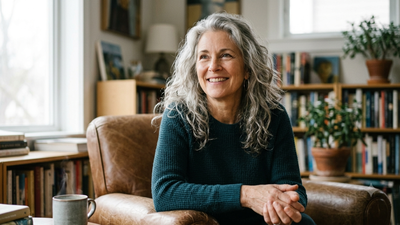
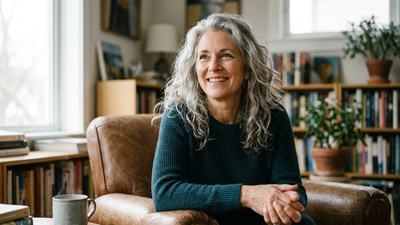
There’s a moment a lot of people remember pretty clearly: the day they found their first grey hair. Maybe you plucked it out without thinking twice. Or maybe you just stared at it in the mirror for a second too long. So what happens next, whether you dye it, hide it, or just let it be, turns out to say a lot more about your psychology than your follicles.A study published in the Journal of Women and Aging looked into why some women choose to stop dyeing their hair even though they know it might make them look older. Researchers from the University of Western Australia and the University of Bath found something interesting. Women going grey often face a tension between two competing needs: wanting to be seen as competent, and wanting to feel authentic. Basically, society tells women that grey equals old, and old equals incompetent. But a lot of women, despite knowing this, choose to go grey anyway because hiding it starts to feel like hiding themselves.That’s a pretty big deal psychologically. The researchers pointed out that gray hair on a woman has long produced one of the least desirable personas in society, an old woman, and that’s exactly the stigma women are pushing back against when they let their natural color show. So when someone embraces their grey despite that pressure, it’s not vanity or laziness. It’s closer to a quiet act of self-acceptance.
The confidence connection
Then there’s the social perception side of things. A 2025 study published in Frontiers in Psychology looked at how grey hair color shapes the way people are judged by others, in terms of age and social traits. The researchers noted something useful here too. Being aware of how gray hair affects age perception and social judgments can actually be a first step toward reducing the bias people hold against those who have it, whether at work or in everyday social settings. In other words, the bias against grey hair is real, but it’s also something we can consciously unlearn, both about others and about ourselves.And that unlearning seems to come with psychological benefits. People who decide to stop fighting their natural color often describe a kind of ripple effect. They feel braver. More willing to take up space. Less interested in shrinking themselves to fit someone else’s idea of what’s “presentable.” It’s not that grey hair magically makes you confident. It’s that the decision to stop hiding it usually comes after you’ve already done some inner work around self-worth and aging.
Why it reads as emotional maturity
So here’s the psychological piece that ties it together. Letting your hair go grey, especially in a culture obsessed with youth, requires you to separate your sense of identity from how others perceive you. That’s basically a textbook definition of emotional maturity. You’re not waiting for permission to feel okay about yourself. You’ve decided your value isn’t tied to looking 28 forever.There’s also something to be said about the self-esteem angle. Premature greying, in particular, has been linked in clinical literature to real impacts on body image and self-esteem, especially when it shows up earlier than expected. So choosing to embrace it, rather than constantly battling it with dye and root touch-ups, often reflects someone who’s made peace with aspects of themselves they can’t fully control. That’s not resignation. That’s psychological flexibility, the ability to accept what is rather than exhausting yourself fighting it.But maybe the simplest way to put it is this: embracing grey hair isn’t really about hair at all. It’s a small, visible signal of a much bigger internal shift, one where self-image stops depending on meeting someone else’s standard of youth.