








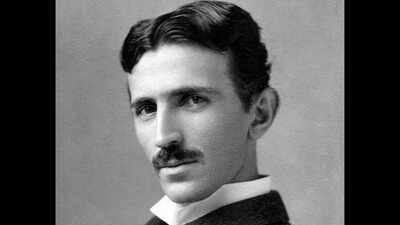
Some quotations remain popular because they offer encouragement. Others survive because they reveal something uncomfortable about human nature. This remark, commonly attributed to Nikola Tesla, belongs to the second group.The sentence is short, but it leaves a strong impression. Tesla takes an emotion that most people have experienced at some point and compares it to one of the most powerful forces known to modern civilisation. The result is a line that feels clever on the surface yet carries a deeper observation underneath.People usually think of hatred as a personal feeling. It exists inside individuals, between rivals, among groups or within long running conflicts. Yet when enough people hold onto anger at the same time, the effects become visible everywhere. Relationships break down. Communities divide. Arguments continue long after their original cause has been forgotten.Tesla’s quote does not read like a moral lecture. It feels more like a sharp comment from someone watching the world and noticing how much energy people devote to resentment.More than a hundred years after Tesla’s lifetime, that observation still feels familiar.
Quote of the day by Nikola Tesla
“If your hate could be turned into electricity, it would light up the whole world.”
What is the meaning behind the quote by Nikola Tesla
The quote works because it exaggerates a truth that many people recognise.Hatred consumes energy.A person who spends weeks replaying an argument in their mind knows this feeling. Someone who cannot let go of an old grievance knows it as well. Anger rarely sits quietly in the background. It demands attention. It keeps returning.Tesla imagines all that emotional force being converted into electricity. His conclusion is deliberately dramatic. According to the image he creates, there is so much hatred in the world that it could illuminate the entire planet.Of course, the statement is not meant to be taken literally.The point is that human beings often devote enormous amounts of effort to negative emotions. Time, attention and mental energy are poured into disputes that sometimes achieve very little.When viewed this way, the quote becomes less about electricity and more about misplaced energy.Tesla seems to be asking readers to notice just how much power is tied up in anger.
Anger often lasts longer than the event itself
One of the strange things about human behaviour is that people can remain upset about something long after it has happened.An argument ends, yet the conversation continues internally. A disagreement is settled, yet resentment remains. Years pass, but old frustrations still occupy space in the mind.This is not unusual.Most people have experienced moments when a memory from the past suddenly returns and brings back emotions that seemed long forgotten.The original event may have lasted only minutes. The emotional response can last much longer.That gap is part of what gives Tesla’s quote its force. The energy involved in hatred is often far greater than the event that created it.A small disagreement can produce years of resentment. A brief conflict can become a permanent grievance. The imbalance is striking when viewed from a distance.
History offers countless examples
The quote can be understood not only on a personal level but also on a larger one.History is full of conflicts that continued because people refused to let go of old hostilities. Nations have carried disputes across generations. Communities have remained divided because of events that occurred decades earlier. Families have stopped speaking over arguments whose details are barely remembered.The original issue sometimes fades.The resentment remains.This pattern appears repeatedly throughout history. The emotional energy attached to conflict often proves more durable than the conflict itself.Tesla’s observation captures that tendency with remarkable simplicity.Instead of analysing political disputes or social tensions, he reduces the idea to a single image. The amount of hatred in the world becomes so vast that it resembles an enormous source of power.The comparison is memorable because it feels exaggerated and believable at the same time.
Tesla understood the language of energy
There is another reason the quote attracts attention.Tesla spent much of his life working with electricity. He explored ways of generating, transmitting and using energy. His name remains closely linked with some of the most important developments in electrical engineering.Because of that background, the comparison feels natural.Had another figure made the same remark, it might not carry the same impact. Coming from Tesla, the reference to electricity immediately feels connected to his life’s work.Yet the quote is not really about science.It is about people.Tesla borrows the language of energy to comment on human behaviour. He takes something familiar from his professional world and applies it to emotions.That approach gives the quote a distinctive character.It sounds like something only Tesla would say.
Modern life creates new spaces for old emotions
Although the quote comes from another era, it often feels surprisingly current.People now have more opportunities than ever to express anger publicly. Social media platforms, online discussions and constant connectivity mean that disagreements can spread quickly and reach enormous audiences.A disagreement between strangers can attract attention from thousands of people within hours.This environment has not created anger, but it has certainly given it more visibility.Arguments that once would have remained private now become public spectacles. Outrage can travel across the world in minutes.Tesla could not have predicted these technologies, yet his observation still feels relevant because the underlying emotion remains the same.The tools have changed.Human nature has not changed nearly as much.
Energy can be directed elsewhere
One reason the quote continues to circulate is that it quietly hints at another possibility.If hatred contains so much energy, what would happen if that energy were redirected?People channel enormous effort into things they care about. They build businesses, create art, solve problems and support causes they believe in. Those achievements also require time, attention and determination.The difference lies in direction.The same person who spends months dwelling on resentment might achieve something remarkable if that energy were focused elsewhere.Tesla never says this directly. The idea sits between the lines. Readers arrive at it themselves.That subtlety is part of what makes the quote effective. It does not preach. It simply presents an image and allows people to draw their own conclusions.
Why the quote still resonates
Many famous quotations disappear because they become tied to a specific period in history.Tesla’s remark has survived because the behaviour it describes remains familiar.People still hold grudges. They still argue. They still devote extraordinary amounts of energy to conflicts that bring little benefit.At the same time, most people recognise the truth hidden within the exaggeration.Hatred is powerful.It can shape decisions, influence relationships and occupy the mind for far longer than it deserves.Tesla transformed that observation into a memorable image involving electricity, the field that defined much of his life.The result is a quote that continues to be shared not because it offers comfort, but because it reveals something people recognise immediately.It points to a reality that is easy to see in others and sometimes harder to notice in ourselves.
Other famous quotes by Nikola Tesla
- “The present is theirs; the future, for which I really worked, is mine.”
- “Be alone, that is the secret of invention.”
- “The scientists of today think deeply instead of clearly.”
- “Our virtues and our failings are inseparable.”
- “The progressive development of man is vitally dependent on invention.”