







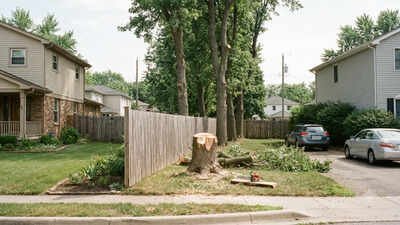
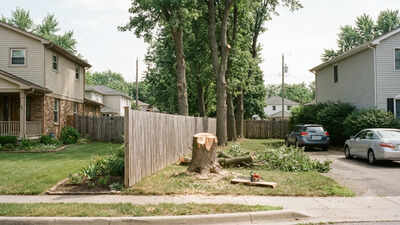
A dispute over trees along a shared property boundary in Washington resulted in a $69,802.65 judgment against a man after he failed to respond to his neighbour’s lawsuit. Years later, he tried to overturn the decision and have the amount reduced to zero. However, an appeals court has rejected his latest challenge, finding that he had failed to address the specific decision he wanted reviewed.Gina Hunt filed the lawsuit against her neighbour, Edward A. Monk, in October 2018. According to the ruling, she accused him of cutting trees she had grown along the boundary between their properties. When Monk did not respond to the complaint, Hunt approached the court for a default judgment.The court granted her request on October 26, awarding her $69,802.65. A default judgment is issued when a defendant does not respond to a lawsuit within the required period. Monk later made several attempts to get the decision overturned, but his requests were unsuccessful.His circumstances came under consideration again in December 2021, when he sought to have the judgment cancelled. He argued that his mental condition had prevented him from responding to the original complaint. In March 2022, a judge accepted that he had been of unsound mind when the case was filed and when the judgment was issued.However, the court did not remove the finding against him. It allowed him to challenge the compensation amount instead. This reopened the question of damages, while the finding of liability remained unchanged.
Neighbour seeks to reduce judgment to zero
The partial reopening did not end the dispute. Monk continued trying to challenge the finding that he was responsible for the tree-cutting claim. His subsequent requests were rejected.In March 2025, he approached the superior court again, this time asking it to change the judgment amount to zero. The court rejected his request on the day it was filed.Monk then took the matter to the Washington Court of Appeals. However, his appeal focused largely on complaints about the earlier proceedings rather than the March 2025 decision.He questioned the authority of the judge who had handled the 2022 proceedings and alleged that the process had violated his constitutional and civil rights. He also raised objections about the judge’s appointment and authority to act in the case.The appeals court found that these arguments did not address the decision Monk had actually challenged. His complaints concerned the March 2022 proceedings, while the appeal before the court related to the rejection of his request to amend the judgment in March 2025.The court also noted that he had missed the deadline to challenge the earlier decision. A separate judgment following a jury trial on damages in September 2025 was also outside the appeal because Monk had not filed a timely challenge against it.
Court rejects jurisdiction argument
Monk argued that his complaints involved jurisdiction and could therefore be raised at any time. The appeals court disagreed.It explained that jurisdiction concerns a court’s authority to hear a particular type of case. In this dispute, Monk had not argued that the superior court lacked the power to hear a timber trespass claim. His objections were instead about the authority of the judge who handled the earlier proceedings.The court also pointed out that the judge involved in the March 2022 decision was not the judge who issued the March 2025 order under challenge.As Monk had not presented an argument showing an error in the March 2025 decision, the appeals court found no reason to overturn it.Hunt also sought reimbursement of her legal expenses for dealing with the appeal. She argued that Monk’s repeated challenges had forced her to spend money on further legal proceedings.The appeals court accepted her request, awarding her attorney fees and costs associated with the appeal. It found that Monk had failed to present arguments relevant to the decision he was challenging.