





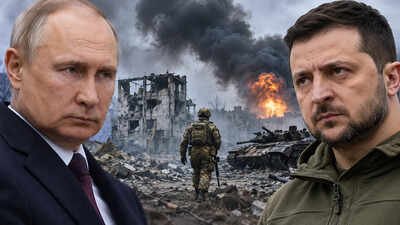
Nearly five years after Russia launched its full-scale invasion of Ukraine, the war remains far from over. Territorial disputes, Nato membership, security guarantees and competing geopolitical interests continue to prevent a peace agreement. While US President Donald Trump has renewed efforts to bring Moscow and Kyiv to the negotiating table, neither side appears ready to make the concessions required to end the conflict.The war, which began on February 24, 2022, has evolved into a prolonged confrontation involving Russia’s territorial ambitions, Ukraine’s fight to preserve its sovereignty and a wider contest between Moscow and the West.The latest diplomatic efforts have failed to resolve the fundamental disagreements. Russia wants Ukraine to abandon its Nato ambitions and make territorial concessions, while Kyiv insists that any settlement must protect its sovereignty and provide credible security guarantees. European countries, meanwhile, fear that an agreement favouring Moscow could create further security threats across the continent.In a conversation with The Times of India, Professor Rajan Kumar explained why the war continues, Europe’s role in the conflict, Russia’s demands and what a possible settlement could look like.
Here are 10 key reasons behind the continuing conflict
1. Russia and Ukraine have fundamentally different ideas about the country’s future
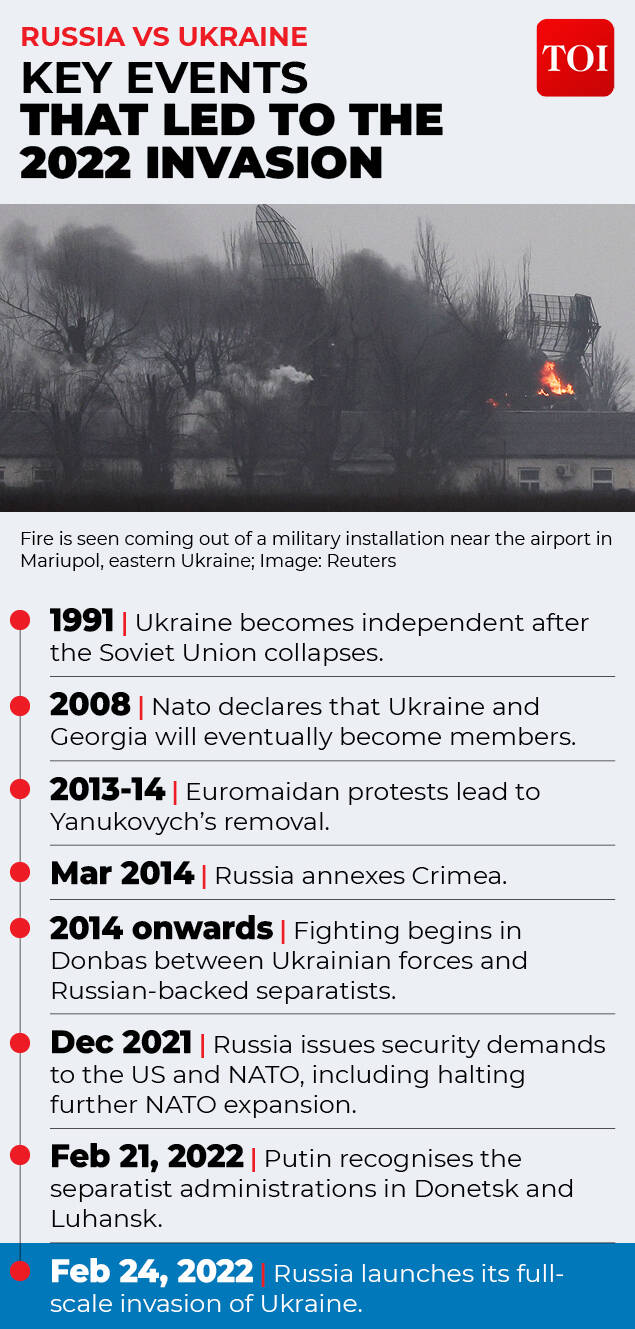
At the heart of the conflict is a disagreement over Ukraine’s political identity and its place in the international order.Russia has historically considered Ukraine an important part of its strategic neighbourhood. The two countries share centuries of intertwined political, cultural and economic history, including their common past within the Russian Empire and the Soviet Union.Ukraine, which became independent following the dissolution of the Soviet Union in 1991, has increasingly sought closer political, economic and military integration with Europe.The disagreement became particularly visible in 2013-14, when then Ukrainian president Viktor Yanukovych abandoned plans to sign an association agreement with the European Union following pressure from Moscow. The decision triggered mass protests, known as the Euromaidan movement, and Yanukovych was removed from power in February 2014.Russia subsequently annexed Crimea and supported separatist forces in eastern Ukraine’s Donetsk and Luhansk regions. The developments marked the beginning of a conflict that eventually escalated into Russia’s full-scale invasion in 2022.
2. Nato membership remains the biggest sticking point
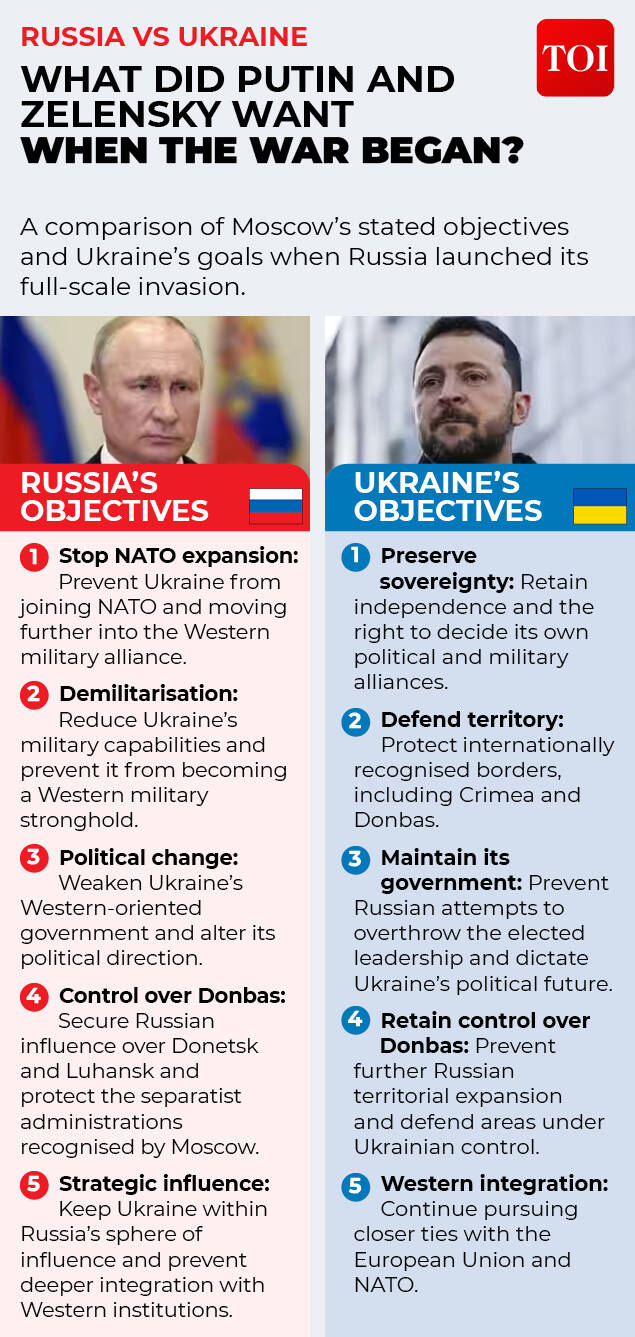
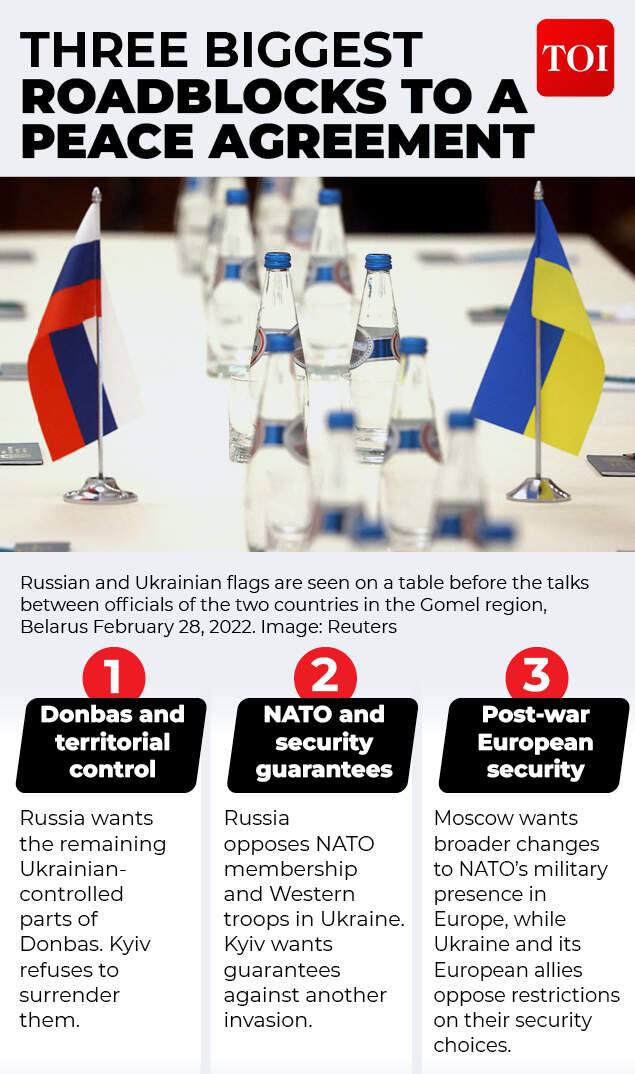
One of the central reasons behind Russia’s opposition to Ukraine’s Western integration is its potential membership of Nato.At the 2008 Bucharest summit, Nato declared that Ukraine and Georgia would eventually become members of the alliance, although neither received an immediate membership invitation.Russia has consistently opposed Ukraine joining the military alliance, arguing that Nato’s eastward expansion threatens its security.Professor Rajan Kumar believes Nato membership was the central issue behind Russia’s decision to invade Ukraine. However, he argues that Moscow’s historical and cultural perception of Ukraine makes the issue particularly sensitive.“The main reason why Russia initiated this war was that Ukraine was willing to become a member of Nato, and there was a sense that Nato might give it membership and the European Union might also offer some kind of affiliation to Ukraine.“But the main issue is that Russia ethnically considers Ukraine and Belarus to be one people, the Slavic people. It fears that this is an attempt by Europe to create a rift among the Slavic population.”Kumar also questioned the argument that Nato’s military presence near Russian borders alone explains Moscow’s opposition.“But just look at the Baltic states. Nato forces are already there, and these countries share borders with Russia. Nato forces are also in Finland, which has a 1,300-km border with Russia.“So, when people make this argument, I think they don’t think much before making it. But yes, what you said in your first statement is correct. Nato membership for Ukraine was the real issue, not simply that forces would come to the Russian border.”
3. Crimea and Donbas remain major territorial obstacles
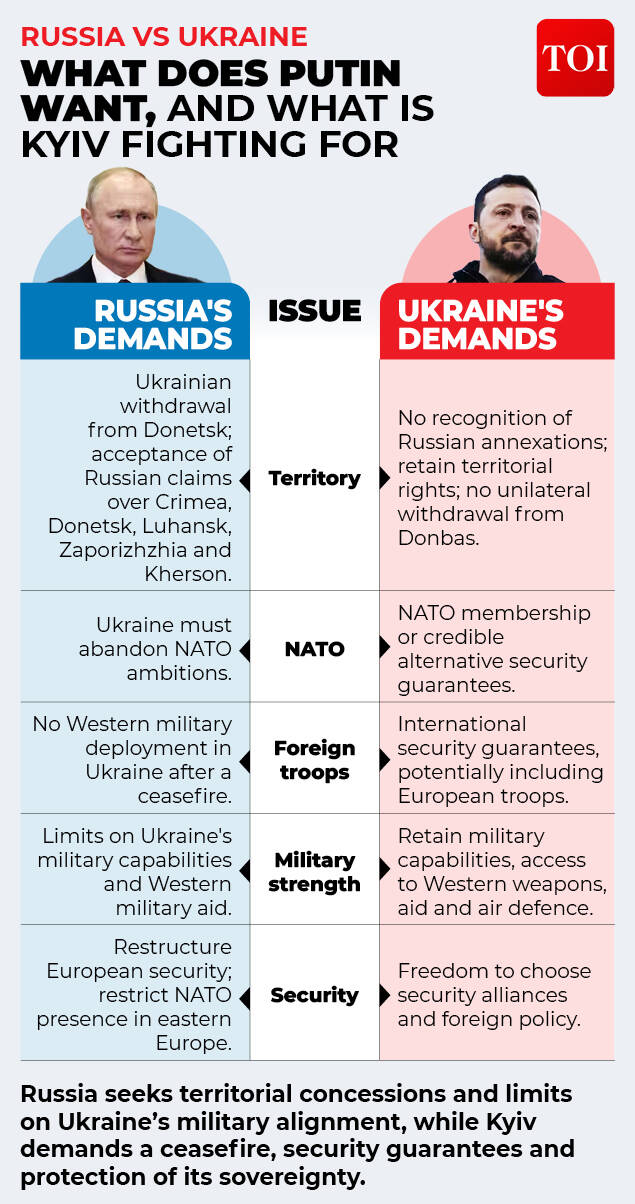
Territory is arguably the biggest obstacle to a peace agreement.Russia currently controls approximately one-fifth of Ukraine’s internationally recognised territory, including Crimea and substantial parts of eastern and southern Ukraine.In September 2022, Moscow announced the annexation of four Ukrainian regions: Donetsk, Luhansk, Zaporizhzhia and Kherson. Ukraine and most of the international community rejected the annexations as illegal. Russian forces do not control all the territory within the claimed administrative boundaries.Moscow has demanded that Ukraine withdraw from the remaining parts of Donbas under Kyiv’s control. Ukraine, however, has rejected the demand and refuses to legally recognise Russia’s territorial claims.The issue has remained central to the latest US-led negotiations.The Financial Times reported on November 25 that the Trump administration had moved away from proposals involving American business investments in Russia as an incentive for peace. The Kremlin had shown little interest in such economic arrangements and continued to insist on territorial concessions from Ukraine.The report said Putin was prepared to end the offensive if Ukraine surrendered the entirety of Donbas, a condition Zelenskyy has repeatedly rejected.
4. Europe wants to remain involved and fears a Russian advantage
Europe’s role has become another important dimension of the conflict.European countries have provided Ukraine with military equipment, financial assistance and diplomatic support. They fear that a settlement allowing Russia to retain its territorial gains could embolden Moscow and create further security threats for the continent.Kumar argues that European countries are reluctant to accept an immediate ceasefire because they believe Russia could emerge stronger from the conflict.“The obstacle to this mediation, or any possibility of a ceasefire, is Europe. Europe doesn’t want to stop the war immediately. Europe doesn’t want the US and Russia to negotiate. Europe is not playing any role [in the negotiations].“Europe also wants Ukraine to remain engaged because most European countries believe that if the Ukraine war ends with some advantage to Russia, which is very likely, the next target would be Europe. So, essentially, Ukraine is fighting the war for Europe at this point in time.”He believes European countries are continuing to provide Ukraine with financial and military assistance to sustain its resistance, while avoiding a direct military confrontation with Russia.“European countries still somehow believe, wrongly, that there is a possibility of keeping Russia engaged in a situation of deadlock and that, in the long term, this will weaken Putin and Russia. Because of that, they keep supplying basic survival material and weapons to Ukraine.”Kumar also argues that Europe wants a place at the negotiating table because it fears that a security arrangement reached directly between Washington and Moscow could leave European countries out of decisions affecting their own security.
5. Neither side trusts the other to honour a ceasefire
Even if Russia and Ukraine agree to stop fighting, ensuring that the ceasefire lasts will remain a major challenge.Ukraine fears that a temporary pause could allow Russia to regroup, replenish military supplies and prepare for another offensive. Its concerns are partly rooted in the failure of the Minsk agreements, signed in 2014 and 2015 to end fighting in eastern Ukraine.Russia, meanwhile, has accused Ukraine and its Western supporters of using ceasefires to strengthen Kyiv’s military position.The two sides also disagree over how a ceasefire would be monitored and enforced. Ukraine wants international monitoring and credible guarantees against renewed Russian aggression, while Moscow has rejected the presence of European or Nato forces on Ukrainian territory.Putin has also questioned the prospect of European peacekeeping forces, arguing that their deployment would undermine the possibility of peace.Without an agreed monitoring mechanism, enforcement arrangements and consequences for violations, a ceasefire could merely freeze the conflict rather than resolve it.
6. Ukraine wants security guarantees, but Russia opposes Nato involvement
Security guarantees have emerged as another major obstacle to negotiations.Ukraine argues that it cannot accept a settlement without assurances that Russia will not launch another invasion. Its preferred option has been Nato membership, which would provide collective defence protection under Article 5.However, Moscow has rejected Ukraine’s membership of Nato and opposed the deployment of foreign military forces in the country.Alternative arrangements could involve military assistance, intelligence-sharing, air defence support and commitments from Western countries to respond if Russia attacks again. Ukraine has also sought international security arrangements that could include a role for European forces.Kumar believes this disagreement leaves Ukraine with limited options.“If Nato membership is not given, Ukraine is left with very limited options. What Trump and Russia are saying is that Ukraine may be considered for some kind of Nato-like security arrangement, but it will not be given Nato membership.“Now, Russia will not agree to that kind of security arrangement if European or Nato forces come to Ukraine for its defence. These are the difficult issues and the thorny issues between the two sides, and that is the reason why negotiations are not progressing.”The challenge for negotiators is to find an arrangement that reassures Kyiv without crossing Moscow’s stated red lines.
7. The battlefield has turned into a war of attrition
Neither Russia nor Ukraine has achieved a decisive military victory, turning the conflict into a prolonged war of attrition.Russia failed to capture Kyiv in the opening phase of its February 2022 invasion but subsequently concentrated its military operations in eastern and southern Ukraine.Ukraine recovered territory in parts of the Kharkiv region and Kherson during counteroffensives in 2022. However, it has struggled to achieve another decisive breakthrough.Russia continues to have advantages in manpower, artillery production and ammunition supplies. Ukraine, meanwhile, has increasingly relied on drones, precision strikes and attacks on Russian military logistics and energy infrastructure.According to the November 2026 assessment cited by Al Jazeera, Russian forces captured approximately 117.38 square kilometres of Ukrainian territory during January-October 2026, indicating the difficulty of achieving substantial territorial advances despite continued fighting.The human cost has also mounted. A November 25 NBC News report, citing leaked Russian statistical records analysed by independent media, said at least 490,000 Russian military deaths had been registered in the data. Meduza projected the figure could reach 720,000 when deaths not yet registered were included. NBC said it could not independently authenticate the leaked data or confirm the estimates.Russia has rejected the higher estimates. The actual military death tolls on both sides remain uncertain.
8. The human cost is mounting, but domestic pressure has not forced a settlement
The war has killed and injured thousands of civilians and displaced millions of Ukrainians.According to figures compiled by Russia Matters in its November 24 war report, more than 17,000 civilians had been killed and nearly 54,000 injured in Ukraine. Approximately 9.6 million Ukrainians remain displaced, including 3.7 million internally displaced people and 5.9 million refugees abroad.Military casualties are considerably harder to establish because neither country regularly publishes comprehensive figures.Kumar believes growing public fatigue could eventually put pressure on Zelenskyy to negotiate, particularly as Ukrainians continue to bear the burden of mobilisation and fighting.“Yes, some people are already tired of the war. Many people, if there is a normal situation, don’t want to die. Most people don’t want to die for the sake of anything. If they have lost their families, what is the meaning of continuing?“But when there is a war-like situation, the press is not free. You cannot speak against the army or the regime because you are treated as a traitor, and under martial law, you can be sent to jail.”He added that the pressure on Ukraine’s leadership was increasing as the conflict continued.“People are extremely tired. Most people don’t want to fight, but because of conscription, state policies and the regime, they are forced to fight a war.”
9. Energy attacks, sanctions and international partnerships are sustaining the confrontation
The conflict has expanded beyond the battlefield to include energy infrastructure, oil refineries, power plants and supply chains.Russia has repeatedly attacked Ukrainian electricity and gas infrastructure, particularly ahead of winter. Ukraine has responded with drone strikes targeting Russian refineries, military logistics and energy facilities. The attacks are aimed at weakening the other side’s ability to sustain the war.Western sanctions have also increased pressure on the Russian economy. However, Moscow has maintained trade and diplomatic relationships with countries outside the Western sanctions framework, including China and India.Meanwhile, Ukraine continues to depend on European financial and military assistance as uncertainty surrounds the scale of future American support.Trump’s approach has also changed the diplomatic environment. His administration has prioritised negotiations, while Ukraine remains concerned that reduced US assistance could weaken its position.
10. Trump’s peace efforts face the biggest question: What will Russia and Ukraine gain?
The Trump administration has attempted to bring Moscow and Kyiv closer through negotiations, including discussions involving US envoys Steve Witkoff and Jared Kushner.However, the latest diplomatic efforts have failed to resolve the territorial dispute and disagreements over Ukraine’s future security arrangements.The Financial Times reported on November 25 that Washington had shelved proposals to use American business investments in Russian oil, titanium and aviation ventures as incentives for peace. The focus has shifted towards more traditional negotiations centred on territory and security.Putin has continued to insist on territorial concessions, while Zelenskyy has rejected demands that would require Ukraine to surrender Donbas.Kumar believes a settlement will eventually emerge through negotiations, but argues that Ukraine may have to accept the loss of territory.“Ultimately, all wars end through some kind of negotiation and peace. So, peace will happen. There is no doubt that there will be some kind of ceasefire or agreement.“But given the conditions, Russia will not withdraw from Donbas. So, Ukraine will have to accept the loss of territory.“Legally, it will be difficult for any regime in Ukraine to accept a truncated territory. But sometimes, when you are dealing with a large neighbour, a big neighbour, you don’t have any choice. You establish peace under pressure also. Unfortunately, Ukraine will have to accept that.”He also believes Ukraine would need something to present as a political gain to its people if it agrees to territorial concessions.“Russia is willing to negotiate. Let me tell you, although if you read most of the Western newspapers, especially European or American publications like The Washington Post and The New York Times, they give the impression that Putin is not willing to negotiate, which is not true.“Russia has already made the gains it wanted. Keeping in mind that Russia has now realised that controlling Kyiv will not be easy, it has accepted the new reality and would be happy with a Donbas treaty. It can show its people that at least it gained something.“Now, the Ukrainian regime also needs to gain something. So, how does it show that? The only two possibilities are that either Ukraine becomes a member of Nato or gets something similar to that, or Ukraine becomes a member of at least the European Union, so that it can tell its people that it gained something despite making sacrifices.”
How will the Russia-Ukraine war end?
A negotiated settlement remains the most likely way to end the war, but the terms remain deeply contested. Russia wants territorial concessions and an end to Ukraine’s Nato ambitions, while Kyiv seeks security guarantees that can prevent another invasion.Professor Rajan Kumar believes Ukraine may eventually have to accept territorial losses, particularly in Donbas, in exchange for a security arrangement or European Union membership. However, such a compromise would be politically difficult for Zelenskyy to sell domestically.If neither side is willing to make these concessions, the conflict could continue as a prolonged war of attrition, with periodic diplomatic efforts failing to produce a lasting settlement.