








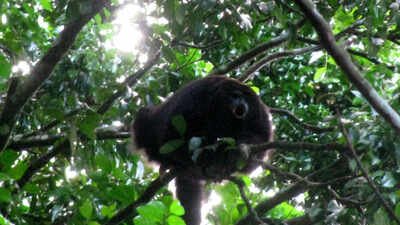
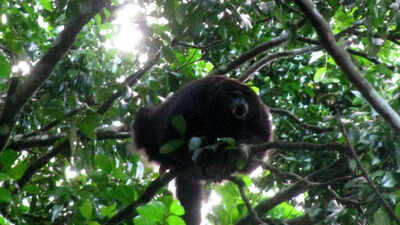
It is widely believed that we are what we eat, a phrase that can now extend to an endangered species as well. With the loss of habitat, not only can an entire species be put at risk of extinction through the loss of shelter and food, but its body can also experience significant changes. These effects can extend beyond the landscape itself, as scientists are now finding clues to habitat damage in an unexpected place: the gut of an animal.According to a Northwestern University report, scientists from both the Northwestern University and Universidad Veracruzana studying endangered Mexican mantled howler monkeys in the Los Tuxtlas Biosphere Reserve in Veracruz, Mexico, ascertained that differences in their forest habitats and the environmental changes have come to alter and reflect in a howler monkey’s gut microbiomes.The findings were published in the journal Animal Conservation on November 15, 2026, under the title Multi-Biomarker Fecal Assessment of Habitat Disturbance Effects in an Endangered Howler Monkey. Led by Tabor L. Whitney, the study explored how habitat fragmentation and changes in vegetation were associated with different biological indicators in the endangered subspecies.
A rainforest losing its original cover
The research was conducted in the Los Tuxtlas Biosphere Reserve, an area that has undergone considerable environmental change over the last few years. As reported in the study, nearly 60% of its original forest cover is gone, leaving behind a landscape made up of human settlements, agricultural fields and pastures interspersed with smaller patches of forest. These remaining parts have served as crucial spaces for wildlife to continue surviving, especially the Mexican mantled howler monkey (Alouatta palliata mexicana), a testament to its resilience in deteriorating environmental conditions.For animals that depend on trees for food and movement, the loss of a continuous forest canopy can make everyday activities more difficult. Fewer tree species can also mean fewer dietary options, while isolated patches may restrict the movement of animals between different parts of the forest. The researchers therefore aimed to understand why these changes are reflected in the monkeys’ physiology.
What the researchers found in their gut bacteria
The team studied howler monkeys living across 10 forest fragments that differed in size, tree diversity, vegetation structure and connectivity. They collected faecal samples from the animals and examined three different biological indicators: gut microbiome composition, short-chain fatty acids and glucocorticoid metabolites.The gut microbiome essentially refers to the community of microorganisms, including bacteria, living in the digestive system. These microorganisms are important for several bodily functions, including the digestion of food, energy metabolism and immune regulation. In animals that consume plant material, gut bacteria also help break down dietary fibres that the digestive system would otherwise struggle to process. To put it simply, the condition of a forest can influence not only what an animal eats but also the microorganisms that help it process that food.The study found significant differences in gut microbiome diversity and composition between the 10 forest fragments. The size of a forest patch, the diversity of its tree species, the average diameter of its trees and the number of tree lines connecting different areas were among the characteristics associated with these variations. However, a difference was noted in how monkeys living in smaller forest fragments with smaller trees and lower tree diversity had substantially different gut microbiome compositions from those in more mature forest habitats.Another key difference highlighted in the research related to the abundance of certain bacterial groups across habitats. For instance, some bacteria associated with breaking down plant fibres were more strongly associated with larger trees and better-connected forest areas. However, the researchers cautioned that these bacterial functions were inferred from existing knowledge about the identified microorganisms and were not directly tested.
Looking beyond the gut microbiome
The researchers did not limit their investigation to gut bacteria. They also examined short-chain fatty acids, which are produced when gut microorganisms ferment dietary fibres, and glucocorticoid metabolites, which are hormones measured in faeces and can provide information about an animal’s physiological stress responses.These additional indicators helped the team understand whether the changes observed in the microbiome were accompanied by other physiological differences. Interestingly, the results were not identical across all three measurements. While gut microbiome composition differed significantly between forest fragments, short-chain fatty acid concentrations did not show significant differences between the locations. Glucocorticoid concentrations also showed no statistically significant variation between fragments, although some relationships with individual habitat characteristics were observed.The research, however, exclusively focused on adult male howler monkeys, with the scientists explaining that the available hormonal testing method had been biologically validated for this particular group. The results therefore cannot automatically be extended to females or younger monkeys, whose physiological and dietary requirements may differ.
A look at the future of conservation
Traditionally, monitoring endangered animals involves observing population numbers, mapping their habitats and assessing changes in the availability of food and shelter. While these remain essential, the study suggests that examining faecal samples could provide another way of understanding how animals are responding to environmental changes.Lead author Tabor Whitney also suggested that researchers could collect samples every five or 10 years to compare changes in gut microbiomes and evaluate whether conservation efforts are making a difference. According to the Northwestern University report, landowners in the region have also expressed interest in helping monkeys move between forest areas by maintaining tree connections on their properties.The study concludes that there may be practical approaches that can be adopted to improve the remaining forest areas, such as planting a greater variety of trees, especially fruit-bearing species that can provide an abundance of food for monkeys and birds. Lastly, expanding the forest canopy and creating connected lines of trees, even across isolated patches, can make it easier for monkeys to move between habitats and forage for food.