







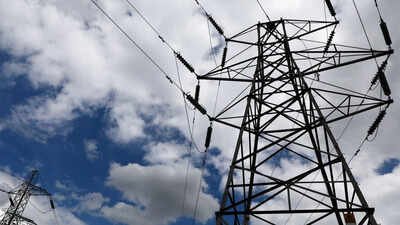

A landowner in Alabama has parked two semi-truck trailers at the entrance to his property to prevent Alabama Power from accessing the land, escalating a dispute over the utility company’s plan to build a transmission line across his property using eminent domain.Fenn Church, who owns more than 400 acres in Shelby County, has opposed the proposed route, arguing that the power company should not be allowed to use his property’s entrance and surroundings for transmission infrastructure. The dispute has reached the Alabama Supreme Court, where Alabama Power is challenging a judge’s decision to reject its request for a temporary restraining order against Church.The case has also drawn the attention of influential groups, including the Business Council of Alabama and the Alabama Department of Transportation (ALDOT), which have been allowed to support the utility company’s appeal through legal filings.
Why Alabama Power wants access to the property
The dispute began after Alabama Power sought an easement to install a transmission line across Church’s land. The company says it offered compensation for the access easements and right of way covering less than nine acres of his property.In a statement released earlier this month, Alabama Power said Church had been awarded $425,435 for the easements, clarifying that the payment was not for ownership of the land.The company argued that the transmission line was necessary to provide reliable electricity to its three million customers, including homes, hospitals, schools and businesses.Church, however, has maintained that he is not opposed to transmission lines or the need to supply electricity to data centres. He objects to the proposed route, saying it would bring infrastructure too close to his home and affect the privacy of his property.“I’m not anti-Alabama Power. I think we got to have transmission lines. We’ve got to have data centers, but don’t build them in people’s backyards and expect to use their front driveway as your easements,” Church said.
Alabama agency backs power company’s appeal
Alabama Power’s legal challenge has received support from the Business Council of Alabama and ALDOT. Both groups have been granted permission to submit amicus briefs, also known as “friend of the court” filings, in the appeal.ALDOT is concerned that a ruling restricting the right of entry onto disputed land could affect how government agencies carry out future road and bridge projects. The agency argues that such a decision could make it harder for authorities to access land before property disputes are fully resolved.According to the Alabama Appellate Court, ALDOT sought additional time to submit its brief, which is due on November 30.
Governor Kay Ivey’s position draws Church’s criticism
Alabama Governor Kay Ivey’s office has defended ALDOT’s involvement, saying the agency must sometimes use eminent domain as a last resort to complete necessary road and bridge projects.The governor’s office said ALDOT follows the law, ensures property owners receive fair compensation and treats them fairly.Church said he was “extremely disappointed” by the governor’s position. He claimed he had supported Ivey throughout her political career and had invited her to visit his property to examine an alternative route.He argued that another route would be more economical and environmentally friendly, and said he was not trying to stop the transmission line from being built.Church has also questioned ALDOT’s involvement in the case, claiming it presents a conflict of interest because he pays annual vehicle registration fees for his trucking business, which help fund the department.The legal dispute continues as Alabama Power seeks to overturn the lower court’s decision and secure access to Church’s property.