






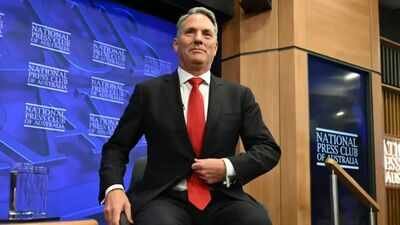
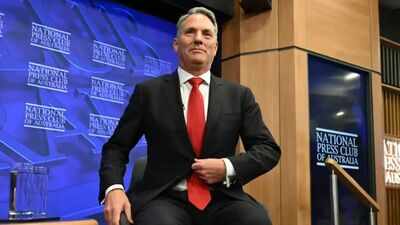
Australian Defence Minister Richard Marles has rejected concerns that the AUKUS submarine agreement could weaken the US Navy for years, disputing a report that warned the deal would put additional pressure on America’s already stretched submarine manufacturing industry.Speaking to the Australian Broadcasting Corporation’s (ABC) Insiders programme on Sunday, Marles said he was not concerned by the findings of a report released by the US Congressional Budget Office (CBO) on Friday. He also insisted that American submarine production was increasing.The CBO report said the US submarine industrial base was struggling to meet the Navy’s existing requirements. It warned that producing additional submarines to replace those transferred to Australia would further challenge American shipyards.“The sale of SSNs to Australia would reduce the number of attack submarines available to the navy for many years,” the report said.However, Marles dismissed the assessment and said he expected similar reports over the next decade.“The reason it doesn’t worry me is because AUKUS is very much happening,” he said.When asked whether the CBO was wrong about US submarine production, Marles responded: “Yes, they are wrong. The production rate in the United States is absolutely increasing.”He acknowledged that submarine production was critical to Australia’s plans to acquire Virginia-class nuclear-powered submarines but said maintenance and sustainment capabilities were equally important.Australia is expected to receive its first Virginia-class submarine in the early 2030s under the AUKUS arrangement.Marles also said preparations were on track for the establishment of the Submarine Rotational Force-West at HMAS Stirling in Western Australia by this time next year. The arrangement will allow US and British nuclear-powered submarines to maintain a rotational presence at the facility and give Australian sailors experience operating alongside them.However, former Australian prime minister Malcolm Turnbull questioned whether Washington would be able to deliver the submarines on schedule.“The Americans have been very straight with us. They will only transfer Virginias to Australia if their navy can spare them. Right now it cannot,” Turnbull said.He argued that US submarine production remained significantly below the Navy’s requirements, raising doubts about whether Australia would receive the promised vessels by 2031.
Marles defends Australia’s AI data centre ambitions
Separately, Marles played down concerns over US President Donald Trump’s warning against American artificial intelligence companies setting up data centres overseas.Trump has said he would not allow US AI companies to build data centres in foreign countries and threatened “tremendous taxes” on those that do.His remarks come as Australia witnesses a surge in investment in AI infrastructure, with data centre operators raising at least $35 billion by September this year, according to ABC.Marles said Australia would continue engaging with American authorities and technology companies to attract investment, arguing that establishing AI infrastructure outside the US could also benefit American security.“If all of that infrastructure is in one place, in other words, if it remains solely in the United States, right there, there’s a vulnerability,” he said.He added that Canberra wanted such investments but would ensure they were made on Australia’s terms.Australia this week signed a US-led agreement aimed at identifying vulnerable supply chains and protecting sensitive AI technology from theft and foreign interference. Marles said the agreement also supported the development of AI data centres outside the US.However, Australian Security Intelligence Organisation (ASIO) chief Mike Burgess has warned that foreign actors could use investments in local AI data centres to gain covert access to sensitive information or critical infrastructure.Marles acknowledged the security risks, saying the expansion of data centres had created another avenue for foreign interference.Home Affairs Minister Tony Burke also warned that foreign ownership of data centres required careful scrutiny, stressing the need for strong national security safeguards.