

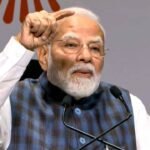





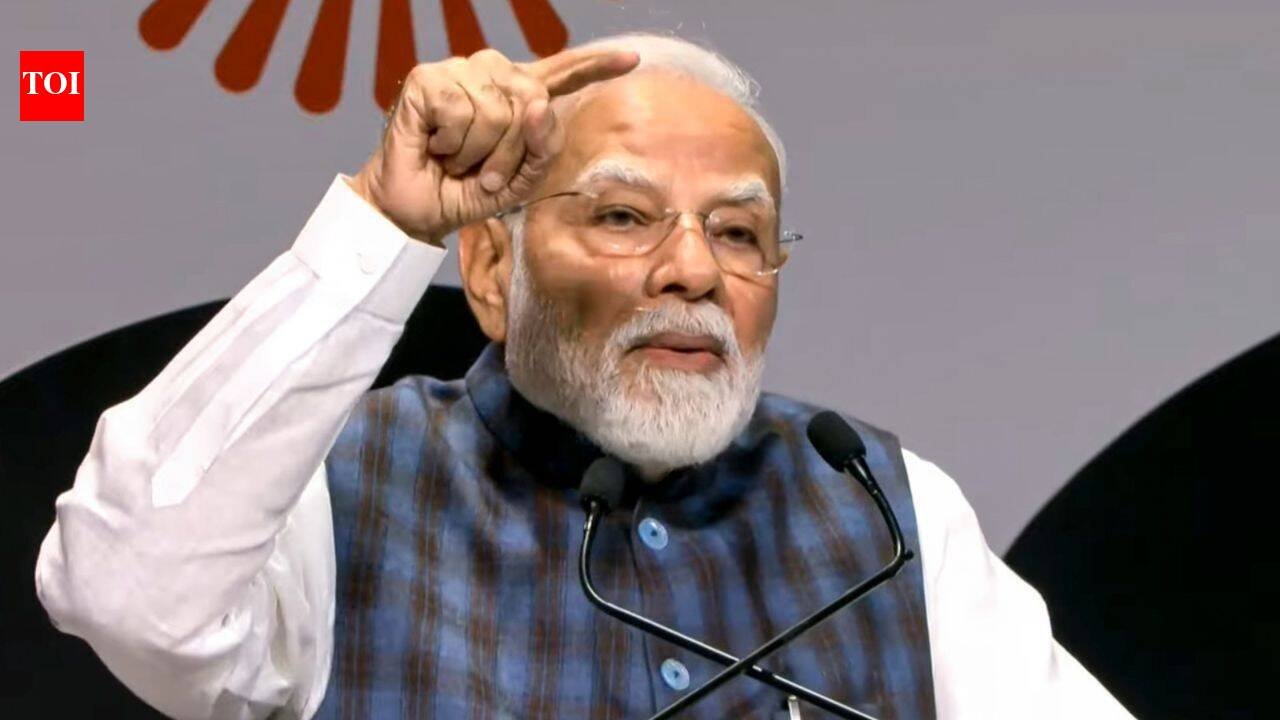
PM Modi also referred to the income-tax exemption for annual incomes of up to Rs 12 lakh.
NEW DELHI: Prime Minister Narendra Modi on Thursday took a swipe at industry leaders over inadequate job creation or salary hikes despite government concessions, saying, “How much ever you give, their [India Inc] appetite is never satisfied.“Addressing the annual general meeting and convention of FICCI in New Delhi, PM Modi questioned whether companies had increased employee salaries or hiring, and urged them to share the benefits of economic growth with their workforce.“Have you increased the salaries of your employees? Have you increased the number of employees? No! It is always: ‘Modi ji, you do it; we will see what happens.’ This is how things will continue,” he said.The Prime Minister cited steps taken by the government to improve the business environment, including reducing the basic corporate tax rate from 30% in 2014 to 22%, simplifying tax returns and refunds, and cutting GST rates on several products.He also referred to the income-tax exemption for annual incomes of up to Rs 12 lakh, saying the relief had boosted people’s purchasing power. He said this should translate into higher demand and encourage businesses to expand.“Aapki bhookh itni hai, kitna hi khilao pet bharta hi nahi (How much ever you give, their appetite is never satisfied),” PM Modi told the industry leaders, and urged them do more for their employees instead of expecting the government to shoulder the responsibility for growth.Further recalling an interaction with Income Tax Department officials in Gujarat around 2001-02, when he was chief minister, PM Modi said he had questioned the approach of treating taxpayers as potential wrongdoers.“I did not understand much at the time; I had little knowledge and no experience either. But I delivered a speech there. This must have been around 2001-02, perhaps 25 years ago. All the senior officials of the Income Tax Department were present. I asked them: ‘When will you stop treating everyone as a thief? What kind of approach is this? You, too, work for the country. Are we the only ones who have taken it upon ourselves to serve the nation? You also do your bit, and every citizen does their bit. Everyone deserves respect,'” he said.
Invokes Gandhi’s Swadeshi message
The Prime Minister also invoked Mahatma Gandhi’s call for self-reliance and (Swadeshi) indigenous goods, saying the message remained relevant even a century later.Referring to Gandhi’s 1930 message, PM Modi questioned why industry still needed to be reminded of the importance of Swadeshi and self-reliance.“Imagine, 100 years have passed, but in 1930, Gandhi left us with this message, and today, so many years later, I too have to say the same thing. Is this your success or your failure? Don’t listen to me; at least you could have to listen to Gandhi! (Meri mat mano, par Gandhi kih toh mano bhai). He too spoke of Swadeshi before leaving; he too spoke of Atmanirbhar Bharat (Self-Reliant India). And now you have turned 100 years old, yet things remain right where they were ... Spread my message too to every home!” he said.
‘Don’t treat 140 crore Indians as assured market’
PM Modi also urged businesses not to take India’s large domestic market for granted, saying companies must focus on product quality and compete with international standards.“Do not consider the 140 crore Indians an assured market,” he said, questioning the mindset that whatever companies produce will automatically find buyers in India.He criticised the practice of marketing certain products as “export quality” for overseas consumers, asking whether Indian customers did not deserve the same standards. “My countrymen deserve quality,” he said.The Prime Minister called on businesses to invest in understanding consumer preferences in different markets, develop products suited to local requirements and build distribution networks overseas.“Our domestic market should not be our comfort zone. It should give us the confidence to compete in global markets,” he said.
Urges industry to tap trade agreements
PM Modi said India’s trade agreements with several countries had opened up major international markets for domestic businesses and asked industry leaders whether they had drawn up plans to make use of the opportunities.“Over the past few years, India has entered into trade agreements with several countries around the world. Have you, the members of FICCI, ever sat down to reflect on this? When free trade agreements are signed with major global economies, it means that doors have been opened for you. Have you devised any plans to seize these opportunities, or will I have to come to you to address this as well?” he said.He urged companies to look beyond the domestic market, meet international standards and strengthen their presence in overseas markets.
India is ‘pharmacy of the world’
PM Modi specifically asked the pharmaceutical industry to reduce its dependence on imported active pharmaceutical ingredients (APIs), bulk drugs and drug intermediates.Pointing out that India is known as the “pharmacy of the world”, he said the country continued to import billions of dollars’ worth of these products every year.“India is called the ‘pharmacy of the world,’ yet it imports billions of dollars’ worth of APIs, bulk drugs, and drug intermediates every year. There are hundreds of categories in which we currently depend on imports. Our pharmaceutical industry must understand which ingredients we can manufacture in India. In which areas can we invest in new technology and large production plants to become competitive with other countries?” he said.He called for investment in technology and large-scale manufacturing facilities to build domestic capacity and make Indian companies more competitive globally.
‘This is a government of friends’
PM Modi also asked industry representatives to share their concerns and suggestions for further reforms, saying the government was open to feedback from businesses.Taking a swipe at previous governments, he said the industry’s past experiences had affected its relationship with the current administration.
Share your thoughts in the comments
Be respectful · TOI community guidelines
“Your experience with previous governments has been so bitter that I am having to bear the consequences. This is not the old government; this is a government of friends. It knows how to honour friendship, and you are my true friends. So, without hesitation or reservation, please write to me openly about what still needs to be improved,” he said.He added that the government was willing to consider suggestions from industry and urged business leaders to communicate their requirements directly to him.The Prime Minister also said India’s progress depended on recognising the contribution of different sections of society, including farmers, entrepreneurs, industries, wealth creators and taxpayers.