








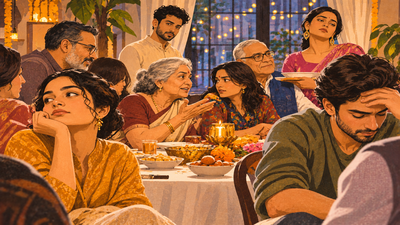
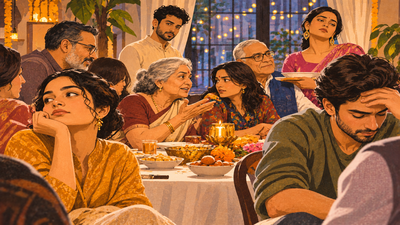
In Surita Mishra’s life there is a particular kind of exhaustion that has set in after Diwali. The guests have left, the house is finally quiet, the elaborate meals have been cleared away and the photographs of smiling faces have found their way to social media. Yet, instead of feeling happy and refreshed, she and her husband are feeling strangely low, irritable or emotionally drained.They replay conversations in their heads, remember an unnecessary remark made by a relative, feel guilty about an argument or wonder why spending a few days with people they love has left them so exhausted. Even angry.For some, the relief of returning to their own homes and routines is greater than the sadness of saying goodbye.Clinical psychologist Muskaan Trikha, Institute of Neurosciences, Medanta, says, “Family gatherings bring back emotional patterns that most of us have outgrown in our lives. Returning to the same family environment of our childhood can reactivate these feelings, making old rivalries and insecurities resurface.”Growing up, we all develop a sense of identity within the family based on how we are treated, compared or recognised. When siblings are repeatedly compared in terms of academic achievements, careers, relationships or parental attention, these experiences influence how they perceive themselves and each other even in adulthood. And perceived favouritism, unequal treatment and unresolved conflicts can contribute to sibling resentment, which have a way of surfacing during festive times, adds Ms Trikha.Festivals are ideally supposed to bring families together. However, research globally over the years has shown that togetherness does not always translate into harmony. In fact, occasions that demand prolonged family interaction have more chances of exposing tensions that ordinary life, geographical distance and busy schedules help keep under control.A sibling rivalry that has remained dormant for months can suddenly surface over something as trivial as who received more attention from the parents. A seemingly innocent question about marriage, children, career or money, can reopen insecurities that have taken years to manage. Couples who generally get along well may find themselves arguing over whose family gets priority, who is expected to adjust and who has to shoulder the responsibility of keeping everyone happy.Research by sociologist Jill Suitor at Purdue University, through the ‘Within-Family Differences Study’—which followed more than 550 multigenerational families over two decades—found that disagreements over strongly held values, particularly political and religious beliefs, were an important source of family conflict. The research also highlighted how disagreements over a child’s choice of partner can strain relationships between parents and their adult children, sometimes leading to fewer visits and less frequent communication.Family members may share a surname, history and traditions, but that does not mean they share the same beliefs or values. Differences that remain manageable during the rest of the year can become difficult to navigate when everyone is expected to spend several days together. Gender roles, parenting and even food habits can become sources of friction, particularly when older and younger generations have very different ideas about how people should live.The return of old family rolesOne of the more curious aspects of family gatherings is how quickly adults can slip back into the roles they occupied as children. Dr Samant Darshi, consultant, Psychiatrist at Yatharth Super Speciality Hospital, Greater Noida, explains why: “Family gatherings often reactivate emotions and experiences associated with childhood. Even as adults, people may unconsciously return to familiar family roles, such as the responsible child, the achiever or the one who always makes compromises. These comparisons between siblings and differences in parental attention bring back feelings of inadequacy.”And now that the children are adults, coupled with the fact that we live in times when our emotional filters have vanished and family time has added to our stress — it’s like a dam burst somewhere. That’s how ugly a situation can get.As adults, we have all built independent lives, made important professional decisions and become entirely self-sufficient; hence being treated like an irresponsible teenager the moment we return to our parental home or when parents and siblings visit ours — becomes a powder-keg situation. The daughter who was always considered difficult may still be seen that way, while the son who was the family favourite may continue to receive a degree of indulgence that his siblings find difficult to accept.Returning home almost always activates these old patterns because gatherings are always about discussing shared history, childhood anecdotes. For instance, a parent may continue to offer unsolicited advice to an adult child, while the child, despite being perfectly capable of making independent decisions, reacts with the same irritation or defensiveness they experienced growing up. The exchange can quickly become less about the immediate disagreement and more about years of accumulated frustration.Sibling relationships can be equally complicated. Adulthood does not necessarily erase childhood competition, particularly when comparisons continue within the family. Who is more successful, who earns more, whose children are doing better, who spends more time with the parents and who contributes more to family responsibilities can all become sources of tension. Even when nobody explicitly raises these questions, people may carry an awareness of where they stand in the family hierarchy.
Disproportionate pressure on women
The workload behind these celebrations is another important part of the problem. Shopping, cooking, cleaning, organizing and managing needs and expectations require considerable effort. This work often falls disproportionately on women, who may find themselves responsible for ensuring that everyone feels welcome and gets along. A 2006 holiday-stress survey by the Greenberg Quinlan Rosner research group, cited by Family Psychology Associates, identified women and lower-middle-income individuals as particularly vulnerable to holiday-related stress. Respondents reported fatigue, nervousness, sadness and irritability, all of which can make it harder to manage everyday disagreements.
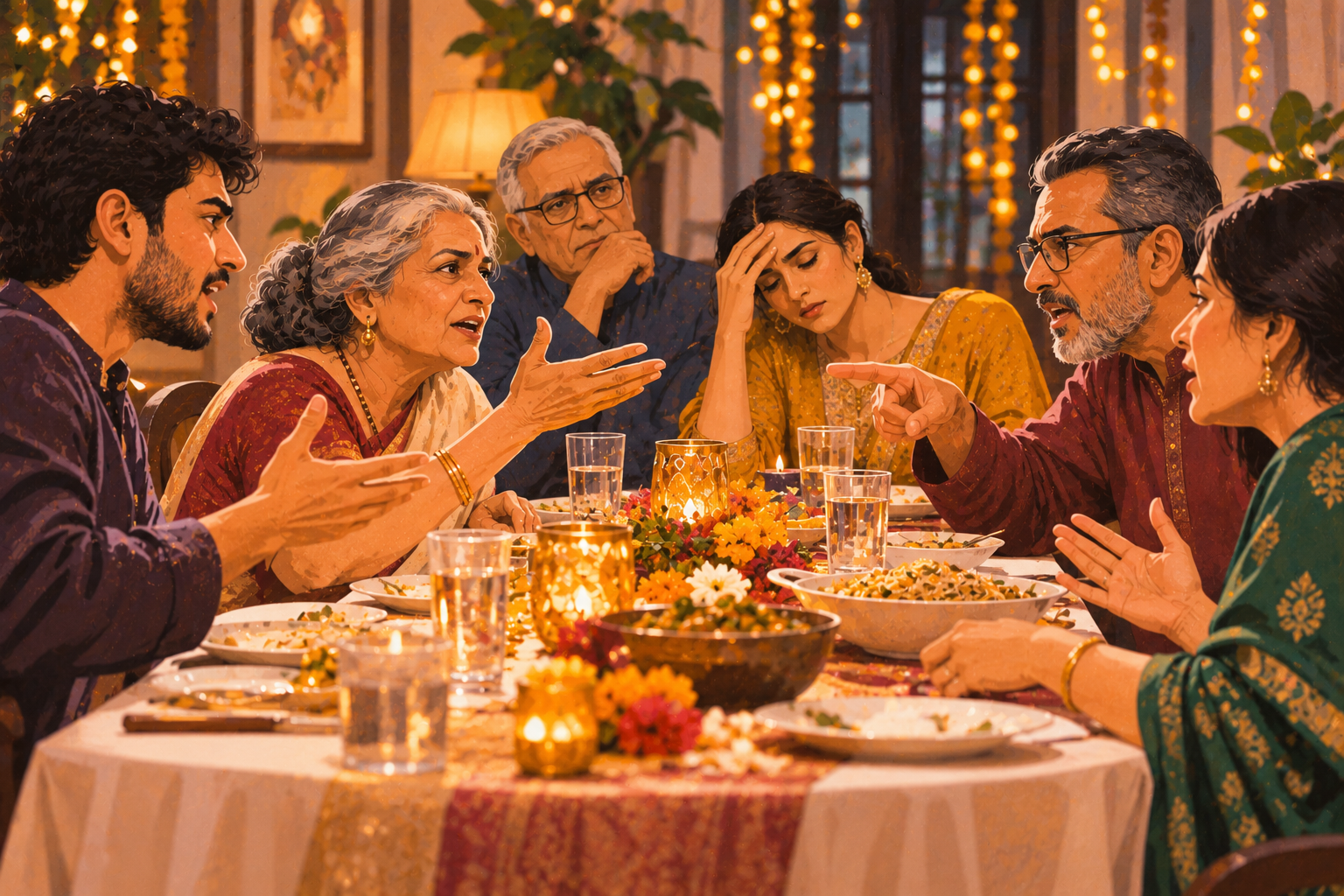
From sibling rivalry to physical and emotional exhaustion – anything can lead to an outburst
Don’t forget about expenses
Money adds another layer. Travel, gifts, entertaining relatives, preparing elaborate meals and accommodating guests can stretch household budgets. People may feel obliged to spend more than they can comfortably afford because of family expectations or the desire to maintain appearances. The financial pressure may not always be openly discussed, but it can contribute to resentment, particularly when some family members spend freely while others are left to manage the expenses.The physical and emotional exhaustion of hosting can also affect how people respond to one another. In a 2024 article, UT Southwestern Medical Center’s clinical psychologist, Dr Sarah Woods, noted that strained family relationships can contribute to stress-related symptoms such as disrupted sleep, headaches and other physical complaints. When people are already tired, overworked and emotionally stretched, their tolerance for disagreements can diminish further.Festivals provide the setting for these comparisons to become more visible. When siblings who live in different cities or countries meet after a long gap, they are suddenly confronted with each other’s choices, achievements and lifestyles.What begins as catching up can turn into an unspoken assessment of who has done better in life. The problem is not necessarily that families intend to hurt one another, but that old expectations often remain intact long after people have outgrown them.
Those ‘harmless-harmful’ questions
There is also the peculiar discomfort of being asked questions that seem harmless to the person asking them but deeply personal to the person answering.When are you getting married? Why haven’t you had children yet? Are you still in the same job? How much are you earning? Why don’t you visit more often? Such questions carry an undertone of judgement, particularly when they touch on areas where someone is already feeling vulnerable. A person dealing with infertility, a divorce, financial uncertainty, professional disappointment or loneliness may find it difficult to respond casually to something that others consider ordinary family conversation.The expectation that everyone should be cheerful and accommodating during festivals makes these encounters harder to deal with. People often suppress their irritation because they do not want to spoil the occasion, only to find that the feelings resurface later.
When togetherness becomes emotional labour
Family celebrations involve considerable emotional and physical labour, much of which remains invisible. Someone has to organise the gathering, prepare the food, arrange accommodation, buy gifts, coordinate travel and make sure everyone feels included. In many households, these responsibilities continue to fall disproportionately on women, particularly mothers and daughters, even when they are also managing professional commitments and their own families. The expectation that everyone should enjoy the festivities can mean that the people doing the most work have the least opportunity to participate in them.This imbalance can become a source of resentment, especially when some family members arrive expecting to be looked after while others are expected to manage everything. A daughter visiting her parents may find herself spending most of her time in the kitchen rather than catching up with family. A working woman may be expected to take time off, travel with children, organise gifts and accommodate relatives, while her partner’s contribution is treated as optional. Such arrangements may have been accepted for years, but they can become increasingly difficult to tolerate as people’s lives and expectations change.The wider social climate can also add to these tensions. The American Psychological Association’s ‘Stress in America’ 2025 survey found that 62% of US adults considered societal division a significant source of stress. Among those affected by this stress, 60% said they had lost patience or yelled at a family member because of stress.Generational differences can make matters worse. Research highlighted by the National Communication Association, US, showed that a familiar pattern of older relatives criticizing or questioning younger family members over their habits, personalities, political beliefs and lifestyle choices. Younger people, in turn, find such comments as intrusive, judgemental or meddlesome. When several generations share a home during festivals, these differences become harder to sidestep.Couples often find themselves caught between competing family expectations. Festivals can become a test of loyalty, with each partner negotiating how much time to spend with their respective parents, whose traditions should take precedence and how to deal with relatives who overstep boundaries.A partner who remains silent when their family makes an uncomfortable remark may unintentionally leave the other feeling unsupported. Disagreements that appear to be about travel plans or festive arrangements can actually be about a deeper question: whose feelings matter more, and who is expected to keep adjusting?For some couples, these gatherings expose differences that everyday life allows them to avoid. One partner may value close family involvement, while the other prefers greater independence.Relationship therapists often point to boundaries as an important part of maintaining healthy family relationships. Being close to one’s family does not mean having to accommodate every demand, answer every personal question or participate in every tradition.Yet setting boundaries can be difficult, particularly in families where saying no is interpreted as disrespect, selfishness or a lack of affection. People here simply agree to things they do not want to do to avoid confrontation, accumulating resentment in the process.
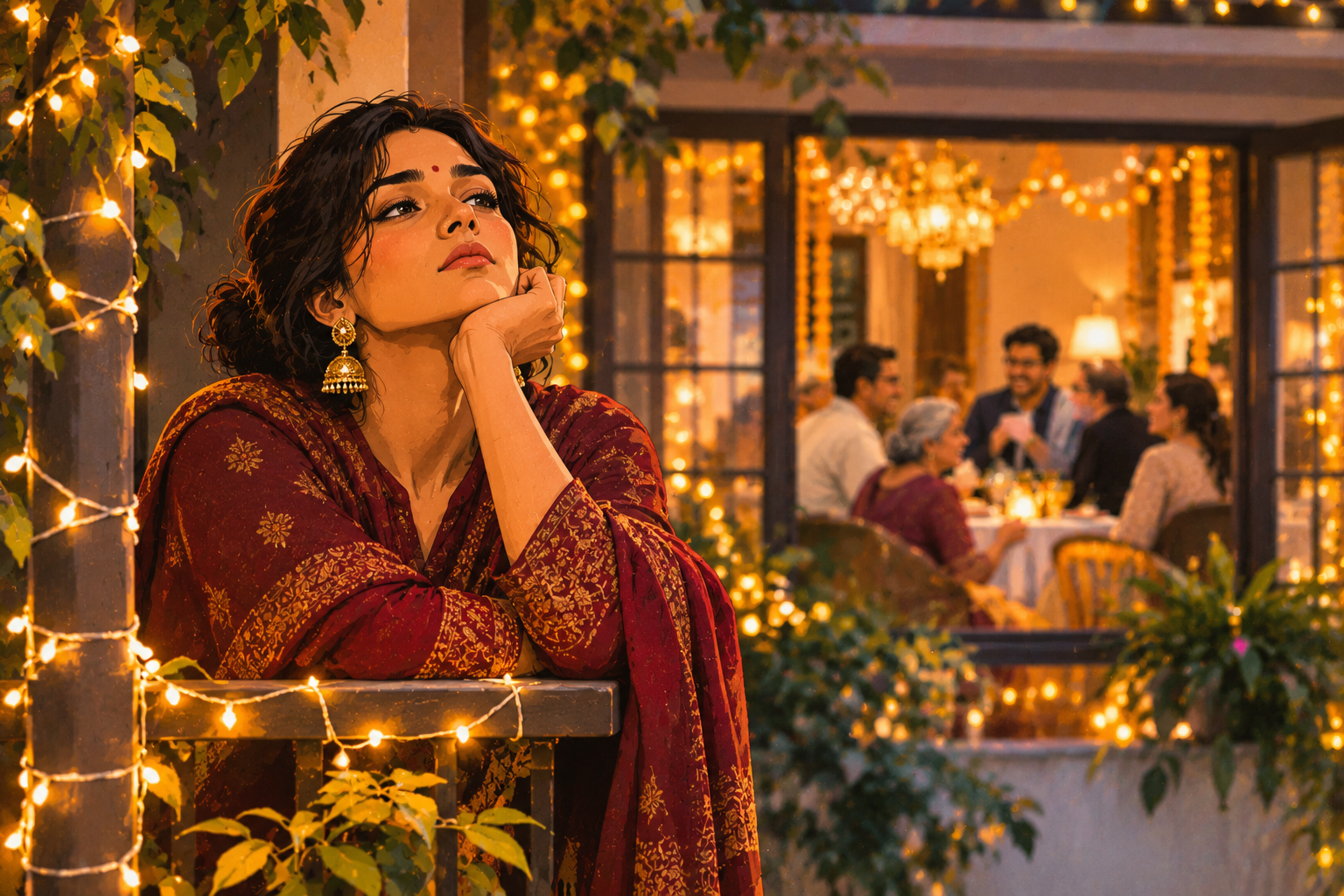
Post-event letdown is an actual psychological term.
The emotional hangover
The pressure to appear happy during festivals is another stressor. Social media has added another layer to this expectation, with family photographs, elaborate meals and cheerful reunions creating an impression that everyone is enjoying an uncomplicated sense of belonging.But people dealing with strained relationships, grief, separation or loneliness find this atmosphere claustrophobic. For those who have experienced family estrangement, the celebrations bring a sharper awareness of what is missing. A person who has lost a parent may find the first festival without them particularly difficult.Someone who is separated or divorced may feel uncomfortable attending gatherings where relatives continue to ask questions about the relationship. Others may feel lonely even when surrounded by family because the emotional connection they want is simply not there.
What is post-event letdown ?
Psychologists sometimes describe the low mood that follows a period of intense social activity as a form of post-event letdown. The transition from an unusually busy, emotionally charged period to ordinary routine can be difficult. However, when the distress follows family gatherings, it may also reflect unresolved conflict, emotional exhaustion and the effort involved in managing difficult interactions.This is why some of us are relieved when the festivities end.Adds Dr Darshi, “Feeling relieved after festivals does not mean someone dislikes their family. Prolonged social interactions can be exhausting. The end of festivities allows people to return to their routines, find their personal space and bring back that sense of independence they are used to in their daily lives. The most important thing to remember here is that we can love our families while still needing emotional distance and time for ourselves.”The idea that family is where everyone should feel most comfortable is appealing, but it is not always the reality. In the season of shimmer & shine, the human thing to do is to understand that things may not be perfect. But it’s not a permanent feeling. It’ll pass.