









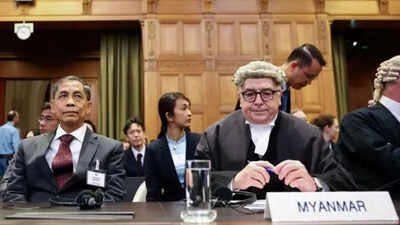
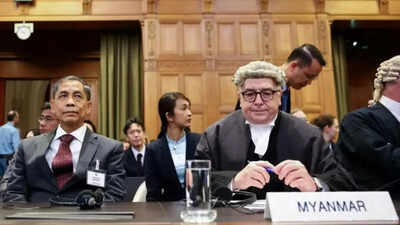
The International Court of Justice (ICJ), the United Nations’ top court, on Thursday said Myanmar’s military killed around 10,000 Rohingya Muslims and committed widespread sexual violence during its 2017 military crackdown, as it delivered its landmark judgment in a genocide case against the country.The Court said Myanmar’s actions during the 2017 military crackdown showed an intent to destroy a substantial part of the Rohingya population, marking a crucial finding in the genocide case against the country. The court’s assessment of genocidal intent is central to determining whether Myanmar violated the 1948 Genocide Convention.“The court finds that Myanmar’s security forces killed thousands of Rohingya civilians, perpetrated widespread acts of sexual violence, as well as acts of extreme violence against children, and attacked fleeing Rohingya,” ICJ President Yuji Iwasawa said while reading out the judgment at the Peace Palace in The Hague.The court’s findings relate to the military operations launched in August 2017 in Rakhine state, which forced hundreds of thousands of Rohingya to flee to neighbouring Bangladesh. The case, brought by Gambia in 2019, accused Myanmar of violating the 1948 Genocide Convention through its military campaign against the minority community.Gambia accused Myanmar of carrying out a systematic campaign to destroy the Rohingya community, citing mass killings, sexual violence, destruction of villages and forced displacement. It asked the court to declare that Myanmar had violated the Genocide Convention, ensure those responsible were held accountable and provide reparations to victims.The country also sought guarantees for the safe return of Rohingya refugees, including citizenship and legal protections.Myanmar rejected the genocide allegations, maintaining that its 2017 military campaign in Rakhine state was a legitimate counterterrorism operation launched in response to attacks by the Arakan Rohingya Salvation Army (ARSA) on security posts.During hearings at the ICJ, Myanmar’s legal team argued that evidence of killings, sexual violence and other atrocities did not automatically establish genocide. It maintained that Gambia had failed to prove that the military acted with the specific intent to destroy the Rohingya community, in whole or in part.Myanmar argued that genocidal intent must be the only reasonable inference that can be drawn from a pattern of conduct. It also challenged the reliance on findings by UN investigative bodies, arguing that their conclusions did not automatically establish genocide under international law.How the 2017 military crackdown unfoldedMyanmar’s military launched what it called a clearance operation in August 2017 after the Arakan Rohingya Salvation Army attacked police posts in northern Rakhine state.The operation triggered widespread allegations of mass killings, rape, torture and the burning of thousands of Rohingya homes and villages. More than 730,000 Rohingya fled across the border into Bangladesh following the crackdown.The Rohingya had already faced decades of discrimination in Myanmar, including restrictions on movement, denial of citizenship and limited access to basic services. The military operation further deepened the humanitarian crisis, leaving much of the community displaced and stateless.