







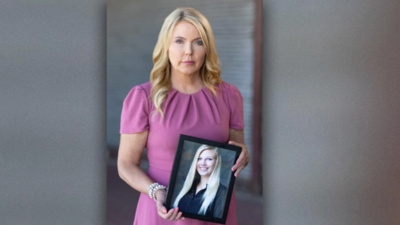
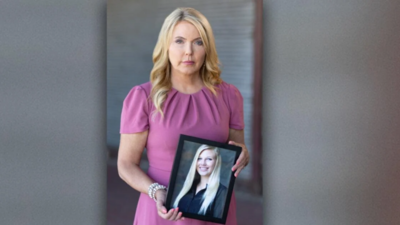
The death of her 21-year-old daughter Emily from fentanyl poisoning in 2018 changed the life of South Dakota journalist Angela Kennecke. What began as a personal tragedy eventually became a mission to prevent other families from experiencing the same loss. Kennecke founded Emily’s Hope, a nonprofit dedicated to tackling substance use disorders through overdose prevention, treatment assistance, education and recovery support. Since its inception, the organisation has distributed more than 15,700 naloxone kits, invested over $500,000 in treatment scholarships and taken substance-use prevention education into schools, reaching more than 20,000 students. From making overdose-reversal medication accessible to helping people afford rehabilitation, the initiative has grown into a multi-pronged effort to address the opioid crisis and challenge the stigma surrounding addiction.
A daughter’s fentanyl death inspired a journalist to help thousands
Emily Groth was 21 when she died from fentanyl poisoning in May 2018. According to her mother’s account, Emily had believed she was obtaining heroin, but an autopsy revealed that fentanyl had caused her death.Kennecke, who had spent decades working as a television journalist, had been reporting on the opioid crisis when she received the news of her daughter’s death. Emily was also just days away from entering a treatment programme.The loss prompted Kennecke to establish Emily’s Hope in 2019, turning her daughter’s memory into an initiative focused on preventing overdose deaths and improving access to addiction treatment.After 33 years in television journalism, Kennecke eventually left her newsroom career in 2022 to concentrate on running the nonprofit.
Nonprofit distributes more than 15,700 naloxone kits to prevent overdoses
One of Emily’s Hope’s central initiatives is expanding access to naloxone, a medication that can rapidly reverse an opioid overdose. Also known by the brand name Narcan, it can restore normal breathing in someone experiencing an opioid overdose and provide time for emergency medical assistance to arrive.According to the organisation’s 2025 annual report, Emily’s Hope had distributed 15,732 naloxone kits cumulatively. More than 14,000 of those kits were distributed during 2025 alone.The nonprofit has also worked to make the medication accessible through public distribution boxes. Its network included 34 distribution boxes, while naloxone was stocked alongside automated external defibrillators and first-aid supplies at 340 locations.Its distribution efforts extended across 32 counties and six of South Dakota’s nine tribal areas. The organisation also expanded its work into Iowa.In April 2025, Emily’s Hope became part of a wider state initiative involving South Dakota’s Attorney General’s Office and state health and social services departments. The partnership aimed to distribute 20,000 naloxone kits, containing 40,000 doses, using funding from opioid settlements and support from pharmaceutical company Teva.
More than $500,000 towards addiction treatment
Beyond overdose prevention, Emily’s Hope works to address another major barrier faced by people struggling with substance use disorders: the cost of treatment.The organisation provides treatment scholarships to individuals who need financial assistance to access rehabilitation and recovery services. Its 2025 annual report recorded a cumulative investment of $505,494.92 in treatment scholarships, supporting 297 individuals.During 2025, the nonprofit provided $79,080.74 in scholarships to 52 people.One of the stories highlighted in the report is that of Lori Kellar, who struggled with alcohol use disorder and experienced difficulties in her personal relationships. Financial assistance from Emily’s Hope helped her access 28 days of intensive treatment at the Avera Addiction Care Center.Following treatment, Kellar entered recovery, completed pharmacy technician training and worked towards rebuilding her relationship with her husband.
Taking addiction prevention education into schools
Emily’s Hope has also expanded its efforts beyond people already affected by substance use disorders, focusing on educating children about prevention and healthy decision-making.Its school curriculum introduces students to topics such as how substances affect the brain and body, medication safety, emotional regulation, peer pressure and the importance of making healthy choices.The programme uses a strategy called Pause-Think-Act to encourage children to consider the consequences of their decisions before responding to challenging situations.According to the organisation’s 2025 annual report, its curriculum reached more than 18,000 students during that year across 44 school districts. Its wider cumulative reach had crossed 20,000 students.The report also highlighted improvements in students’ understanding of healthy behaviours and decision-making. First-grade students demonstrated a 57% gain in knowledge about healthy behaviours, while second-grade students showed a 52% increase in their ability to use the Pause-Think-Act strategy.The initiative has since expanded to additional grades and locations. A May 2026 report by South Dakota News Watch put the programme’s reach at approximately 30,000 students across six states.
Supporting people and families affected by addiction
The nonprofit’s work extends beyond treatment scholarships, naloxone distribution and school education.Its Post-Overdose Response Team connects people who have experienced an overdose with peer support specialists, treatment options and recovery resources. In 2025, the programme expanded to seven South Dakota counties and added nine certified peer support specialists.Kennecke also hosts the Grieving Out Loud podcast, which features conversations about addiction, overdose deaths, recovery and the experiences of families affected by substance use disorders. The podcast recorded more than 34,000 listens in 2025.Another initiative, More Than Just A Number, seeks to put individual stories behind overdose statistics through memorials and remembrance activities. The organisation also runs support initiatives for families grieving the loss of loved ones to substance use.
Expanding its work with fresh funding
Emily’s Hope received further support for its prevention efforts in 2026. In April, it announced approval for a grant of up to $518,418 from South Dakota’s Opioid Settlement Fund to expand its substance-use prevention curriculum in public schools.A May 2026 report by South Dakota News Watch also highlighted the organisation’s growing educational reach, reporting that the curriculum had reached approximately 30,000 students across six states.The nonprofit has also been working to expand its Facing Fentanyl public-awareness initiative, which aims to reach students, parents and educators.