





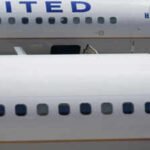
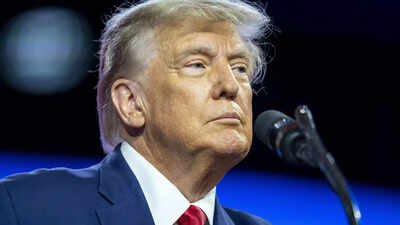
TOI CORRESPONDENT FROM WASHINGTON: There are days when the United States seems to be running the world. And days when it cannot quite manage to run its own email, banking, or airline reservation systems. From a nationwide grounding of aircraft and malfunctioning bank accounts to a suspected Iranian dirty-bomb plot, a succession of unnerving events — while seemingly unrelated — has put America on edge, fueling conspiracy theorists and comedians at the same time.The past several days have been particularly unkind to the country’s self-image as the world’s tech superpower whose leader has frequently disparaged “third world” countries. First came Microsoft’s Outlook and other services going on the blink. Then the Federal Aviation Administration (FAA) ordered an extraordinary nationwide grounding of flights after a communications-system failure. Before passengers had recovered their faith in air travel, United Airlines suffered a widespread computer outage that briefly prevented departing aircraft from taking off on Monday evening, even as Chase Bank reported software problems disrupting transactions.If this were a comedy, the punchline would be that Americans could no longer reliably communicate, travel or access their money — three activities considered routine in a functioning modern economy. But the laughter and self-deprecation in many quarters has been mixed with something more uncomfortable in others: anxiety bordering on panic.The timing has been particularly combustible because the tech troubles coincided with alarming intelligence reporting about a possible Iranian dirty-bomb or chemical-weapons plot targeting senior Trump administration officials in Washington. Suddenly, a series of apparently unrelated computer failures began acquiring a life of its own: Was America experiencing a run of bad luck, an infrastructure crisis, or the opening moves of a cyber attack?Influential voices amplifying the suspicions didn’t help. “When it looks like a duck, quacks like a duck, and walks like a duck, it’s probably a cyber attack,” former National Security Advisor Michael Flynn declared, warning that America’s adversaries were probing vulnerabilities and asking if government agencies and private companies were communicating effectively. WIth apocalyptic gravitas, he suggested the U.S was already in a war in the cyber domain, compounded by what he described as a spiritual struggle between good and evil.On the flip side though, none of the organisations affected reported evidence of a coordinated attack. The FAA blamed its disruption on a malfunctioning router during telecom maintenance. The equipment, part of an aging network connecting more than 4,400 aviation facilities, reportedly flooded the system with repeated connection attempts, destabilising communications across the country. Microsoft attributed its problems to a technical issue during an upgrade. Chase said its disruption stemmed from a software bug in its hardware systems, explicitly ruling out a cyberattack. United, meanwhile, said there was no indication its outage was cyber-related and fixed the issue in a couple of hours.But facts have a hard time competing with fear when the failures arrive in rapid succession, addled by paranoia about distant wars coming home. CNN, citing seven US officials familiar with intelligence assessments, reported on Monday that Iran was developing possible plans to target senior Trump administration officials in Washington with a dirty bomb or chemical weapon. The intelligence reportedly included specific locations and targets, prompting contingency planning. Adding to the angst, the Federal Emergency Management System (FEMA) scheduled a nationwide alert exercise on Tuesday – in normal times, a routine test when all broadcasts are interrupted for about one minute to check that emergency alerts can reach the public.This in turn triggered another sinister theory among administration critics: the succession of breakdowns and the heightened security threat could be used to manufacture a national emergency, expand presidential powers and justify extraordinary domestic measures, potentially including martial law. The basis for this suspicion? A President who had already tried to overturn an election, suggested the mid-term results were rigged, and has frequently hinted at a longer innings.Humorists and comedians provided some relief from the overwrought commentary, joking that America was running not on Windows95 but Windows1776. Jimmy Fallon, whose Sunday-night monologue followed the FAA debacle, took aim at the administration’s explanation that outdated switches, routers, and copper wires were responsible while welcoming his guest Jennifer Lopez with the observation that she was there for the same reason as everybody else: her flight had been cancelled.For critics of the Trump administration chuffed by the mid-term results, this is also a question of political competence. They point to the administration’s shifting explanations, its tendency to blame inherited problems on predecessors despite being in power six of the last ten years, and its apparent inability to communicate clearly or honestly during a crisis.For instance, Transportation Secretary Sean Duffy, a former reality star, has demanded $50 billion for FAA modernisation, even though he voted against some FAA funding in the past and claimed at a cabinet meeting with Trump a year ago that the FAA would be fixed by 2027 with the historic $12.5 billion funding from the big beautiful bill. Evidently, that isn’t enough to prevent an ugly meltdown.