







Elon Musk has shared a tweet he posted 12 years ago after a rocket operated by United Launch Alliance (ULA), which is a joint venture between Boeing and Lockheed Martin, failed minutes after liftoff on November 15, destroying 40 satellites meant for Amazon’s Leo internet network that competes with SpaceX’s Starlink. In 2014, Musk testified against the ULA monopoly contract. Following the incident, Musk also offered sympathy on ULA’s official statement.“12 years ago,” Musk said in a post while sharing an old tweet in which he informed: “About to testify before [the] Senate against ULA (Lockheed and Boeing) monopoly contract for national security launches”, recalling his past battles with the aerospace giant. Though, following the incident, Musk offered brief condolences, posting: “Sorry to hear this. Hope you are back to flight soon.”
What happened during the Vulcan launch
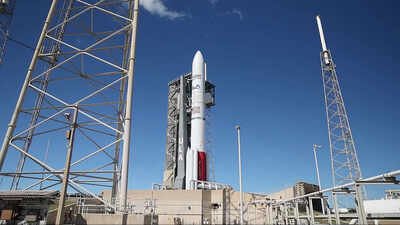
The Vulcan rocket lifted off from Space Launch Complex 41 at Cape Canaveral, Florida, at 12:40 pm local time (1740 GMT). Roughly 10 minutes into the flight, the vehicle suffered an anomaly and failed to place the 40 satellites into orbit. The incident marks the first mission failure in the 20-year history of ULA. The company noted that it is still too early to pinpoint what went wrong.Based on data received by our Launch Director, we confirm that the Vulcan vehicle launched from Space Launch Complex 41 suffered an anomaly 10 minutes into the flight and failed to deliver the Amazon mission to orbit.Every flight generates data, and every flight teaches us something. Since the anomaly just occurred, we don’t have any specific data yet to understand what occurred today.ULA exists to provide assured access to space for our nation and for the customers who depend on us. That purpose is why we take on some of the hardest missions in spaceflight, and why we hold ourselves to the standard of mission success. Today, we did not meet that standard.We will work closely with our customer and other appropriate organizations to find the cause, determine the appropriate corrective action, and return to flight as quickly as possible.ULA is committed to full transparency with our customers, and they will have visibility into the investigation process, which utilizes rigorous methodology and corrective action.We will provide further updates when new information becomes available.
Major setback for Amazon’s satellite internet network
The failure deals a blow to both ULA’s flagship rocket and Amazon’s push to compete with Musk’s Starlink in the satellite internet market. Sunday’s flight carried the largest batch of satellites Amazon has attempted to launch at one time. According to Agence France-Presse (AFP), Amazon has bought 38 launches from ULA, relying on Vulcan to carry nearly half of its first-generation Leo constellation, which is planned to include 3,232 satellites.Amazon had already deployed roughly 400 satellites since April 2025 with plans to roll out its commercial internet service, Amazon Leo, in 2026. Despite the loss, Amazon struck a measured tone on X.“There is risk with any launch, and that’s especially true for inaugural missions,” Amazon Leo posted, adding that it expects ULA will “learn from this mission and deliver on their long-term plans for Vulcan.” Just one day earlier, Musk’s company deployed 26 large Starlink satellites during a Starship test flight.